Burning Man is Not a Marketing Opportunity
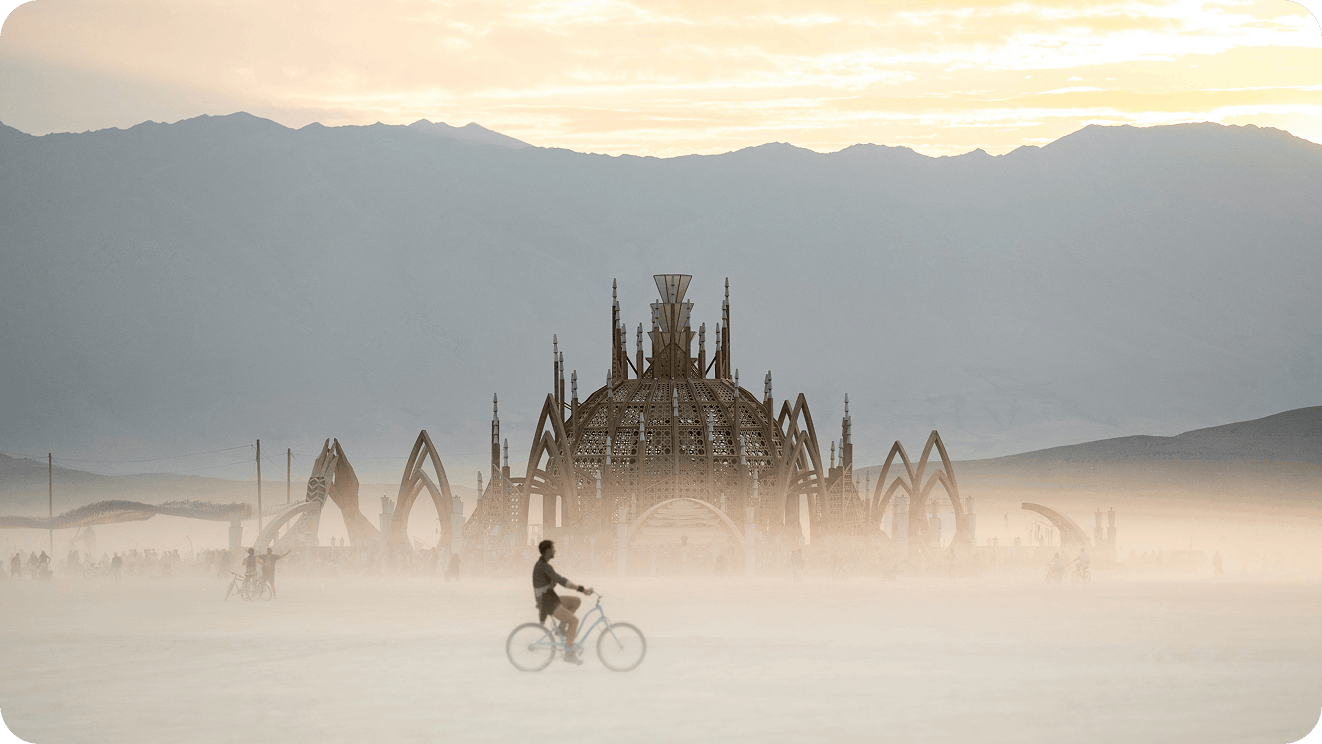
Every few years, a brand tries to turn Burning Man into a stage, but it never goes the way the brand hopes.
Burning Man is one of the only large-scale cultural events in the U.S. built around actively rejecting advertising. Organizers call this decommodification, and it isn't a suggestion. No logos, no sponsorships, no product placement, no influencer content staged on the playa. To a brand weighing OOH and guerrilla marketing as a way to reach a young, culturally engaged audience, Burning Man can look like open inventory. It isn't. It's a community that has spent decades building rules specifically to keep brands out.
For brands exploring OOH and guerrilla marketing, the Burning Man case is worth studying even if the desert isn't on the media plan. The instinct to treat a cultural moment as free real estate, whether that's a festival, a protest, a meme or a neighborhood, is one of the most common and most avoidable mistakes in event-adjacent marketing. Burning Man just makes the mistake easiest to see.
Can Brands Market at Burning Man?
No, not officially, and not without real risk.
Decommodification is one of Burning Man's 10 guiding principles. Organizers have been direct about what it means in practice: no one may use the Burning Man name, the Black Rock City name, the Man logo or imagery from the event to promote a product, service or brand. That extends to using photos or footage taken on the playa to sell something once the event is over.
This isn't only a norm the community polices on its own, though it does that too. Burning Man's guidance encourages attendees to flag branded content on social media and report it back to organizers. The restriction is also written into the ticket terms every attendee agrees to, and Burning Man has said the rule carries legal weight beyond the event itself.
For a brand, that means there's no version of showing up, official or improvised, that doesn't carry reputational exposure and possible legal risk.
Why Burning Man is Not Brand Inventory
The default marketing instinct is to look at any large gathering of an attractive audience and ask how to get a logo in front of it. That instinct fails here because Burning Man was built as a rejection of that model.
A Gifting Economy, Not a Media Market
Burning Man's economy runs on people trading skills, art and time instead of money. A brand dropping a paid activation into that environment isn't tapping into the culture; it's importing the exact dynamic the event was designed to avoid, and participants tend to notice fast.
What the Community Actually Enforces
Vehicles with visible logos are expected to be covered, and free samples with a brand name attached count as advertising, not gifting. None of this is subtle, and none of it leaves room for a brand to argue its activation was different.
Cultural Relevance Does not Equal Cultural Permission
A topic trending doesn't mean a brand has standing to enter it.
In 2019, Burning Man's leadership publicly pushed back on prepackaged, sponsor-driven experiences and influencer content that treated the event as a backdrop rather than a community to join. The message wasn't about one bad post, but a pattern of brands and creators mistaking access for invitation.
That distinction applies well beyond one festival. Being culturally adjacent to something doesn't grant a brand the right to use it. Relevance versus permission is where most guerrilla missteps start, and it's a question worth asking before a single asset gets produced.
The Anti-Activation: When Staying Out is the Smartest BVrand Strategy
Marketers are trained to treat visibility as the goal. But inside a space that has explicitly opted out of commercialization, visibility reads as tone-deaf rather than clever.
The same test applies to protests, memorials, grassroots movements and closed community events. Does showing up serve the audience, or does it serve the brand? When the honest answer favors the brand, restraint is the stronger call.
Why Guerrilla Marketing Still Requires Consent, Permits, and Planning
Guerrilla marketing isn't lawless just because it looks spontaneous.
In 2001, IBM's Linux stencil campaign on San Francisco sidewalks was treated as illegal graffiti rather than advertising, and the company ended up paying roughly $120,000 in fines and cleanup costs. The tactic looked scrappy, but the bill was not.
Unauthorized doesn't mean unaccountable. Public property, private property, city ordinances and event organizers all have a say in whether a campaign is legal, and "we didn't ask" stops being a defense the moment a stunt goes viral for the wrong reasons.
What Responsible Event-Adjacent Marketing Looks Like
A campaign can still feel bold and earn attention without treating a community's rules as an obstacle to route around. A few habits separate the two:
- Get permits and property owner sign-off in writing before production starts, not after the campaign is already built.
- Work adjacent to a cultural moment instead of inside a space that has explicitly opted out of commercialization.
- Ask organizers directly rather than assuming access equals invitation.
- Build in something the audience actually wants, not just brand exposure dressed up as a gift.
None of this slows a campaign down as much as marketers assume. It just moves the hard conversations earlier, where they're cheaper to have.
Questions to Ask an OOH and Guerrilla Marketing Agency Before Launching a Campaign
- Has this location or event explicitly restricted commercial activity, and have we confirmed that directly with organizers?
- Do we have permits or written property owner approval in hand before production starts?
- What's the realistic cost of removal, fines or backlash if this gets flagged as unauthorized?
- Does this campaign give the audience something they want, or does it only serve our visibility?
- Who is our point of contact if a city, venue or community group asks us to stop?
An agency that answers these without hesitation has done this before. One that treats them as friction is a warning sign, not a creative risk worth taking.
How Breef Helps Brands Find OOH and Guerrilla Marketing Agencies
The line between a campaign that earns attention and one that earns legal action often comes down to who's running it. An experienced OOH and guerrilla marketing agency handles the parts brands tend to skip: permitting, property rights, organizer relationships and reading a room before a stunt goes live.
Breef matches brands with vetted agencies that specialize in OOH and guerrilla work, based on the market, budget and the type of activation a project calls for. Instead of guessing which agency knows the difference between bold and reckless, brands get matched with partners who have already done the legwork and have the exact skillset they need. Get started by booking a call with a Breef Marketing Strategist.