How Brands Are Designing Circular Economies Around Their Products

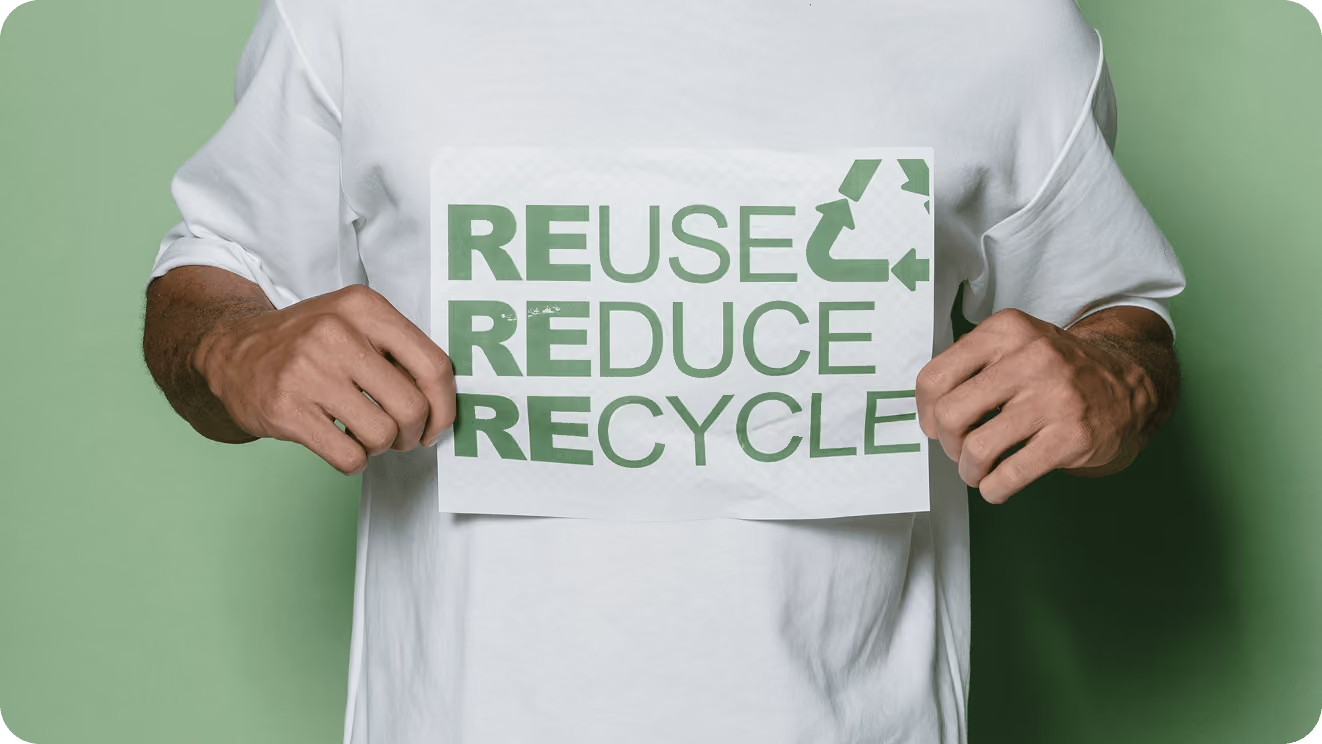
The conversation around circular economy has been happening in sustainability reports for years. What's changed recently is where it's showing up: in product strategy, in UX decisions, in CRM programs and in community infrastructure that brands are building deliberately rather than hoping happens organically.
The brands doing this well aren't just adding a take-back form to their website. They're designing systems where the product's second, third and fourth lives are as intentional as the first. And they're discovering that the circular layer doesn't just reduce waste, it creates customer relationships and community dynamics that linear retail never generates.
What a Circular Economy Means for Consumer Brands
A circular economy, at the brand level, means designing products and systems so materials stay in use rather than ending up in landfill. In practice, this takes several forms: take-back programs that reclaim products at end of use, resale programs that facilitate peer-to-peer or brand-operated secondhand markets, repair services that extend product lifespan and rental or lease models that keep ownership with the brand while giving customers access.
What's notable about the most effective circular programs isn't just the environmental logic, it's also the business logic. Secondhand sales are expected to grow two to three times faster than new retail over the next several years, reaching $317 billion by 2027, according to the State of Fashion 2026 by Business of Fashion and McKinsey. Branded resale, specifically, grew 300% between 2021 and 2025. The brands moving early on circular models aren't just managing waste, they're building revenue streams and customer relationships that competitors without circular infrastructure can't replicate.
The interesting design challenge is how to make the circular layer feel native to the brand rather than bolted on. When it's bolted on — a recycling portal that doesn't connect to the rest of the brand experience — participation stays low and the business case is thin. When it's designed as part of the brand ecosystem, it generates the kind of engagement and loyalty that acquisition spending rarely achieves.
The UX and Web Design Work Behind Circular Experiences
The gap between a brand that has a circular program and one that gets participation often comes down to UX. Most take-back and resale programs fail to achieve meaningful scale not because customers don't care, but because the experience of participating is too inconvenient or unclear.
Designing Resale Flows That Feel Native
A resale experience that requires customers to navigate to a separate subdomain, create a new account and figure out their own shipping isn't a circular program; it becomes a compliance exercise. The brands seeing real participation have built resale flows that live inside the existing customer experience, use existing account credentials and make the friction of participation feel comparable to a standard return.
This is a web design and development problem before it's a sustainability problem. The underlying circular logic can be sound, but if the UX doesn't support it, the program gets used by committed enthusiasts and ignored by everyone else. The design work involves building authenticated resale portals, integrating secondhand inventory into existing product pages and creating seller flows that are clear enough that a first-time participant can complete them without a FAQ.
Pricing and Verification Mechanics
For branded resale to work, someone needs to authenticate condition, set pricing and manage fulfillment. Different brands handle this differently — some operate warehouses where returned items are graded and re-listed by the brand directly; others facilitate peer-to-peer transactions where sellers set their own prices within brand guidelines.
Each model requires different UX infrastructure. The warehouse model needs intake flows, condition grading interfaces and restocking systems. The peer-to-peer model needs seller tools, pricing guidance and dispute resolution.
Getting these right requires both UX design expertise and back-end development that most internal teams don't have the bandwidth to build properly while also running the rest of the business.
Mobile-First Circular Experiences
The customers most likely to engage with circular programs (younger buyers, sustainability-motivated shoppers, existing brand loyalists) are doing most of their shopping on mobile.
Circular programs designed primarily for desktop and then adapted for mobile consistently underperform programs designed mobile-first. This seems obvious, but it's consistently underprioritized when brands are building resale infrastructure quickly.
How Circular Business Models Show Up in Real Life for Brands
The most interesting circular implementations aren't the take-back portals brands build because a sustainability consultant recommended it. They're the ones where the circular model creates something the linear model couldn't: new relationships, new revenue or new community.
Janji's Gear Swap: Circular As Community Infrastructure
Janji, the Boston-based running apparel brand, has built one of the more genuinely novel circular models available. Through their Janji Collective membership program ($25 one-time fee), members get access to the Janji Collective Gear Swap — a monthly member-led marketplace running inside a dedicated Slack channel where members can swap and sell their used Janji gear directly with each other.
What makes this worth studying isn't the resale mechanics, it's the infrastructure. Slack is already where engaged communities spend time. By building the marketplace inside a communication platform rather than a standalone portal, Janji created something that doubles as a community channel and a circular economy tool simultaneously. Members aren't logging in to a resale site, they're participating in an ongoing conversation where gear happens to change hands.
The business logic is also interesting. Janji doesn't take a cut of secondary sales the way a brand-operated resale platform typically would. The value they're capturing is community depth and member retention; the Janji Collective member who's selling their old gear to another member is more embedded in the brand than a one-time buyer who never interacted with another customer.
Patagonia Worn Wear: The Established Benchmark
Patagonia's Worn Wear program is the reference point most brands look at when designing circular programs, and for good reason. It covers repair, resale and trade-in under a consistent brand narrative ("better than new") that connects the circular program to the brand's core positioning rather than treating sustainability as a separate message.
What Patagonia figured out early is that the repair and resale layer communicates something about product quality that advertising can't. A brand willing to repair and resell its own products is implicitly claiming those products are worth repairing and reselling — a credibility signal that's hard to fake.
The North Face Renewed: Building Circular Scale
The North Face operates its Renewed resale program through Tersus Solutions, a logistics partner specializing in brand resale. The program reached 96,000 items resold last year; still a small fraction of total production, but a meaningful and growing revenue stream that operates with different economics than new product sales.
The Tersus model is worth understanding because it illustrates how circular logistics are becoming a specialist category. Rather than brands building their own take-back and resale infrastructure from scratch, purpose-built partners are emerging that give brands access to circular operations without requiring them to build the capability internally.
IKEA: Circular Beyond Apparel
IKEA's take-back and in-store resale program shows that circular models work beyond fashion. At NRF 2025, IKEA executives described initiatives to take back furniture for potential resale or recycling, with used and refurbished products sold in-store, closing a loop that most furniture retailers don't attempt because the logistics are genuinely harder than apparel.
IKEA's 2030 goal is to become fully circular, using recycled materials in products and designing for extended lifecycles. What's notable is that circularity is embedded in the product design brief, not just the post-sale program; which is the version that reduces material waste rather than just extending the life of products that weren't designed to be circular.
Brand, Communications and PR: Telling a Circular Story Without Greenwashing
Circular programs are genuinely good sustainability stories (if they're real). The challenge is communicating them in a way that reads as substantive rather than performative, especially in an environment where consumers and journalists are actively skeptical of sustainability claims.
What Greenwashing Looks Like in Circular Communications
The patterns that trigger greenwashing accusations are predictable: vague claims about "sustainability" without specifics, headline programs that cover a tiny fraction of actual volume and circular messaging layered onto brands whose primary product strategy is still fast fashion or single-use packaging.
If the circular program is a PR vehicle for a brand whose core operations haven't changed, audiences and journalists will notice (and the coverage will be worse than silence).
The brands communicating circular programs credibly share a few traits: they're specific about scale (actual items recovered, actual percentage of materials recycled), they acknowledge what isn't circular yet and why, and the circular messaging is consistent with what the brand has done historically, not a sudden pivot to sustainability in response to consumer pressure.
PR and Earned Media for Circular Programs
A well-designed circular program that's communicated honestly is a genuine media story, not because sustainability is trending, but because the operational innovation is interesting. Janji's Slack-based gear swap is a more compelling story than a generic take-back portal because it's novel and specific. The North Face's volume numbers are a more compelling story than a vague "commitment to circularity" because they're concrete.
PR partnerships that understand the circularity space can help brands find the journalists and publications where this story genuinely resonates — sustainability-focused trade press, outdoor and lifestyle media for brands like Janji and The North Face, mainstream business press when the circular economics are interesting enough to stand on their own.
The communications work also involves preparing for the scrutiny that comes with any sustainability claim. A PR partner who understands circularity can help brands anticipate the questions about scale, materiality and overall environmental impact that credible journalists will ask; and make sure the answers are honest and supportable before the program goes public.
Lifecycle and CRM: Integrating Resale and Circular Offers Into Customer Messaging
The circular program that lives only on a dedicated webpage and never shows up in customer communications is operating at a fraction of its potential. The brands getting real participation treat circular programs as a messaging thread throughout the customer lifecycle, not a standalone initiative.
Post-purchase As Circular Activation
The post-purchase moment is underused as circular program activation. A customer who just bought a product is at peak brand relationship — they made a financial commitment, they're engaged, they have brand context. This is the moment to introduce the circular program: here's how this product can have a second life, here's what to do when you're done with it, here's what other customers have done with their old gear.
A customer who knows about the resale program before they've finished using the product is significantly more likely to participate than one who encounters a take-back landing page for the first time at the point of disposal. This isn't just good sustainability practice, it's basic CRM logic.
Behavioral Segmentation For Circular Engagement
Not every customer will participate in a circular program, and the ones most likely to engage have identifiable behavioral characteristics: longer purchase history, higher lifetime value, documented engagement with sustainability content, previous participation in loyalty programs. CRM segmentation that identifies these customers and directs circular program messaging specifically to them produces better participation rates than broad campaigns.
This is also the data that helps brands understand the actual customer economics of their circular program. Are customers who buy secondhand product eventually buying new product? Are Janji Collective members who participate in the Gear Swap more likely to buy new product in the following quarter than members who don't? These are answerable questions for brands with good CRM infrastructure, and they're what turn circular programs from sustainability initiatives into business strategy.
How to Use Breef to Find the Right Agencies for Your Circular Strategy
Building a circular program that works requires expertise across disciplines that rarely live under the same roof internally. The UX and development work to build resale flows, the brand and communications work to tell the story credibly and the CRM infrastructure to integrate circular messaging into the customer lifecycle all require specialist skills that most marketing teams don't have on hand simultaneously.
Breef connects brands with vetted agencies across all of these disciplines. Whether you need a web design and development partner who can build resale UX that people use, a PR agency that understands how to communicate sustainability claims without triggering greenwashing accusations or a CRM and lifecycle team who can integrate circular messaging into existing customer journeys, our platform matches you with agencies who've done this work before.
Ready to find agencies who can help you build a circular program that works? Book a demo call with Breef and find partners who understand the full scope of what circular strategy requires.