
Industry Interview: Fernweh


Some agencies help brands stand out. Fernweh Studio helps them communicate what they stand for. As co-founder, Lisa Hennessy has built a creative studio rooted in intentional storytelling, helping brands craft identities and campaigns that connect with people while creating positive change.
Throughout her career, Lisa’s creative work has been recognized by some of the industry’s most respected award shows, including Cannes Lions, Clio, ADC and The ANDYs. Today, she brings that same creative excellence to Fernweh, proving that meaningful work and beautiful storytelling can go hand in hand.
Tell us a little about your background. What led you to where you are today?
Lisa: I started my career in Germany at a design studio before moving into the agency world to work on big global brands. Eventually, I became Head of Art at DDB Berlin, where I worked on Volkswagen and the relaunch of the iconic Beetle. The work was incredible, but after years of agency culture that celebrated long hours and all-nighters, I realized I didn't want that to be my career forever. I left and opened a small studio in Berlin, hoping to build something of my own, but I continued getting pulled into freelance work for brands like Apple and other global agencies because that was what people knew me for.
Those opportunities eventually brought me to Los Angeles, where I moved about 12 years ago. While I continued working as a creative director and design director, I found myself back in the same agency environment I had tried to leave. Over time, I realized I wanted to create something that felt more aligned with the kind of work and life I wanted.
What inspired you to start Fernweh?
Lisa: I kept asking myself whether I wanted to spend my career convincing people to buy more things the world didn't necessarily need. From the beginning, the goal was to partner with ethical, purpose-driven companies and help tell stories that mattered. It was a huge shift from agency life, and I quickly realized that while design school teaches you how to be a designer, it doesn't teach you how to run a business. There was definitely a learning curve.
About a year in, my husband joined the studio. He's a cinematographer who had also grown tired of the traditional film industry, so it felt like a natural fit. What started as him helping on smaller client shoots eventually became a true partnership, allowing us to combine brand strategy, design and production under one roof.
What do all Fernweh projects have in common, regardless of client or industry?
Lisa: Every Fernweh project starts with empathy. I want our work to feel thoughtful, create an emotional connection and hold someone's attention a little longer than the average. That's why I've never believed great branding comes from industry specialization alone. If you're looking for the same formula everyone else uses, there are agencies for that — but for us, the fundamentals of building a brand are universal: empathy comes first, and the rest is research.
We've also become much more intentional about who we work with. I love partnering with people who know exactly why they're building something and want to make a difference, not just launch the next trending product. Those relationships often grow beyond the original scope because we become deeply invested in the brand and the people behind it.
Whether we're helping build a marketplace for inclusive fashion or shaping the strategy and creative direction for a hospitality brand in Italy, the projects all share the same foundation: founders who care deeply about what they're creating. Those are the partnerships that inspire our best work.

What are brands asking for today that they weren't asking for five years ago?
Lisa: I think people are over content that feels manufactured or made just to fill a feed. They're looking for something more human — something with soul. For years, brands have talked about building community, but I don't think community is something you can simply decide to create. When a brand genuinely cares about something and people can feel that, community follows naturally.
To me, that's become the new luxury. I spent years working with luxury brands, and I think status symbols matter less than they used to. Today, luxury is authenticity. It's access and feeling like you belong to something meaningful. That desire for belonging comes up in almost every client conversation, whether it's tied to a physical place or shared values.
In many ways, I think we're returning to our roots. As AI and digital experiences continue to grow, people are craving the opposite just as much: real conversations, shared experiences and authentic human connection. That's what I see brands asking for more than ever.
How do you think about creating content that can live across multiple channels and formats?
Lisa: It's always a balance. We shoot beautiful, cinematic work and then adapt it into vertical formats because we're realistic about how people consume media and engage with brands today. As creatives, that's honestly a little heartbreaking, but we keep both versions whenever we can because I believe the original framing tells the full story.
Where we draw the line is creating content that's only designed to feed an algorithm. If the goal is simply to churn out as much content as possible, it's usually not the right fit for us. We'd rather create fewer, more meaningful pieces with a longer lifespan. Even on larger brand projects, we'll produce shorter edits for social, but they're always part of a bigger story — not the story itself.
In a digital world, where do you see human creativity remaining irreplaceable?
Lisa: Creativity comes from emotion, experience, imperfection and the things that make us human. If we rely on AI to create everything for us, we're really just remixing what already exists. There can be a level of polish, but there's no lived experience behind it. There's no soul.
I think AI is a great tool when it helps make the creative process easier, whether it's supporting research, brainstorming, mood boarding, educating or removing some of the repetitive parts of our work. Anything that gives us more time to focus on the parts we love is valuable. But when it comes to the final creative execution, I still believe there needs to be a human hand behind it.
I think people are already starting to recognize the difference. My kids are growing up with AI, and they can immediately spot when something feels artificial. Even brands that stand for something meaningful can lose that connection when they replace authenticity with something that feels generated. That's why I was never really afraid that AI would replace my work or my husband's work. There will always be people who value creativity that makes them feel something, and that's the part I don't think technology can replicate.
What's one thing marketers consistently underestimate about the production process?
Lisa: I believe the biggest misconception is how much goes into creating something genuinely thoughtful. A lot of people come into the process wanting more for less, and I understand why — technology has made creativity more accessible than ever. Everyone can design something in Canva, take a photo on their phone or create content quickly, and that's a great thing. But there's a big difference between creating a piece of content and building a brand with intention. When we present a production budget, people are often surprised by the number of people involved, the equipment, the lighting, the casting and all of the details that contribute to the final result.
A lot of the value comes from the things people don't immediately see: the experience behind the decisions, the years spent learning the craft and the process of testing, failing and improving. I always think about the idea that something may take five seconds to create, but it took years of experience to know what those five seconds should look like. That's why I don't work hourly anymore — I don't think experience should be discounted. There is absolutely a place for fast content, and there are incredibly talented creators making amazing work with just a phone or a simple setup. That's just not the type of work we do. We're focused on creating brands and stories that are intentional, sustainable and built to last.
How should marketers think about the role of photography versus cinematography in a campaign?
Lisa: I don't really see photography and cinematography as two separate things. To me, they're both about visual storytelling. Cinematography is essentially the photography of a moving image. Whether we're creating a video or a still image, our process starts the same way: understanding the why. Who are we speaking to? What do we want them to feel? How do we create an emotional connection? From there, we research, build storyboards and define the visual language of the brand.
The difference is that cinematography gives you additional tools to tell that story over time. Movement, lighting, color and composition can communicate before someone even hears the words or sees the message. When it comes to campaigns, I think both photography and cinematography play an important role. A hero video can tell a deeper story, while photography creates additional moments and assets that extend that story across channels.
How do you create moments on set that feel authentic rather than manufactured?
Lisa: I think authenticity comes from finding the balance between preparation and flexibility. You need a clear vision, a strong pre-production process and an understanding of what you're trying to create, but you also have to leave room for the unexpected. A lot of that comes down to the fundamentals: great casting, thoughtful locations and the right lighting. Those elements create an environment where people feel comfortable and where real moments can happen.
The best shoots are the ones where there's trust between the client and creative team. When everyone is aligned on the vision, you can be open to the moments that weren't part of the original plan. Maybe something happens on set that feels more interesting than what you storyboarded, and you have the freedom to say, "This wasn't what we expected, but it's better. Let's follow it." You can only control so much, and sometimes those unexpected moments become the most authentic and memorable parts of the story.
What’s your favorite Breef project you’ve worked on?
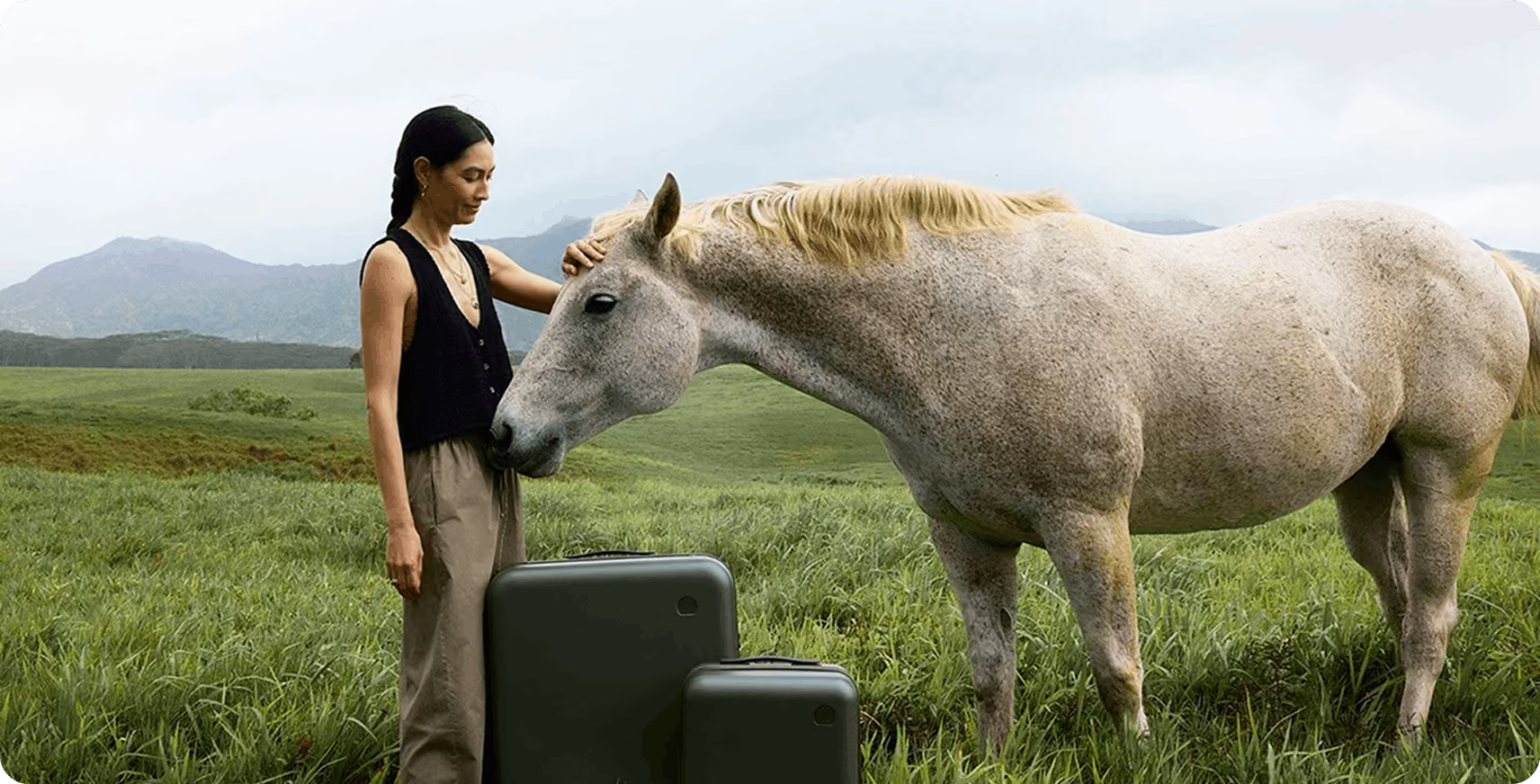
Lisa: My favorite Breef project was with Nex Travel. When we first connected, they were looking for something much smaller — a social media content retainer. I think part of the reason we initially stood out was that we were based in Hawaii, and they were creating a Hawaii-inspired luggage collection. But once we started talking, the partnership quickly evolved. They were incredibly open to collaboration and would say things like, "We trust you. How would you approach this?" They weren't just looking for someone to execute a brief; they wanted our perspective and expertise.
That's something I've always valued. One of the biggest frustrations from my agency days was seeing brands hire experts and then not give them the freedom to do what they were hired to do. The greatest work happens when there is trust on both sides, and everyone respects the expertise each person brings to the table. With Nex Travel, that trust turned into a true creative partnership. We created content together in Hawaii and eventually found opportunities to collaborate while traveling, including shoots in places like Iceland and Berlin.


.avif)


