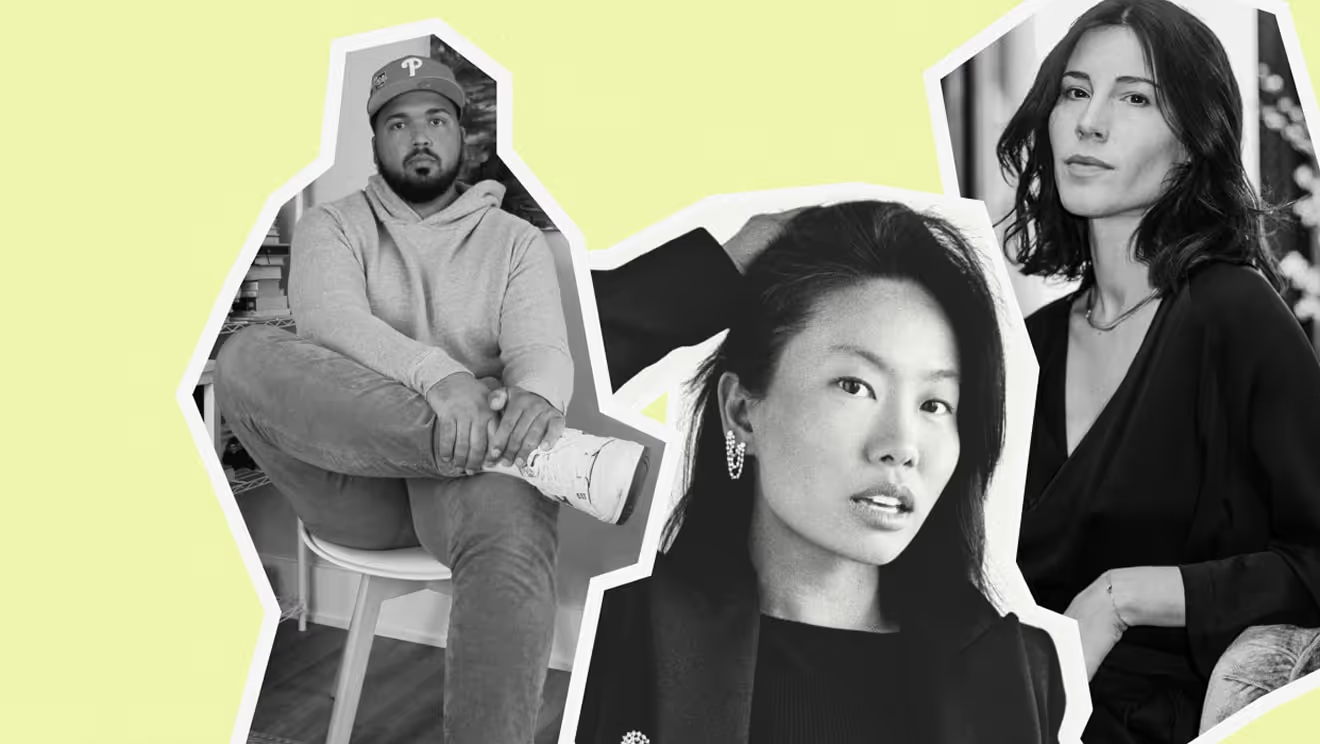
Industry Interview: Lustre


Success is earned through work and results, and Lustre has become a recognizable name by consistently delivering both. Founded by Lauren Turle and creatively directed by Julia Card, Lustre was built to bridge the gap between strategic thinking and creative execution.
We sat down with founder Lauren Turle to explore the principles that have guided the agency from the start, how Lustre approaches integrating AI into the creative process, the importance of their “North Star” and what it takes to design brands with longevity in mind.
Tell us more about Lustre: why was it founded and what’s in its DNA?
Lauren: I’ve worked in marketing for years, and I was often responsible for hiring design agencies or independent designers. Over time, I noticed a consistent gap between strategy and aesthetic execution.
When I started Lustre, I wanted to approach design through the lens that it can be a foundational tool for growing a business. The belief that design is the driver of business growth rather than just a final layer of execution is what defines our DNA. That thinking shows up across everything in our company: the frameworks we use, how we approach validating the strength of design and the people we hire.
Originally, we were focused on providing a solution that connected strategy and design, essentially acting as the bridge between a marketing team and a design agency. Over the last 10 years, we’ve expanded our services significantly, moving from solving that tactical gap really well to enabling a broader set of services that create a stronger foundation across the board. It’s no longer just about design, or designing a website or a logo — it’s about all of the consumer-facing components that go into a brand. For each area of a brand, we either have an internal solution or a trusted partner we can bring in to ensure we can always meet a client's needs.
As a business owner, what principles are most important to you when it comes to leading a team and creating meaningful work for others?
Lauren: At the end of the day, it all starts with the people. As an agency, you're ultimately selling the expertise and creativity of the team behind the work, so hiring is one of the most important decisions you make. When we're building our team, we look beyond design skills and technical capabilities. Clients immediately recognize when someone genuinely cares about their work, and that passion leads to stronger collaboration and greater confidence in our team's recommendations.
Integrity is just as important. We place a huge emphasis on finding people who are trustworthy, empathetic and genuinely care about their clients' success. Design and strategy can be taught, but character is much harder to develop. That's why the first thing I evaluate in an interview isn't necessarily a candidate's portfolio — it's who they are as a person. Those principles shape not only how we lead our team, but also how we create meaningful work for the people we serve.
How do you balance creating something visually compelling with achieving a business objective?
Lauren: Every project starts with strategy. Over the last decade, we've developed and refined a collaborative brief that acts as our North Star throughout the entire process. We work through it closely with clients, asking both strategic and creative questions designed to uncover business goals and customer insights. The goal is to ensure we're solving the right problem before we start designing a solution.
That brief becomes the foundation for every recommendation we make. It helps both teams align on priorities and keep personal preferences from overshadowing business objectives. Design needs to do more than look great — it needs to support the goals of the project.

How do you decide when a brand should embrace bold creative risks versus keeping things simple?
Lauren: There's no universal rule for when a brand should be bold or play it safe — it depends entirely on the context. One of the biggest factors we consider is where the customer is in the journey. At the top of the funnel, where you're trying to capture attention and build awareness, there's often more room for creativity, experimentation and bold ideas. Further down the funnel, when someone is evaluating a product or preparing to make a purchase, clarity and usability tend to matter more than novelty.
At the same time, any creative risk should still be rooted in the brand's core identity. The goal isn't to chase trends; it's to create something customers will connect with while maintaining a cohesive brand experience. We always start by asking whether a decision serves the customer and supports the brand's foundational truth. If it does, we explore how to make it work within the brand system. If it creates confusion or minimizes recognition, it's probably not the right risk to take.
Is AI worth the investment for brands right now, and where does it create the most impact?
AI is absolutely worth investing time in. It's not going away, and we're already seeing it create efficiencies across research, web development, production workflows and post-production creative work. Some of the biggest opportunities today are in accelerating repeatable tasks to reduce the time spent on heavy work so that teams can focus on higher-value thinking. The key is to start with a specific problem you're trying to solve rather than adopting AI simply because there's pressure to do so.
For brands that feel ‘behind’ on AI, what would your advice be? Where can they start in a way that feels practical and impactful instead of overwhelming?
Lauren: If a brand feels behind on AI, my first piece of advice is not to panic. The most important thing is identifying who within the company is best positioned to evaluate where AI can add value. While founders, executives and marketing leaders should be thinking strategically about adoption, the people assessing specific tools should have firsthand knowledge of the workflows those tools are intended to improve.
The biggest misconception about AI is that the tools themselves create value. I often compare it to a professional kitchen: if you gave ten chefs with different experience levels the exact same equipment and ingredients, the most experienced chef would still create the best meal. AI works the same way. The strongest results come from people who deeply understand their craft and know how to apply tools to accelerate or enhance their work. The organizations seeing the most success aren’t replacing expertise with AI — they’re using AI to amplify it.
The most successful AI implementation happens when it's tied to a real business problem rather than a fear of falling behind. The goal isn't to adopt AI for the sake of it, it's to identify where it can improve the way your team already works.

What design choices do you think age quickly vs. hold up over time?
Lauren: Every brand needs a clear set of truths: a distinct visual direction and a framework that guides decision-making. That foundation can evolve as the business grows, but if it's built correctly, the brand shouldn't look wildly different from one year to the next. The most enduring brands aren't necessarily the ones that never change — they're the ones that know what should remain consistent as they evolve.
As consumer preferences and the social landscape continue to shift, the key is asking a few simple questions: Does this align with our brand foundation? Is it something our customers would recognize as us? And is this direction scalable beyond a single moment? Design tends to age quickly when it's driven solely by trends, but it has staying power when it's built around a clear brand identity.
From your perspective, how has Breef evolved since you first joined? How do you think Breef can continue serving and supporting agencies and marketers?
Lauren: I've had the opportunity to see Breef evolve quite a bit over the years. Lustre was actually one of the earliest agencies on the platform and the first agency to win a project through Breef, so we've had a front-row seat to how the business has grown.
What continues to impress me is the platform's ability to facilitate strong agency-client matches. The quality and depth of information provided in briefs gives agencies a much clearer understanding of whether there's a genuine fit before entering a conversation with a client. From an agency perspective, that's incredibly valuable because it allows us to spend less time sorting through opportunities and more time focusing on the clients we can truly help.
.avif)
What are some of the projects you're most proud of and why?
Lauren: A few projects come to mind because they each demonstrate a different aspect of what we love to do as an agency.
One is our work with Monday Swimwear, where we had the opportunity to help evolve a highly recognizable brand and create a digital experience that reflected the sophistication and growth of the business. Through Breef specifically, Needlepoint.com stands out as a memorable project because of the measurable impact it had on the business. The engagement focused heavily on improving the website user experience through a visual refresh and redesign tailored for highly specific shopper profiles, ultimately contributing to stronger site performance and positive movement across key business metrics.
What connects both of these projects is that they demonstrate something we believe deeply at Lustre: great design should do more than look beautiful. It should create a better experience for customers and drive meaningful results for the business.