Industry Interview: Storm Brain

.png)
Some agencies make brands look better. Storm Brain builds the digital systems that help them perform better. Founded in 2006, the full-service digital agency brings brand strategy, UI/UX design, website and eCommerce development and integrated marketing together, earning them a reputation for creating polished, intuitive digital experiences built to drive measurable growth.
Nearly two decades later, Storm Brain is led by husband-and-wife team Blake Nolan, Founder and President, and Leah Nolan, CEO. The agency’s work has earned recognition from the ADDYs, the Hermes Creative Awards and UpCity, including national and local Excellence Awards. In this conversation, Blake reflects on Storm Brain’s evolution, the fundamentals that have outlasted every digital trend and what still separates a great website from the other 95%.
What inspired you to start Storm Brain?
Blake: I started designing early — building brands, creating websites and even landing my first paid project as a high school freshman, designing logos for an entire softball league in Australia. What began as an addictive hobby quickly became a way to combine my interests in art, technology and production.
I later studied fine art photography and illustration in Boulder, Colorado, with plans to become a filmmaker. I put myself through school by designing websites and brands for local businesses. After graduating, I spent three years traveling to 50 countries and funded much of it by finding design work along the way, whether that meant creating a website for a hostel or a brochure for a paragliding company.
When I returned to the U.S., starting an agency felt like the natural next step. I never wanted to position myself as a freelancer; I wanted to build something bigger than myself. So, I moved to San Diego and founded Storm Brain in 2006. What started as a personal passion for art and technology became the foundation for the agency Storm Brain is today.
What marketing advice from 20 years ago is still true today?
Blake: One idea I’ve carried with me throughout my career is that creativity rarely happens in a vacuum. It comes from paying attention to what already exists, understanding what makes it effective and allowing those influences to shape what you create next. Art and marketing are always an evolution of the ideas that came before them.
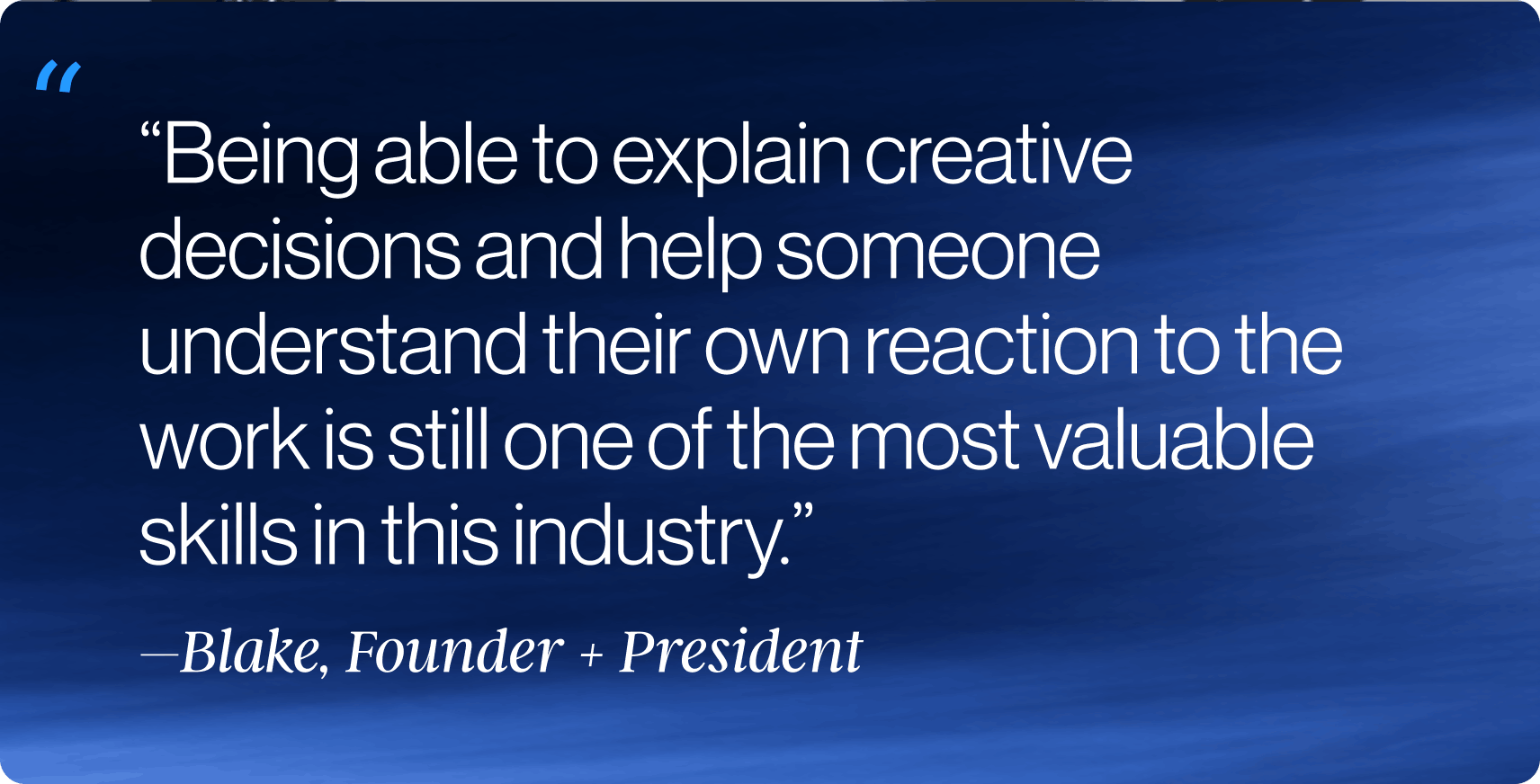
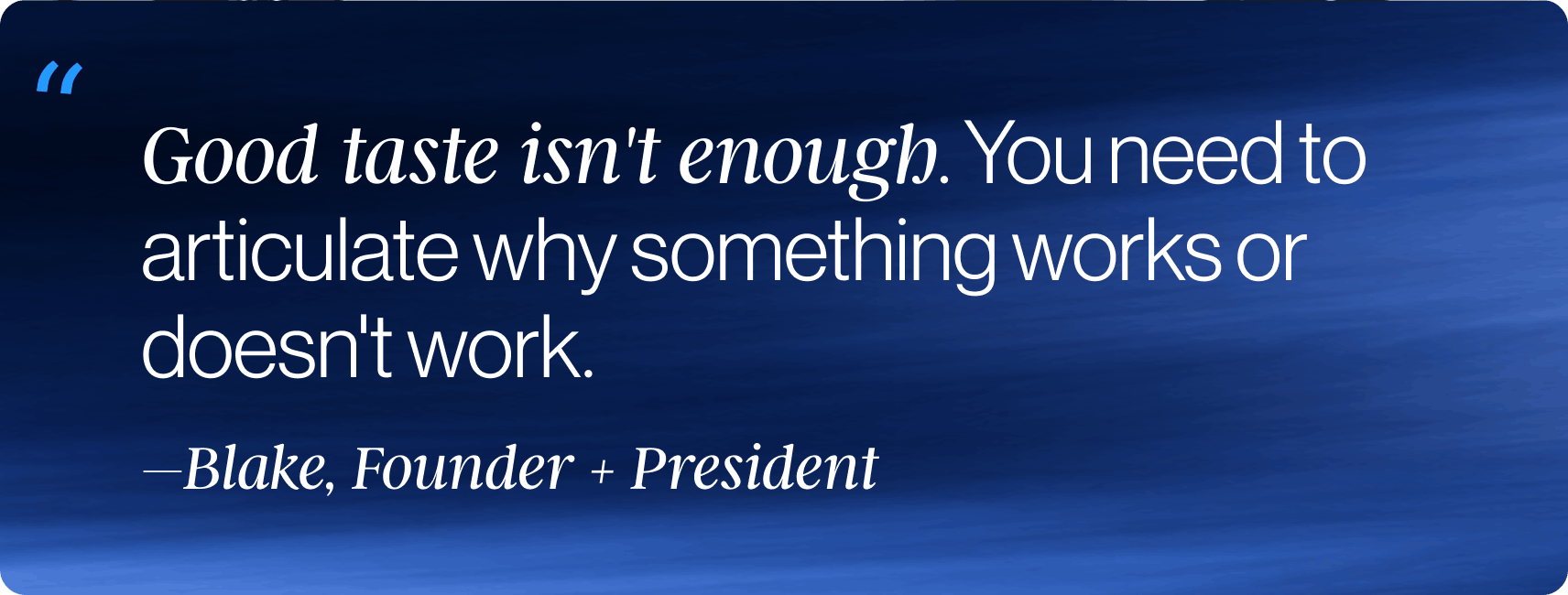
Art school also taught me that having good taste isn’t enough. You need to articulate why something works or doesn’t work. Being able to explain creative decisions and help someone understand their own reaction to the work is still one of the most valuable skills in this industry.
The tools and platforms will continue to change, but those fundamentals won’t: study what’s around you, understand why it works and use that knowledge to create what comes next.
What’s one website mistake you see brands make repeatedly?
Blake: Brands often try to fit too much onto a page. Without enough white space, clear visual hierarchy or a natural path for the eye to follow, the message gets lost and the experience becomes overwhelming. White space isn’t wasted space — it gives the story room to breathe.
The same principle applies to navigation. Brands often create only one route to an important page or action, burying it inside a menu or requiring several clicks to get there. People navigate websites differently, so you need to create multiple intuitive paths to the same destination. You only have a few seconds to capture someone’s interest; if the next step isn’t easy to find, they’ll leave.
What are the first three things you look at when auditing a new website?
Blake: Brand alignment, usability and business purpose.
First, does the website feel true to the brand’s identity and messaging? Then, can people easily understand and navigate the experience? Finally, is the site actually supporting the business’s goals and driving users toward the right actions?
A website can be visually impressive, but if it relies too heavily on trends, excessive animation or experimental layouts, it can quickly become more of an art project than a useful business tool. The best websites stay within the boundaries of the brand, communicate clearly and continue performing long after the latest design trend fades.
What's one decision brands can make today that will still pay off five years from now?
Blake: Invest in a deep understanding of your brand’s identity, messaging and boundaries — then make decisions within them. It’s easy to chase trends through excessive visual experiments or flashy design, but that can leave you with a website that looks impressive but fails to communicate or convert.
The goal shouldn’t be to create the ‘coolest’ website. It should be to build one that serves a clear business purpose and remains easy to use. When those foundations are strong, a website can still feel modern and perform well five, or even ten, years later.
What's changed the most about interactions between clients and agencies?
Blake: The biggest change has been the shift from in-person meetings to remote collaboration. Before 2020, we met nearly every prospective client face-to-face — visiting their offices, touring their facilities and pitching in conference rooms. Today, our agency is primarily remote, with most client relationships being built over Zoom.
I’ve welcomed that shift. Remote meetings are often more focused and effective: we can share screens, pull up relevant work and collaborate while accommodating everyone’s schedules.
The greater challenge is maintaining connection within the agency itself. Client relationships translate well remotely, but team culture requires more intentional effort to ensure employees feel connected to one another and the business.
What’s your favorite Breef project you’ve worked on?
Blake: My favorite recent Breef project has been our work with Fusion Academy, a private school offering one-to-one learning for students who may not thrive in a traditional classroom.
We’re reimagining how the brand comes to life online, from its information architecture and navigation to its calls to action and overall visual experience. One of the biggest challenges has been immediately communicating what Fusion Academy is and why its highly personalized model is different from tutoring.
The new direction feels elevated and premium while remaining approachable for both parents and students. We’ve simplified the navigation, softened the brand’s brighter colors and introduced a more modern, intuitive experience. It’s a great example of applying what we’ve learned across other industries to help a brand better communicate the value of an entirely different approach to education.