

Packaging Design Process For Small Brands Launching Physical Products
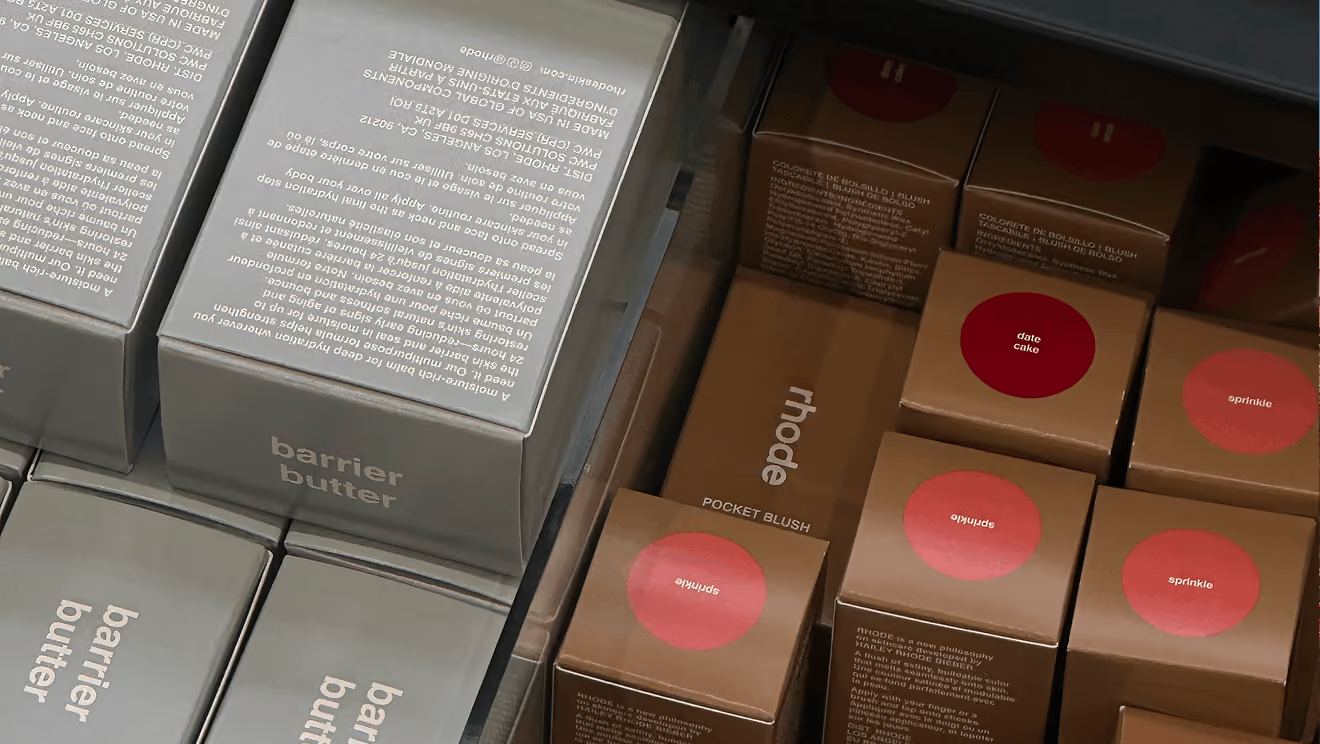
Packaging is your product's first impression, last defense and silent salesperson all rolled into one. Get it right and people pick it up. Get it wrong and it sits on the shelf next to 47 other options that somehow look more trustworthy.
For small brands launching physical products, packaging can feel overwhelming. There are dielines to decode, compliance rules to follow, printers who speak a different language and about a dozen ways to accidentally waste money on a reprint.
But it doesn't have to be chaos. With a clear process and the right guardrails, you can design packaging that works, ships on time and doesn't require a second mortgage. Here's how.
What Packaging Needs To Communicate In The First Three Seconds
You have 3 seconds to convince someone your product is worth picking up. That's it. In those 3 seconds, your packaging needs to answer a few critical questions without saying a word.
What is this? People shouldn't have to guess. If your sparkling water looks like kombucha or your face serum looks like a cleaning product, you've already lost them.
Who is this for? Your design should signal who the product serves. A premium skincare brand targeting 40-somethings shouldn't look like a drugstore teen acne line. A kids' snack brand shouldn't feel like artisanal granola targeted at health-conscious millennials.
Why should I trust it? Trust signals come from design choices: clean typography, intentional color palettes, professional photography and thoughtful details. Cheap-looking packaging makes people assume the product inside is cheap, too.
What makes this different? If your product looks identical to every other option on the shelf, there's no reason to choose it. Your packaging should have a point of view, whether that's bold color blocking, minimal elegance, playful illustration or something else entirely.
Packaging Checklist: Claims, Compliance and Required Information
Before you send anything to print, you need to make sure your packaging includes everything legally required and nothing that could get you in trouble.
Product name and net quantity must be clearly visible. This includes weight, volume or count depending on your product category.
Ingredient or material lists are required for food, beverage, cosmetics and supplements. The order matters. Check FDA or relevant regulatory guidelines for your category.
Allergen warnings if applicable. These often need to be in bold or a specific font size to meet compliance standards.
Nutritional facts for food and beverage products. Use the correct FDA format and make sure your serving sizes align with industry standards.
Country of origin and manufacturer information. Some categories require this on the front panel, others allow it on the back or bottom.
Barcodes and SKU placement. Your barcode needs enough white space around it to scan properly. Don't place it over graphics, gradients or folds.
Claims and certifications. If you're calling your product organic, non-GMO, vegan, cruelty-free, or anything else — you need to back it up. Unsubstantiated claims can result in fines, recalls or legal action.
Recycling symbols and disposal instructions. More retailers are requiring this, and consumers expect it.
This isn't the fun part of packaging design, but it's the part that keeps you out of legal trouble and prevents expensive reprints.
Packaging Design Process Step By Step: From Strategy To Print
Here's how to move from idea to finished packaging without wasting time or budget.
Step 1: Define Your Packaging Strategy
Start with the why. What problem does your product solve? Who's buying it? Where will it be sold (retail shelf, eCommerce, DTC subscription box)? Your answers shape everything from material choice to graphic hierarchy.
Define your brand positioning. Are you premium, accessible, playful, clinical? Your packaging needs to reflect that immediately.
Step 2: Choose Structure and Materials
Structure refers to the physical form: bottle, box, pouch, tube, jar. Your choice depends on product type, shelf presence, shipping durability and budget.
Material impacts cost, sustainability and perception. Glass feels premium but ships heavy. Flexible pouches are lightweight but harder to display. Molded plastic offers protection but raises sustainability concerns.
Work with a packaging supplier early to understand minimum order quantities, lead times and cost per unit at different volumes.
Step 3: Design Visual Identity and Graphics
This is where your packaging comes to life visually. Typography, color palette, imagery and layout all need to work together to communicate your brand and product benefits clearly.
Hierarchy matters. The most important information (product name, key benefit, hero image) should be the first thing people see. Secondary details (ingredients, instructions, brand story) can live elsewhere.
Design for the format. Packaging isn't a flat poster, it has multiple panels, folds and viewing angles. Make sure your design works from every side.
Step 4: Add Compliance and Required Copy
Once your visual design is locked, layer in all the legally required information: nutritional facts, ingredient lists, warnings, barcodes and certifications.
Don't treat compliance as an afterthought. Build it into your layout early so it doesn't feel crammed in at the last minute.
Step 5: Prepare Files For Print (Dielines and Specs)
A dieline is a template that shows the exact shape and dimensions of your packaging, including folds, cuts and safe zones; your printer will provide this.
Set up your design file to match the dieline exactly. Use the correct color mode (CMYK for print, not RGB), embed fonts and make sure your resolution is at least 300 DPI.
Add bleed and safe zones. Bleed is the extra area around the edge that gets trimmed off. Safe zones ensure important text and graphics don't get cut.
Step 6: Proof and Approve Before Production
Request a physical proof before committing to a full print run. A proof is a sample printed on the actual material your packaging will use.
Check colors under different lighting. What looks perfect on your screen might look totally different in real life.
Verify all text for typos, incorrect information or misaligned elements. Once you approve, changes are expensive or impossible.
Test functionality. Does the box close properly? Does the label adhere smoothly? Does the pouch seal without wrinkling?
This step prevents disasters.
How To Work With Dielines, Printers and Proofs Without Reprints
Reprints are expensive and delay your launch. Here's how to avoid them:
Request dielines and print specs upfront. Don't start designing without them. If you design first and retrofit later, things will break.
Communicate clearly with your printer. Ask questions about color matching, material options, turnaround times and costs before you commit.
Order a physical proof and review it in person. Don't approve based on a PDF. Colors, textures and finishes look different in real life.
Build extra time into your timeline. Print production takes longer than you think, especially for custom structures or special finishes.
Check everything twice. Typos, incorrect barcodes and misaligned graphics are all fixable before printing (but costly after).
How To Evaluate Packaging Design When You Have A Small Team
When you're a small team without a dedicated design lead, evaluating packaging can feel subjective. Here's how to make it more objective:
Does it pass the 3-second test? Show it to someone who's never seen your product. Can they tell what it is, who it's for and why they should care within 3 seconds?
Does it stand out on a crowded shelf? Print a mockup and place it next to competitor products. Does it grab attention or blend in?
Does it match your brand positioning? If you're positioning as premium but your packaging looks budget, there's a disconnect.
Is all required information present and legible? Run through the compliance checklist. Missing or illegible information will cost you later.
Does it reproduce well at scale? A design that looks great as a large mockup might fall apart when printed small.
Get feedback from people outside your company. Internal teams are too close to the product and fresh eyes catch things you've stopped seeing.
Get Packaging Design Support Through Breef Vetted Creative Agencies
Packaging design isn't something you want to DIY (unless you have serious design chops and print production experience). The stakes are too high and the costs of getting it wrong are too steep.
Breef connects you with vetted creative agencies and packaging design specialists who've done this before for brands like yours. Whether you need full packaging development from concept to print or just someone to clean up your files and manage production, you get matched with partners who understand the process.
Instead of guessing which agency knows how to work with dielines, handle print specs and navigate compliance, you work with teams who've already shipped products to shelves without costly mistakes.
Ready to design packaging that works? Book a demo call with Breef and find a packaging design partner who can bring your product to life. 🤝


