Brands are Becoming Media Companies

Between AI-generated content, algorithm-driven feeds and constant brand output, attention has never been easier to capture. But it’s also easier to lose.
That’s why “community” has become such a focus. Not as a trend, but as a response to a simple reality: reach doesn’t mean much if no one sticks around.

Follower count is often treated as a proxy for success. The assumption goes: the bigger the number, the stronger the business behind it. But that doesn’t always hold up. A large audience might look impressive, but if only a small percentage is actually engaging, the value is far more limited than it appears. Kevin Kelly’s 1,000 True Fans theory captures this perfectly: depending on what you’re building, you may be better off cultivating a smaller group of engaged, loyal fans than chasing a larger audience that scrolls past your work.
“Community” has become a major buzzword, but at its core, it’s just a more useful way of thinking about an audience. Not how many people you reach, but how many people actually care. More brands are starting to optimize for the people who show up consistently, trust the brand voice and convert — whether that’s through purchases or long-term support.
Emma Chamberlain is a great example. While her peak visibility may have come during her early YouTube years, her influence didn’t disappear, it deepened. As platforms changed, her audience followed. That loyalty allowed her to expand beyond content into Chamberlain Coffee and, more recently, a furniture collection with West Elm. Each move feels consistent with her point of view, which is why her audience continues to show up. Her success wasn’t built on multiple viral moments, but on years of cultivating a community that trusts her.
In many cases, it’s more effective to go an inch wide and a mile deep than the other way around. In earlier stages, or during moments of repositioning, focusing on depth can be more strategic. The right balance depends on what you’re trying to build and where you are in that process.
In practice, that can take different forms. It might mean creating direct lines of communication, like early Glossier’s invitation-only Slack channel for the brand’s most loyal fans, where feedback shaped product decisions and customers could connect with each other. Or it might look like bringing people together in real life, like Wilde House Paper’s Coffee Clubs hosted in cities like London, Toronto and San Francisco by local friends of the brand.
The common thread isn’t the tactic, it’s the intention: making people feel considered and giving them a reason to connect not just with the brand, but with each other. Reach can get you in front of people, but depth is what drives real value.

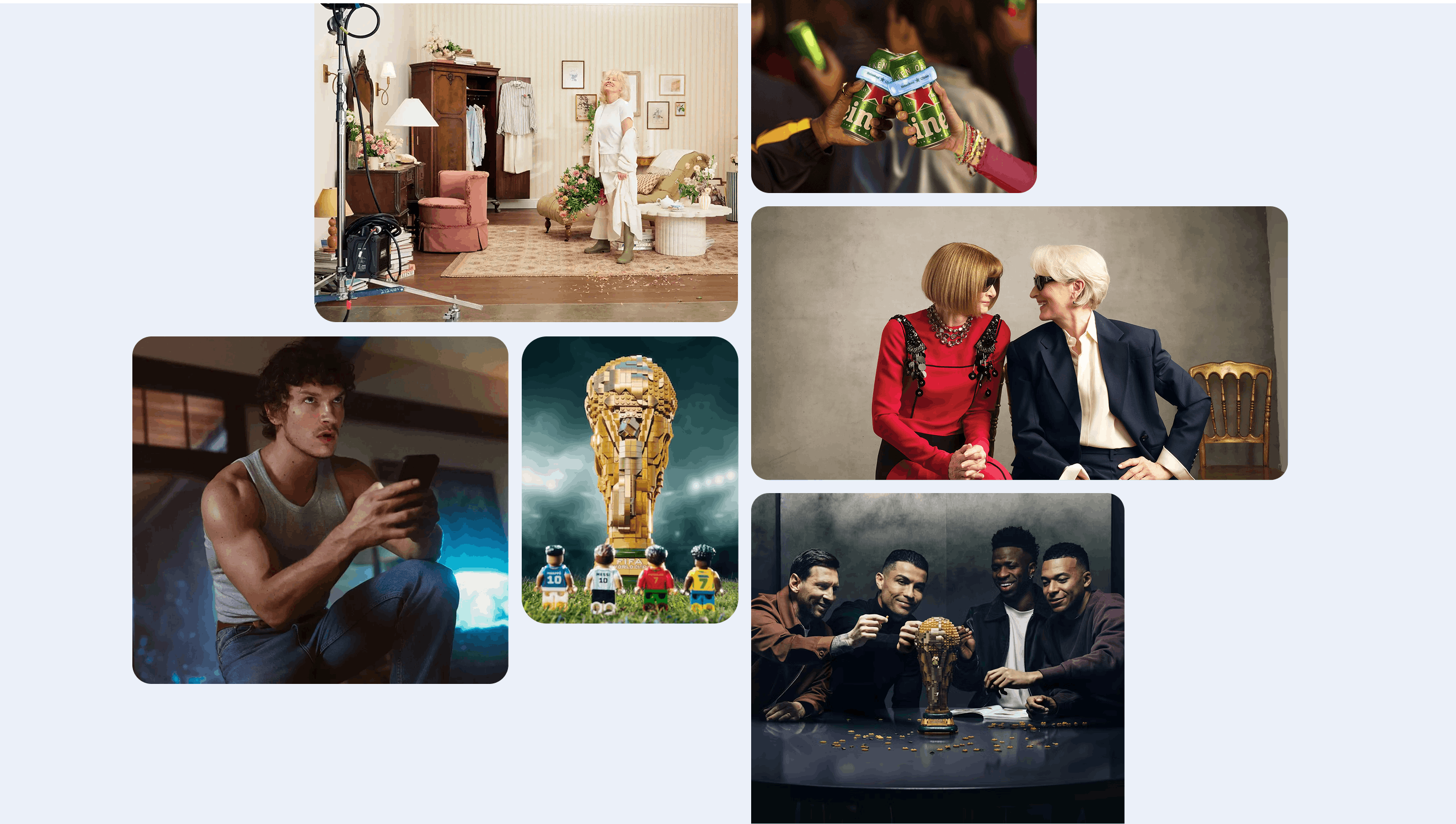
📱 Verizon | Look Behind You with Connor Storrie
Verizon cast Heated Rivalry star Connor Storrie in a thriller-style spot that feels more like a short film than an ad. As lights flicker, music starts and food arrives unprompted, the tension builds until the reveal: it’s all coming from his phone in his back pocket. By committing fully to the genre, Verizon turns a product feature into a story people want to watch.
🏆 LEGO | FIFA World Cup
Ahead of the World Cup this summer, LEGO brought together Cristiano Ronaldo, Lionel Messi, Vinícius Júnior and Kylian Mbappé to build a LEGO version of the iconic trophy. The campaign blends global star power with the brand’s signature playfulness, while also promoting a version fans can actually purchase. By turning a cultural moment into something interactive, LEGO makes the experience feel closer to home.
🕶️ Vogue | Anna Wintour and Meryl Streep for The Devil Wears Prada 2
Vogue brought together Anna Wintour and Meryl Streep for a cover, accompanying interview and playful video tied to The Devil Wears Prada 2 — a full-circle moment given Streep’s character has long been rumored to be inspired by Wintour herself. It’s especially notable given Wintour’s typically reserved public presence. That restraint is part of her brand, so when she does play along, it carries more weight.
🍻 Heineken | Clink. Match. Stay Connected.
Heineken launched “The Clinker” exclusively at Coachella, a gadget that slips over your drink and lights up green or orange when you cheers with someone else, signaling how compatible your music taste is. The idea builds on what people are already doing at festivals: using music and a drink as a starting point for connection. Instead of forcing interaction, it gives people a reason to start one.
📷 Aerie | 100% Aerie Real with Pamela Anderson
Aerie cast Pamela Anderson in its latest Aerie Real campaign, reinforcing its long-standing commitment to natural, non-retouched imagery. Known for embracing a more natural, makeup-free look in recent years, Anderson reflects the brand’s evolving definition of “real.” This time, Aerie makes that stance explicit, extending its no-retouching policy to AI as well.

📄 Oura Ring’s First Female-Focused LLM and the Future of AI Wellness Chatbots (Glossy): How Oura is building a female-focused AI experience — and what it signals about the next wave of personalized wellness and health tech.
🎧 Humanizing Data Through Design (AIGA Design): A conversation on how thoughtful design can make complex data feel intuitive, emotional and actually usable.
📄 The Rise of Made-by-Humans Marketing (Embedded, paywalled): As AI-generated content floods the market, brands are starting to signal what’s human-made, and that distinction may become a differentiator.
📄 A Founder Who Thinks Like a Creator (Following Up!): An interview with Heaven Mayhem founder Pia Mance on how being a creator shapes her approach to brand building — from more intentional gifting to treating content rollout as the core of the strategy, not an afterthought.
Final Thoughts
Algorithms change and attention shifts, but a loyal audience comes back because they’re invested in what you’re building, not just the content you produce. Whether you’re building for reach or depth, the goal is the same: create something people actually want to stay connected to.