The Theme That Won Cannes and Why
Every year, Cannes Lions offers a snapshot of where creativity is heading. While the campaigns span every industry imaginable, the work earning the festival’s highest recognition — and the attention of audiences who didn’t attend — often reveals larger shifts in marketing, branding and creativity. This year, the winning work showed that attention alone isn’t enough — brands need to create something that their audience can actually relate to.

Across the festival’s Grand Prix-winning work, one theme appeared again and again: brands creating experiences rooted in familiarity.
Community-led campaigns and experiential marketing showed this shift by giving people a way to see themselves in the story. Heineken’s Could Have Been a Heineken campaign transformed the familiar experience of long voice notes between friends into a campaign centered around connection.
The same approach extended to AI. Claude’s Can I Get a Six Pack Quickly? and How Can I Communicate Better with My Mom? films used humor and familiar situations to show how AI can support everyday human experiences. Rather than showcasing the technology itself, the work focused on realistic, relatable ways that AI provides value, proving that even emerging tech can resonate when it connects back to something people already understand.
Perhaps the biggest takeaway from Cannes is that the most memorable marketing connects directly to human experience. Brands should walk away with this: you don’t need groundbreaking technology or a huge campaign — you just need to understand your audience.
Cannes aside, the best campaigns, highest-viewed Reels and most shared meme carousels always have one thing in common: they make audiences think I know that feeling.

🪑 IKEA Canada | Assemble the World
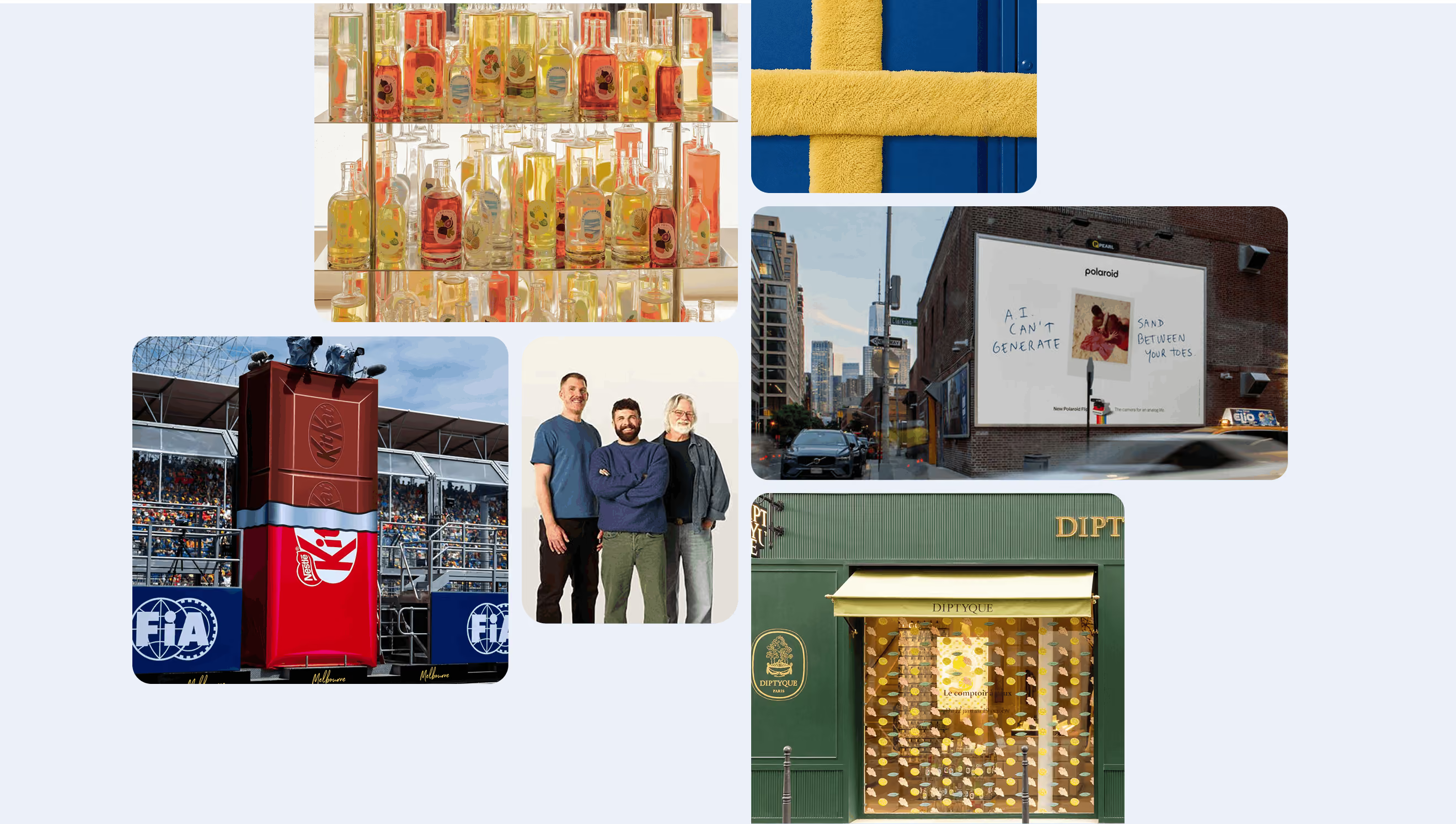
IKEA Canada recreated the flags of every competing World Cup nation entirely out of IKEA products, a concept that's simple enough to land instantly and clever enough to actually stop the scroll. It's a good example of how a brand can show up for a cultural moment without forcing a connection that isn't there.
🛍️ Etsy | Shop Other Jeffs
Timed to Amazon Prime Week, Etsy launched a campaign celebrating the 5,000+ makers on the platform named Jeff: a tongue-in-cheek nudge to skip Amazon and buy from real people instead. The humor is the hook, but underneath it's a real celebration of the makers who make Etsy worth choosing.
🫧 Diptyque | The Water Counter
For the summer, Diptyque installed a water counter at its Paris and London flagships, serving a menu of infused waters inspired by its seasonal collection — a sensory extension of the brand world that goes beyond fragrance. It’s also a fitting way for a fragrance brand to participate in the rise of elevated water and non-alc beverages, where sensory experience is already the whole point.
📸 Polaroid | The Camera for an Analog Life
To launch its newest camera, Polaroid went all-in on the digital exhaustion conversation, plastering provocative OOH across New York and London, deliberately positioned next to Apple Stores and Google offices, and extending the campaign into phone-free walking tours in Paris and Tokyo. The timing is hard to ignore: analog is having a moment, and Polaroid is one of the few brands that can credibly lead that conversation.
🍫 KitKat | The Official Chocolate Bar of Formula 1
KitKat's F1 partnership goes well beyond a logo placement. The brand built a 350kg replica F1 car made entirely of chocolate at Silverstone, wrapped pit lane panels to look like giant KitKat bars, and set up "Break Zones" at circuits around the world. The "Have a break" slogan has never had a more natural home than the pit lane.
🚙 Uber | Sorry for Your Team’s Loss
As World Cup teams get knocked out, Uber deployed giant tissue-box trucks across host cities like Houston and Boston with "Sorry for your team's loss" printed on the side, offering losing fans 30% off their ride home. It teases the losing fans while still coming through for them, which is exactly why it works.

📄 Influencer Marketing Is Moving From Rented Attention To Creator Infrastructure (Forbes): The one-off influencer post is losing ground, and what's replacing it is more structural: affiliate programs, ambassador networks, and creator commerce channels that connect awareness to actual revenue. A useful framework for thinking about where creator strategy is heading.
📄 How Lisa Says Gah Bridged Style, the Internet, and Real Life (Embedded): Founder Lisa Bühler on how the brand has grown through a decade of social media shifts by staying rooted in real community — from early pop-ups to creator collabs to brand events — and why that investment in the room, not just the feed, is what's given it staying power.
📄 Leaders Weigh in on How AI is Changing Creativity at Their Businesses (Fast Company): Executives from Nespresso, Luma AI, and Publicis Sapient on how AI is reshaping creative work and why the consensus at Cannes was less about replacement and more about what happens when curious, adaptable people actually use the tools.
📄 10 Lessons from Building Inside the Creator Economy (New Motives): Ali Kriegsman, who has built creator programs for Sephora, Ulta, and Target, on what she's learned, from why mass gifting exposes your problems rather than solving them, to why scaling intimacy is the hardest part of any creator program.
That wraps this issue of the debreef. Keep an eye on your inbox for the next edition. In the meantime, browse more on our blog: The Breefing Room