Why Brands Think Like Media Companies

The brands that resonate most right now have something in common: they're not trying to interrupt you. They're trying to earn your attention. Whether it's AI fatigue, feed oversaturation or just a lower tolerance for boring content, audiences have gotten better at tuning out anything that feels like a sell or ‘more of the same.’ The brands cutting through aren't posting more — they're thinking more, and their content reflects that.

Attention is fragmented, formats are recycled and impressions no longer reliably translate to loyalty or purchase. Traditional marketing — digital ads, email campaigns, organic social posts — has become easy to ignore. The most effective brands realize this and have adapted accordingly. Rather than just running campaigns, they're putting on a show.
Many brands no longer see content as ‘just something to post.’ In reality, it's something to build — and it needs to be based on what people actually want to consume, regardless of the product. The result is a new kind of brand that more like a media company.
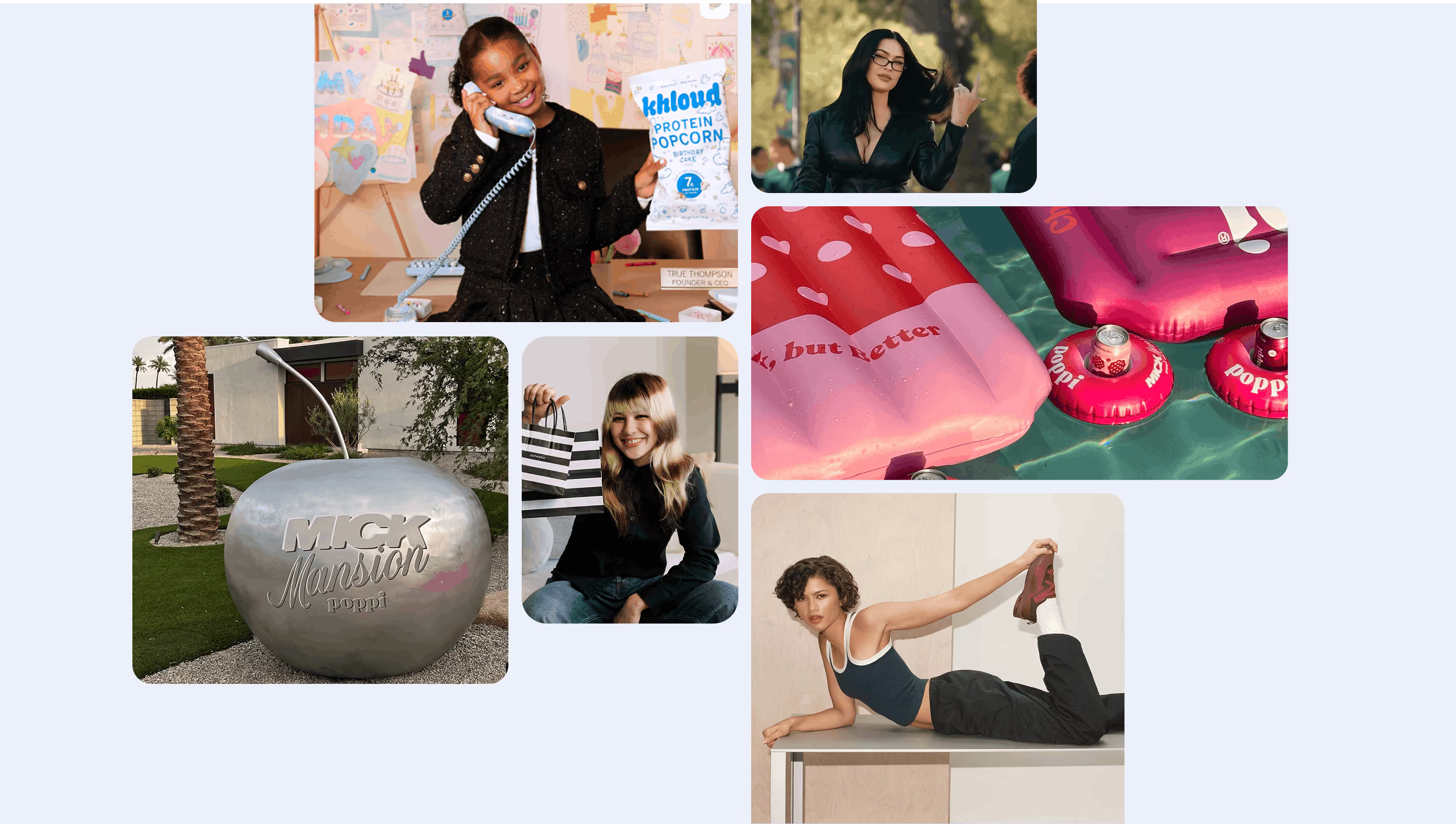
The shift is playing out across categories. Taco Bell turns menu reveals into entertainment events complete with a livestream, celebrity arrivals and a format that borrows more from an awards night than a product launch. Mattel capitalized on Barbie's cultural momentum by positioning the film as both a nostalgic moment for older audiences and an entry point for younger ones — a strategy that drove a 25% increase in sales more than 60 years after the first Barbie was released. Red Bull operates a full-scale media empire producing extreme sports films, sponsoring live events and maintaining a YouTube presence that feels closer to ESPN than sports drink advertising. LEGO has built an entire entertainment universe where the toys are almost secondary to the world itself.
What separates these brands is perspective. Technically, Red Bull is just an energy drink and Barbie is just a doll. But neither brand exclusively asks "how do we sell more product?" They ask "what does our audience actually want to watch, read or share?" That reframe changes everything: how content gets made, what it's trying to do and how success is measured. The payoff isn't just reach — it's relevance. When your content earns attention instead of buying it, the audience shows up on their own terms. If you show them what they want to see, they’ll watch.
Most brands haven't made that shift. Too often, content is still treated as output — something to produce and post — rather than infrastructure to invest in over time. That gap is exactly where opportunity exists. The brands pulling ahead aren't adding more to their content calendar, they're rethinking what their content is for.

Here are a few of the campaigns catching our eye right now.
🪨 Salt & Stone | Hotel Salt & Stone
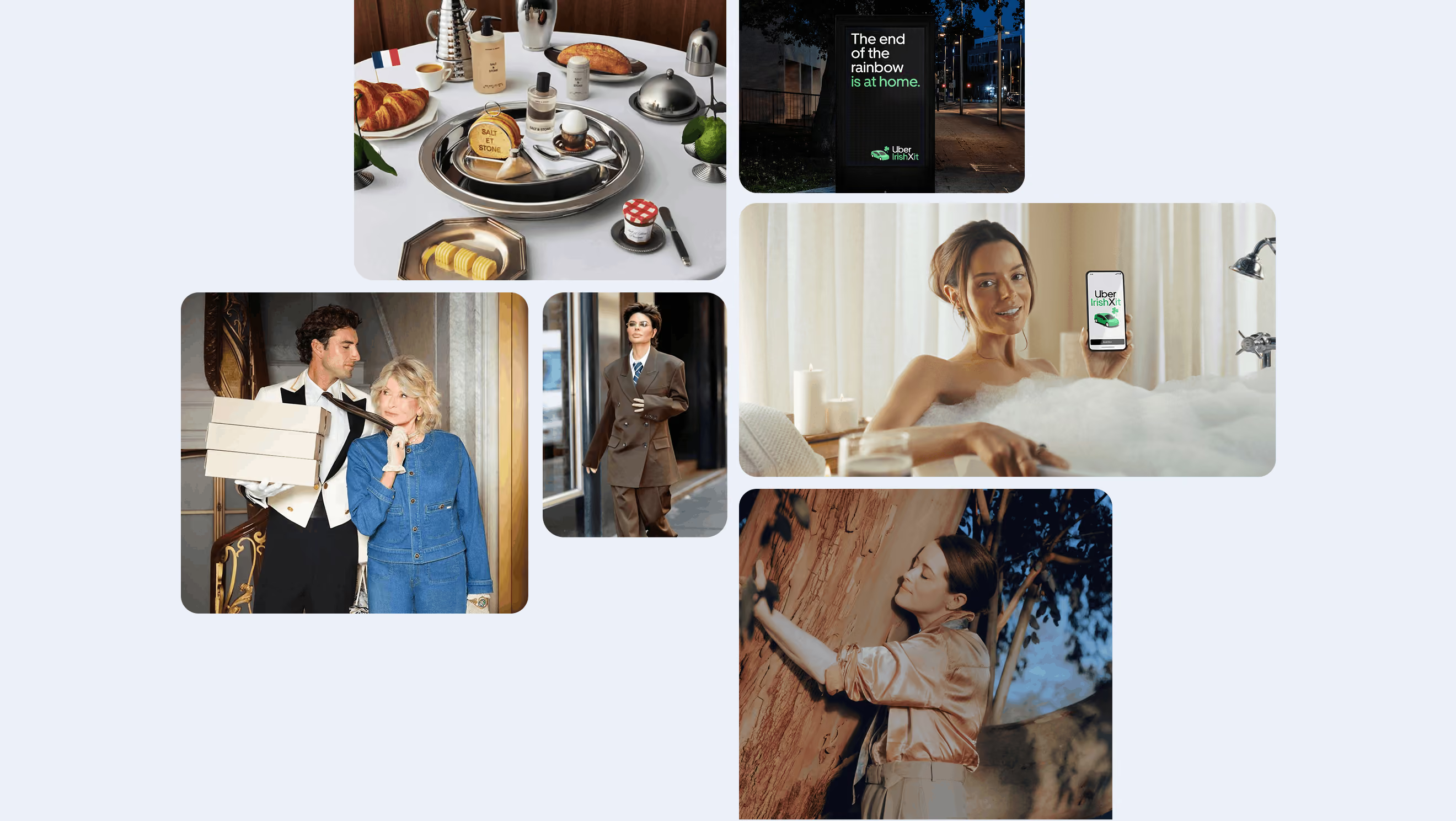
Salt & Stone built a campaign around one universal truth: if it’s in a hotel bathroom, it’s fair game. It leans into that instinct, showing guests quietly pocketing products into their bags as proof of how desirable they are. The brand extended the concept into the real world at SEPHORiA, designing its booth like a hotel check-in desk. Instead of over-explaining the brand, the idea does the work, turning product quality into something people instinctively understand.
💼 LinkedIn | Corporate Translations with Lisa Rinna
LinkedIn tapped Lisa Rinna to translate some of her most iconic Real Housewives one-liners into corporate jargon, including “It’s whack-a-doodle time.” The result is self-aware in a way you wouldn’t expect, using internet-native humor to bridge pop culture and workplace language. It’s a reminder that even the most buttoned-up brands can loosen up without undermining their credibility.
👖 Mother | Lessons from Mother with Martha Stewart
Denim brand Mother leaned into the double meaning of its name, casting Martha Stewart as “mother.” The campaign plays out across playful hotel scenes mixing luxury tropes with a wink of humor (MILF and cookies, anyone?) It’s a smart example of how a brand name can become a creative jumping point.
🚗 Uber | Irish Exit with Maura Higgins
Timed to St. Patrick’s Day, Uber cast Traitors-famous Maura Higgins in a tongue-in-cheek take on the “Irish exit.” The ad imagines her slipping out of a Guinness campaign shoot (via an Uber, of course) without telling anyone, only to end up taking a bath with a pint instead. It works because the idea feels culturally in sync — the timing, the casting and the behavior all click.
🌿 Ffern | This Wild Land with Max Porter and Claire Foy
Ffern released This Wild Land, a three-minute nature film starring Claire Foy and written by Max Porter as part of its latest seasonal fragrance drop. Instead of centering their products, the brand continues to invest in cinematic storytelling that expands its world, bringing the audience into the feeling behind each release. Each drop feels less like a campaign and more like an invitation into that universe.

🎧 Patience is a Virtue: Why Slow-burn Brand Strategies Win (Brand New World): Marketing leaders from Yeti and Huckberry share how investing in community, storytelling and product integrity can outperform trend-chasing and algorithm hacks.
📄 Beauty Founders on The Industry’s New Discipline Era (As Seen On): An interview with leading beauty founders on why the beauty industry is shifting toward more disciplined growth and how that’s changing product strategy, timelines and expectations.
🎧 What Happened to Luxury? (Hitmakers): A conversation on how luxury lost some of its edge — and some hot takes on what brands need to rethink as exclusivity, quality and cultural relevance evolve.
📄 The War of Clean Vs. Science (Express Checkout): How the tension between “clean” beauty and science-backed formulations is shaping consumer perception and forcing brands to rethink how they communicate efficacy and trust.
📄 Beyond the Trend: The Fourth Wall (Playin): An interesting take on how breaking the fourth wall is becoming a creative device in modern marketing, blurring the line between brand, audience and narrative.
Final Thoughts
The common thread is that the best brand work feels like a story, not a product marketing campaign. Good marketing is something that people naturally pay attention to — because it’s relevant, authentic and easy to consume.
Don’t just ask how to get more clicks, purchases or subscribers. Find out what your audience actually wants to see.
That wraps this issue of the debreef. Keep an eye on your inbox for the next edition. In the meantime, browse more on our blog: The Breefing Room