Building your project scope
Breaking Down Poppi's Playbook: Culture as a Distribution Channel

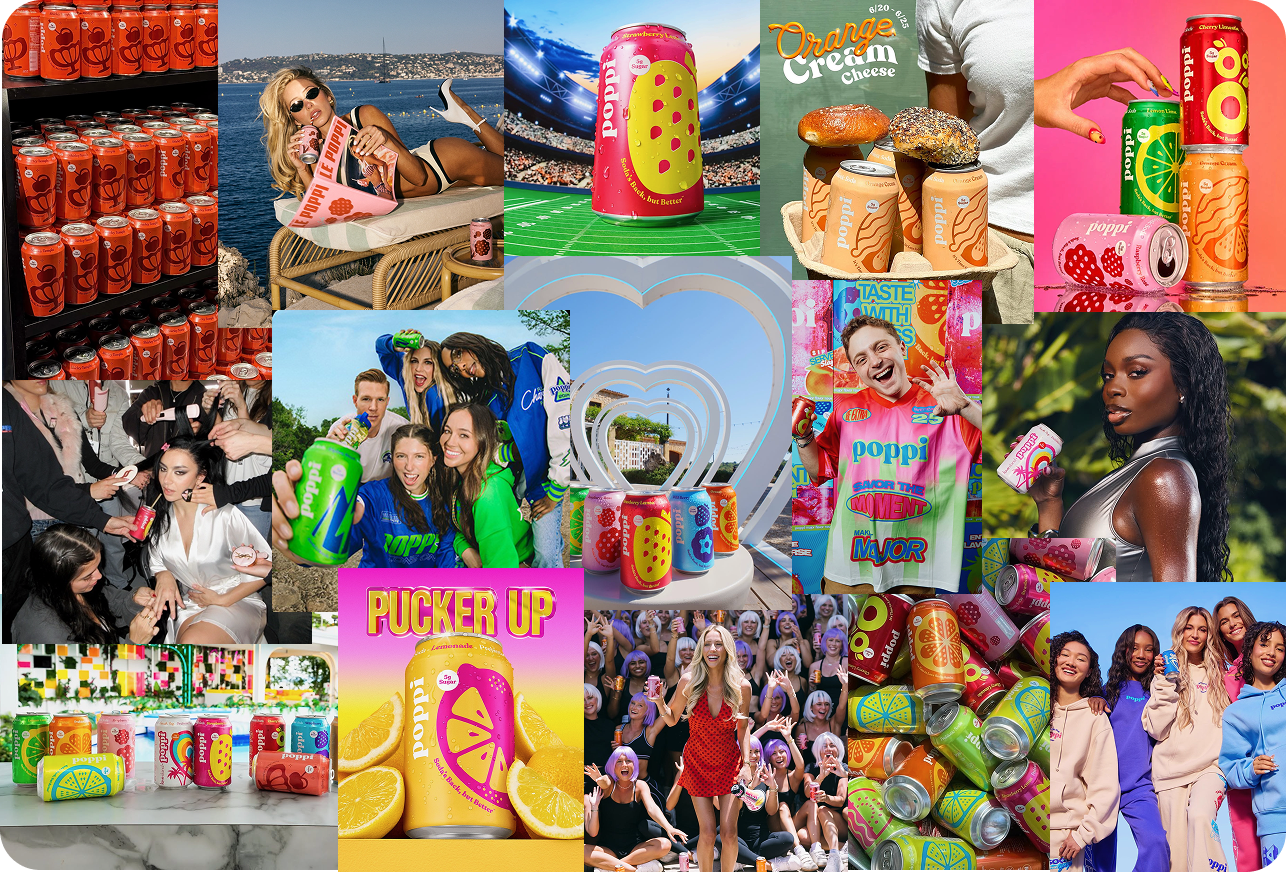
Nine out of ten American households buy soda, making it a $40 billion category controlled for most of the last century by Coca-Cola and PepsiCo. Challenger brands tried and failed with reliable consistency — too niche, too weird, too dependent on a gimmick that wore off.
Poppi launched in March 2020, days before the world shut down, selling prebiotic soda made from apple cider vinegar out of a small manufacturing facility in Dallas. Five years later, PepsiCo acquired it for $1.95 billion. The brand went from its first linear TV campaign to advertising in the Super Bowl in just eight weeks.
The story of how that happened isn't really about soda, but about a brand that understood something most CPG companies still haven't: in a world where attention is the scarcest resource, the brands winning aren't the ones buying into culture but becoming part of it.
From A Farmer's Market to Whole Foods to Shark Tank
Allison Ellsworth, co-founder of Poppi, had been dealing with persistent health issues her doctors couldn't explain. She started mixing ACV with sparkling water and fruit juice, landed on something she actually liked, and began selling it at a local farmers market under the name Mother Beverage. Within three weeks, a Whole Foods buyer who happened to be visiting discovered the brand. According to Tribeza, the moment convinced Allison and her husband to commit fully: they quit their jobs, bought a house and had their first child, all within the same month.
In 2018, nine months pregnant, Allison appeared on Shark Tank with husband and co-founder Stephen, struck a deal with investor Rohan Oza, and rebranded from Mother Beverage to Poppi. She's described the new name as a playful nod to classic soda pop, chosen because it felt fun and energetic. The goal from the start was to build a brand, not just sell a product.
Poppi launched into a pandemic, into a grocery landscape that had never heard of prebiotic soda, and into a TikTok ecosystem that was about to change everything. The timing that seemed catastrophic turned out to be an accelerant.
Allison told Tribeza that her early TikTok attempts (taco recipes, dance videos) went nowhere. It wasn't until she sat down and told Poppi's origin story directly to camera that the account broke through, driving $100,000 in Amazon sales overnight and catching her board off guard.
Culture As Distribution
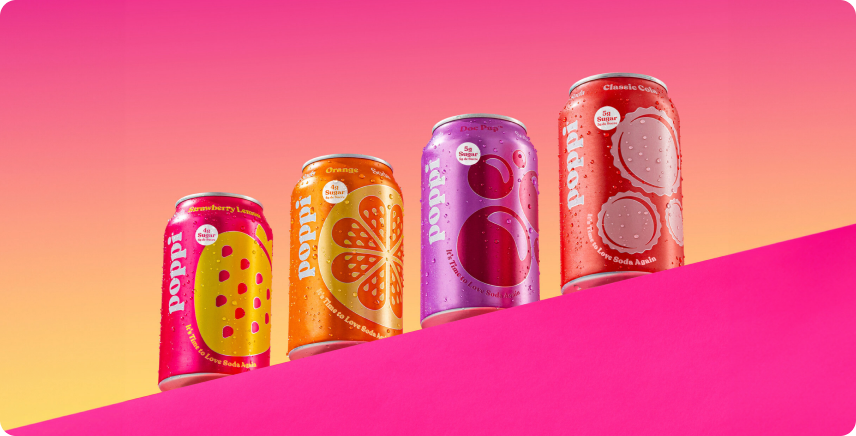
Most beverage brands think about culture the way they think about advertising: as something you buy your way into. Poppi asked a different question. Instead of 'where can we advertise,' the brand asked 'where is our audience already looking,' and built its media plan around the answer. Specifically, the corners of culture where its target consumer already lived. Health-conscious, social-first, young women who spend time on TikTok, watch reality TV and follow influencers who feel like friends.
The early influencer strategy reflected that. Poppi seeded product to creators at every level (nano, micro, macro) with a deliberately light-touch approach. No scripts, no required posts; just: here's the soda, we think you'll like it. This authenticity-first seeding generated the kind of organic content that paid posts can't replicate, because audiences could feel the difference.
The brand also moved early on TikTok (before it became crowded with brand content) and built a community around transparency and personality rather than product features. "Our brand values transparency and keeping it real, which aligns with TikTok's vibe," Allison told Tribeza.
Forrester's analysis of Poppi's media strategy points to something less obvious: the brand doesn't use performance channels purely to chase conversions. It uses them to build recognition across the entire funnel, the same job traditionally reserved for mass media. That's why Poppi runs ads on Bravo alongside Thursday Night Football; its data shows reality TV audiences overlap more with soda drinkers than sports audiences do. The same logic applies to its bet on women's college and professional basketball over the men's game. Every media dollar follows what the audience data says, not what category convention expects.
The result is a brand that makes itself feel familiar before the purchase decision, so that when someone sees Poppi in a friend's fridge, in the background of a creator's Instagram story, or in the Love Island villa, it already feels like something they know (and have access to).
The Partnerships That Turned Familiarity Into Fandom
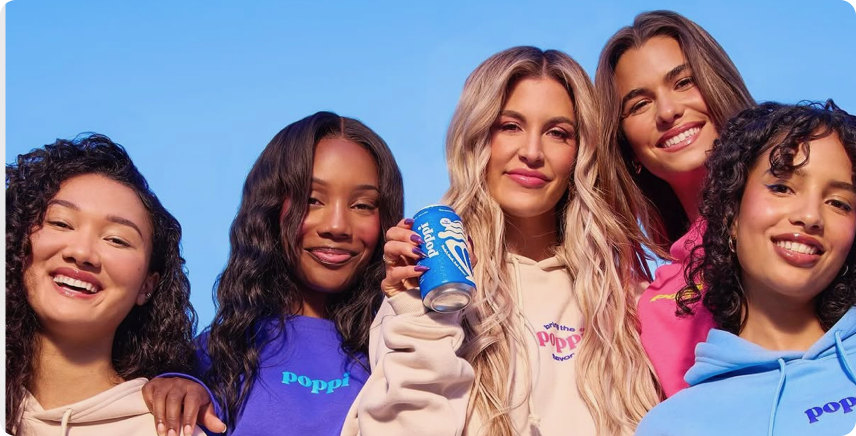
If the early TikTok strategy built awareness, the partnership strategy built something harder to manufacture: genuine cultural presence.
Poppi's approach to partnerships follows a consistent logic: find the person, property or moment that already has an authentic connection to the idea of a better soda, and make that story visible.
Post Malone is a great example. Post had spent years as a self-described soda obsessive until the habit started catching up with him. After publicly overhauling his health and cutting out traditional soda, he discovered Poppi and kept coming back to it. When the partnership and investment was announced in September 2024, the story told itself. To commemorate it, Poppi released a custom can of Wild Berry (Post's favorite flavor) labeled "Posty's Soda," sold exclusively at Kroger. "The partnership was so authentic for both Poppi and Post," Allison said in a press release, noting that Post's own transformation made him a natural messenger for exactly the kind of story Poppi wanted to tell.
That authenticity-first filter runs through every partnership. Alix Earle is a good example of how this works in practice. She wasn't initially hired for a polished campaign, but simply showing Poppi in her GRWM videos, the way she would any product she used, and the brand's presence felt earned rather than placed. She's now an investor and appeared in the 2025 Super Bowl commercial. Love Island USA fan favorite and winner, Amaya Espinal got her own flavor (Amaya's Island Colada), a nod to the catchphrases and personality that made her the breakout star of her season. The brand doesn't manufacture the connection and then market it; it finds the connection first and lets it speak.
That same instinct led to what is arguably Poppi's most ambitious cultural bet yet: a full transatlantic partnership with Love Island. Poppi became the first-ever beverage brand to have its logo visible inside the villa — Love Island had never permitted a beverage partnership before. The 2026 deal spanned both the US and UK series, with in-show integrations, dedicated flavor launches, nationwide watch parties, a finale experience in London and a retail sweepstakes offering fans a trip to Fiji. "We're always looking for ways to turn product innovation into participation," Sophia Sesto, Poppi's VP of Culture, told Brand Innovators. Being inside that ecosystem (not adjacent to it) is exactly what Poppi's cultural strategy is built to achieve.
Poppi's most recent culture push follows the same logic. Netflix's America's Sweethearts turned the Dallas Cowboys Cheerleaders into some of the most talked-about women in sports, and Poppi just signed on as an official sponsor of the DCC, with pouring rights inside the stadium and a multi-year deal behind it. The pairing carries extra weight given Poppi's own roots: a brand that started in a Dallas kitchen is now tied to one of the city's most recognizable institutions.
When Visibility Turns Into Vulnerability
In February 2024, Poppi ran its second Super Bowl commercial — a high-energy spot called "Soda Thoughts" featuring Alix Earle, Jake Shane and Rob Rausch. It was the culmination of a brand journey that had gone from TikTok kitchen videos to the biggest advertising stage in the country in under five years.
The ad itself landed well. What preceded it did not.
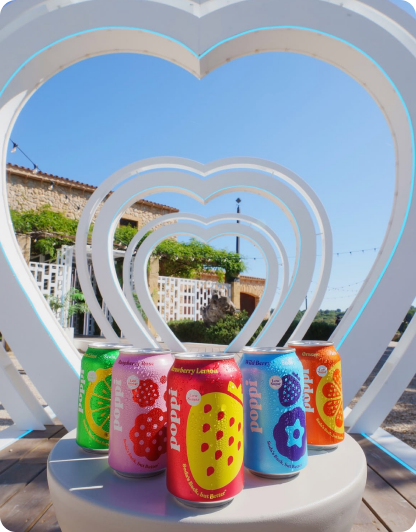
As part of the campaign buildup, Poppi sent full-size branded vending machines to 32 influencers (including many of the same creators who appeared in the ad). The machines were hot pink, fully stocked and installed directly in influencers' homes. The videos generated over 35 million organic views. They also generated something Poppi hadn't planned for: genuine consumer backlash.
The criticism came fast. People called it "out of touch." They questioned why a health brand was sending expensive equipment to wealthy influencers rather than placing machines in schools, hospitals or community spaces. Rival brand Olipop poured fuel on the fire, posting publicly that the machines cost $25,000 each (a figure Poppi disputed) while simultaneously sending Super Bowl-themed gifts to its own community.
Allison responded via TikTok, which generated its own round of pushback. Poppi ultimately apologized and committed to getting the machines into community spaces — which they followed through on, eventually placing them in sorority houses, schools and other community locations.
What the episode revealed is a real tension inside Poppi's strategy. The same influencer-heavy, high-visibility approach that built the brand into a cultural phenomenon can also make it vulnerable when the scale tips from "fun" to "excessive" in the audience's perception. The line between those two things shifts constantly, and in February 2025, amid real economic anxiety and growing consumer skepticism about influencer culture, Poppi landed on the wrong side of it.
The brand recovered, the Super Bowl ad ran and the partnership calendar continued. PepsiCo acquired the company a month later for $1.95 billion. But the vending machine episode is a PR stumble worth sitting with because it's a signal about where influencer marketing is heading, and what brands need to think harder about as the strategy matures.
Poppi didn't pull back from big cultural bets after that. It returned to the Super Bowl for a third straight year in February 2026 with a spot starring Charli XCX and Rachel Sennott, who transform a dull college lecture hall into an over-the-top party the moment a student cracks open a can. The brand called it a "shared language" that anyone can be a part of, another bet on cultural conversation. If the vending machines showed the risk of the strategy, the 2026 ad showed Poppi still believes the reward is worth chasing.
Betting on Campuses, Not Just the Big Stage
Poppi's partnerships aren't limited to Super Bowl-sized talent. For the past two years, the brand has run pop-up tours directly on college campuses, pairing free product with the same creators and reality TV stars driving its broader cultural strategy. In fall 2025, the four-stop Major Flavor Tour brought Love Island USA's Amaya Espinal to Penn State, JaNa Craig to Spelman, and creators Jake Shane and Connor Wood to the University of Arkansas and Indiana University. In 2026, the tour scaled up to 25 university stops.
Underneath the tour sits a paid student ambassador program that has scaled fast. According to Glossy, ambassador applications climbed from under 300 in the program's first year to over 11,000 this past fall, and Poppi now pays 250 student ambassadors for semester-long campus partnerships, alongside official ties with 20 sorority chapters.
The bet makes sense given where Gen Z actually stands on drinking. Gallup's most recent data found that only half of 18-to-34-year-olds say they drink alcohol at all, down from 72% in the early 2000s. For a generation drinking less, Poppi shows up as the easy, no-explanation-needed option in hand.
What Full-Funnel Means When You Do It Right
Zoom out from any single campaign or campus stop, and what Poppi's media strategy reveals about modern brand building is worth paying close attention to.
Most challenger brands in the beverage space pick a lane: either pure DTC social or traditional media, but rarely both with any sophistication. Poppi's approach treats the two as complementary rather than competing. As Forrester documented, Poppi went from its first linear TV campaign to a Super Bowl ad in just eight weeks without abandoning its social-first roots, instead layering mass reach on top of the community it had already built.
The logic is elegant: the nano-influencer seeding makes Poppi feel discovered; the Super Bowl ad makes it feel legitimate; the Love Island partnership makes it feel cultural; and collaborations with artists and creators like Post Malone, Alix Earle, Charli XCX, and Jake Shane make it feel like a personal choice. Each layer does a different job, for a different audience, at a different stage of the funnel, and they reinforce each other rather than compete.
The media mix decisions are driven by actual audience data, not assumptions. Poppi discovered that reality TV viewership correlates more strongly with purchase intent than sports viewership, so it reallocates accordingly. It found that women's basketball audiences over-index on site traffic, so it invests there over men's basketball. These aren't gut calls, but what happens when a brand stays curious about who its customer is and where they actually spend their time.
What Poppi's Story Signals About The Industry
Pull back from the specifics and Poppi's rise points to a few things worth paying attention to.
Culture Is Now A Legitimate Distribution Channel
Poppi didn't build awareness and then convert it. It built community first, on TikTok, through creators, through Love Island, and used that community as the foundation for everything else. The line between "where people spend their time" and "where brands should show up" has collapsed. The brands figuring this out early are building advantages that are hard to replicate.
Authenticity At Scale Is The Hardest Problem In Marketing
Some of Poppi's best moments (the Post Malone partnership, both Super Bowl commercials, the Love Island villa integration) all work because the connection is real before the campaign is built. The vending machine moment failed (in part) because the execution drew attention to the transaction rather than the story. As brands grow and stakes get higher, maintaining that authenticity-first instinct gets harder. The brands that manage it are the ones that stay disciplined about the filter.
The Customer Is Becoming The Influencer
The vending machine backlash wasn't just about the machine, but was a symptom of a broader shift: consumers are increasingly skeptical of brands that lavish experiences on already-wealthy creators while their actual customers watch from a distance. The brands winning right now are finding ways to make their real customers the story, not just the target.
The Honest Takeaway
Poppi sold to PepsiCo for $1.95 billion in March 2025. Allison described it as "like sending our child to college" — involved enough to guide it, but trusting the infrastructure to take it further. The formula stays the same and the distribution certainly will.
What's interesting about the acquisition is what it says about the value of what Poppi built. PepsiCo didn't pay nearly $2 billion for a prebiotic soda formula, but for a brand that figured out how to make a commodity feel like a cultural object; one that built fandom in a category that never had it, among an audience that never cared about soda as a brand.
That's what Allison understood from the moment she sat down and told her story on TikTok and drove $100,000 in sales overnight. People don't fall in love with products, they fall in love with stories, communities and the feeling of being part of something. Poppi built all three, and then found a way to put them on the biggest stages in the world. You can't manufacture cultural relevance. You have to keep earning it, campaign after campaign, partnership after partnership. Most soda brands spend a century building that kind of cultural resonance, Poppi did it in five years.