
Building your project scope


How Major Cultural Events Shape Brand Growth and Visibility
10 minute read
We’re breaking down how major cultural events create brand visibility, what separates successful tentpole campaigns from reactive ones and how to prepare with the right partners in place.
What Are the Major Cultural and Tentpole Events That Impact Brand Marketing Strategy?
Understanding which moments align with your brand's goals (and getting in front of them early) is what separates a well-timed campaign from a reactive post.
Global Sporting Events
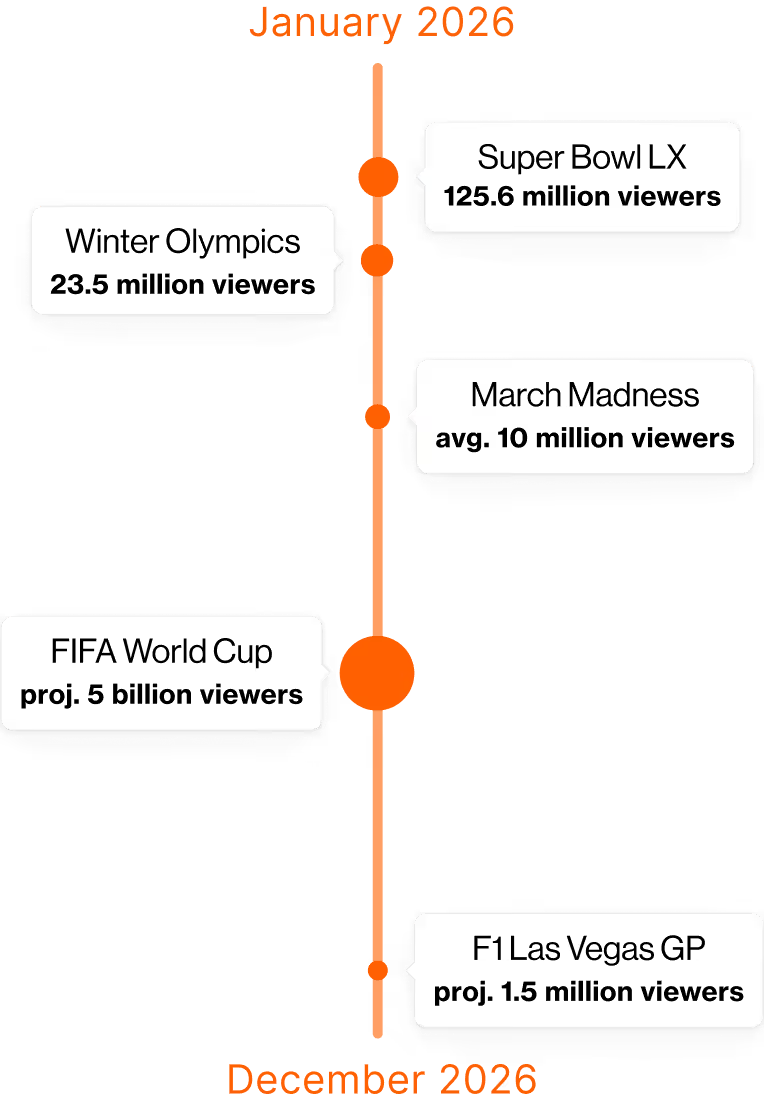
The FIFA World Cup 2026 is the most significant global sporting opportunity in the near term and for U.S. marketers, it's a rare one. FIFA projects over 5 billion total viewers globally, making it the largest single sporting event on the planet. Brands activating during the pre-tournament buildup have a significant lead time advantage over those waiting for the opening match.
The Milan Cortina Winter Olympics averaged 23.5 million viewers (the most-watched Winter Games since 2014) with the LA 2028 Summer Games already on the horizon.
Fashion Week
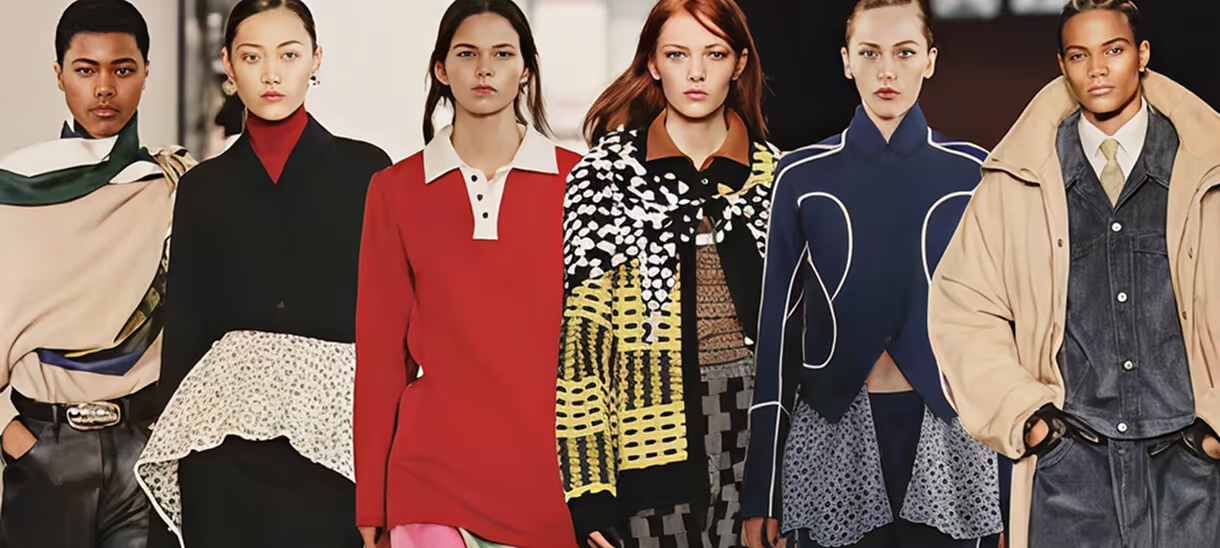
For brands, the marketing value of fashion week has shifted dramatically in the social media era. The majority of Fashion Week's MIV comes from social media rather than traditional press (and the gap keeps widening).
A single well-placed front-row moment or influencer post can generate returns that rival a traditional media buy, making participation less about runway access and more about where your brand shows up in the cultural conversation.
Film Festivals
Cannes splits into 2 distinct moments: the Cannes Film Festival in May (which draws global press and cultural influence) and Cannes Lions in June, the advertising industry's most prominent gathering. For marketers, the two events offer different but complementary opportunities: cultural visibility and industry influence.
For brands, film festivals reward intentionality over scale. A well-placed hospitality activation, screening partnership or talent alignment can generate outsized earned media and lasting credibility with an audience that's already paying close attention.
Major Awards Shows
For brands, the value of awards shows has less to do with linear viewership and more to do with the cultural conversation they generate. Red carpet moments, unexpected wins and real-time reactions give brands natural entry points into conversation, whether through sponsorships, gifting programs or reactive social strategies.
The common thread: awards show audiences are live-tweeting, debating, sharing and creating content in real time, and the brands that show up authentically become part of a conversation they didn't have to start.
Music Festivals
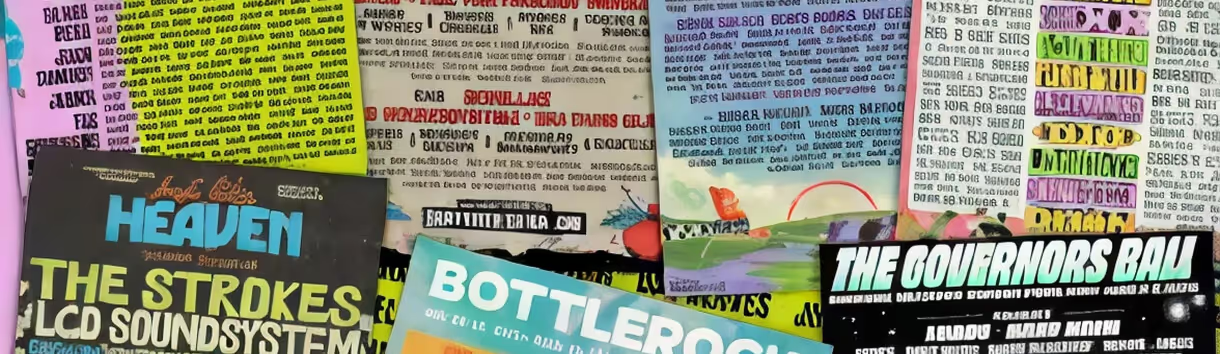
That dynamic is becoming the blueprint for music festivals beyond Coachella. Austin City Limits, Lollapalooza, Governors Ball, and other major festivals now attract similar brand activation strategies, with creator partnerships, experiential pop-ups and real-time social amplification replacing traditional sponsorship logos as the primary currency.
The insight for marketers: at music festivals, your activation is your ad. If it's not worth experiencing and sharing, it's not doing its job.
Event-Driven Visibility vs. Always-On Marketing: What's the Difference?
What Makes an Event Marketing Strategy Successful?
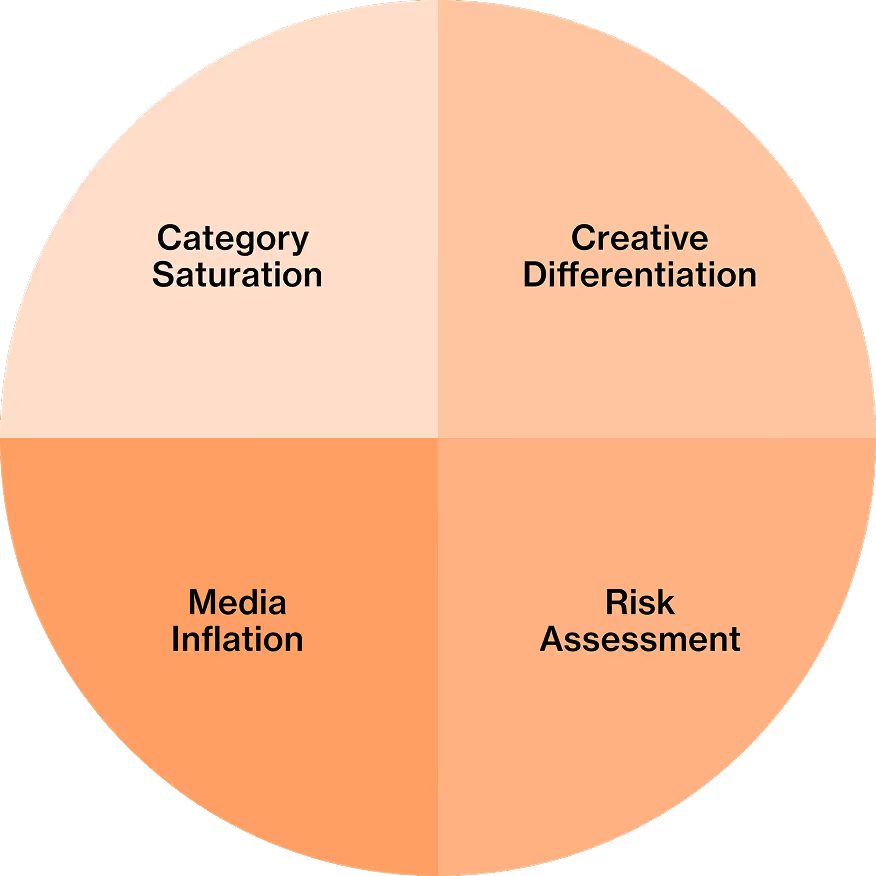
How Brands Should Evaluate Fit Before Committing Budget
Category saturation: If your competitors are already deeply embedded in an event, standing out requires either significantly more investment or a genuinely differentiated angle.
Creative differentiation: Can you bring something to this moment that no one else can? Generic event activations blend into the background.
Media inflation: Advertising inventory around major events costs significantly more than it does the rest of the year. That premium needs to be weighed against projected returns, and the math doesn't always favor participation.
Risk assessment: Live events are unpredictable. Outcomes shift, cultural conversations change in real time, and brand adjacency to the wrong moment can generate headlines no one wanted.
Why Relevance Matters More Than Reach
A beauty brand at Coachella has a natural fit in the conversation. A B2B software company buying an Oscars spot needs a much stronger strategic rationale to justify the spend. Before committing to any event activation, the question is: is this our audience, and does our presence here make sense to them?
Why Brands Should Think in Campaigns, Not Moments
Think of it as 3 stages: anticipation, activation, follow-through. Most brands invest heavily in the middle and underinvest in the other two (which is exactly where the opportunity is).
How Major Events Change Media Costs and Competitive Dynamics
Why Advertising Inventory Becomes More Expensive and Competitive
The Super Bowl is the most extreme version of this dynamic, but the same pressure applies at a smaller scale across awards shows, fashion weeks and major sporting events. Planning early is the difference between securing the placement you want at a rate that pencils out and scrambling for what's left.
When to Compete Directly vs. Activate Adjacent to the Event
Activating adjacent opens up a wider range of options. Regional buys around event markets, digital-first campaigns timed to the cultural moment, creator partnerships that tap into event conversation organically and social strategies built around real-time engagement can all generate significant returns at a fraction of broadcast costs.
How Social Media Amplifies Event Marketing Impact
Why Real-Time Engagement Increases Visibility
The cultural conversation moves faster than any media buy, and brands that are already in it (with content ready, creators briefed and social teams live) capture reach that money alone can't buy.
How Brands Can Prepare for Reactive Moments Without Being Opportunistic
A response that takes 4 hours to clear legal isn't a reactive moment anymore.
How to Prepare for Upcoming Events
Develop a
Strategy
Identify
Channels
Evaluate
Resources
Create
Deliverables
Orchestrate
the Strategy
Measure
the Impact
Develop a Strategy
Identify Channels
Evaluate Resources
Create the Deliverables
Orchestrate the Strategy
Measure the Impact
How to Measure the ROI of Tentpole Cultural Event Marketing Campaigns
Metrics That Matter Beyond Impressions
Brand lift measures the change in awareness, favorability or purchase intent among people exposed to your campaign vs. those who weren't. It's one of the clearest ways to quantify whether a tentpole activation moved the needle on perception, not just reach.
Share of voice tracks how much of the total conversation in your category your brand owned during the event window. In a crowded media environment, capturing a disproportionate share of relevant conversation is a meaningful competitive signal.
Earned media value puts a dollar figure on the organic coverage, social posts and creator content your activation generated without paid placement. For tentpole events especially, EMV can be significant. The scale of the cultural moment amplifies everything attached to it, meaning a well-designed activation can generate returns that far outpace its production cost.
How to Connect Short-Term Spikes to Long-Term Brand Growth
From there, retargeting pools, post-event email sequences and repurposed content (behind-the-scenes footage, creator content, event photography) can feed organic channels and paid campaigns long after the event has passed — turning a cultural spike into lasting brand momentum.
When Should a Brand Hire a Digital Marketing Agency for Major Events?
When Media Planning and Buying Become High-Stakes
When Cross-Channel Execution Needs to Happen in Real Time
Agencies built for this kind of work have the infrastructure, the workflows and the bench depth to manage it while internal teams stretched across multiple priorities often don't.
When Internal Teams Lack Event-Scale Production Resources
When Brand Risk Requires Experienced Oversight
Experienced agency partners bring judgment, escalation protocols and the ability to make fast decisions that protect the brand when things shift unexpectedly.
When Data and Attribution Need Advanced Modeling
Agencies with advanced attribution capabilities can design the measurement framework, implement the tracking and deliver the post-campaign analysis that makes the ROI case clear.
Upcoming Calendar Events
May
- The Met Gala [5/4]
- Cannes Film Festival [5/12-5/23]
June
- Governor’s Ball [6/5-6/7]
- FIFA World Cup [6/11-7/19]
- Cannes Lions International Festival of Creativity [6/22-6/26]
- Tribeca International Film Festival [6/3-6/14]
July
- FIFA World Cup [6/11-7/19]
- Lollapalooza [7/30-8/2]
August
- Lollapalooza [7/30-8/2]
- Copenhagen Fashion Week [8/3-8/7]
September
- New York Fashion Week [9/9-9/13]
- Toronto International Film Festival [9/10-9/20]
- The Emmy’s [9/14]
- Paris Fashion Week [9/28-10/6]
October
- Austin City Limits [10/2-10/4 and 10/9-10/11]
- London Film Festival [10/07-10/18]
- Chicago Marathon [10/11]
- Frieze London [10/14-10/18]
- New York City Wine & Food Festival [10/14-10/18]
November
- New York City Marathon [11/1]
- Formula 1 Las Vegas Grand Prix [11/19-11/21]
- Macy’s Thanksgiving Day Parade [11/26]
December
- SCOPE Art Show [12/1-12/6]
- Art Basel Miami Beach [12/4-12/6]
- Formula 1 Abu Dhabi Grand Prix [12/4-12/6]
What These Cultural Moments Mean When Choosing a Digital Marketing Agency

Breef connects brands with vetted, curated agencies built for this kind of work, matching you to partners aligned to your goals, your budget and the moments you're planning around.
Whether you're gearing up for Cannes Lions, building a strategy around awards season or looking for a creative partner before the World Cup, the time to find them is now.
Start your agency search on Breef.🤝


