Building your project scope
Nobody Was Celebrating Healthcare Workers.
FIGS Made it Their Brand.

There are 18 million healthcare workers in the United States. For most of the history of the medical apparel industry, not a single major brand existed solely to serve them.
The scrubs they wore hadn’t meaningfully changed since the 1950s. Boxy, uncomfortable, made from basic cotton, and sold through distributors to mom-and-pop medical supply stores.
The brands on the labels — Dickies, Cherokee, Grey’s Anatomy (yes, licensed from ABC) were manufacturers moving product, not companies with any particular feeling about the people wearing it.
Heather Hasson, Co-Founder of FIGS, saw this while sitting across from a nurse practitioner friend who’d just come off a 16-hour shift. The scrubs were, as Trina Spear (Co-Founder of FIGS) described to Shopify, essentially a “poorly fitting burlap sack with her size displayed in bright orange for all to see.” Hasson’s thought: there were multi-billion-dollar companies focused on giving athletes every possible performance advantage; what about the people saving lives?
The answer became FIGS, which is (twelve years later) approaching $700 million in annual revenue, a NYSE listing, nearly 2.8 million active customers and a brand so culturally embedded in the healthcare community that when they opened their third Community Hub store in New York City last November, lines went around the block. Two-and-a-half-hour waits for scrubs.
If there's a healthcare worker in your life, you can almost guarantee they've heard of FIGS if they don't already own some. That kind of word-of-mouth doesn't come from a media buy, but from twelve years of a brand doing exactly what it said it would do.
The 7am Shift Change That Started Everything
Before FIGS had a logo or a campaign, it had a ritual. Every morning at 7am and every evening at 7pm, Hasson and Spear were outside emergency rooms waiting for shift changes, talking to healthcare workers and writing down everything they heard.
Spear, a Harvard Business School graduate who had left Blackstone and cashed out her 401(k) to fund the first production run, was collecting cash on a sidewalk. It wasn't glamorous, but those hours outside hospitals gave them something no focus group ever could: real healthcare workers telling them exactly what was wrong with what they were wearing and what they needed.
That customer obsession became the operating system of the company. FIGS built its own fabric technology, went direct-to-consumer at a time when nobody in medical apparel was doing that, and priced its scrubs at a premium. Not luxury, but enough to signal that quality and craftsmanship were part of the proposition.
And it built every piece of marketing around a single conviction: healthcare workers deserve to be celebrated, not just outfitted. “Heather asked me what company, what brand, was focused on the people saving lives,” Spear told Shopify. “And I couldn’t think of one. She’s like, ‘There are none.’ And that just didn't seem right.”
That gap (obvious in retrospect, invisible to everyone before them) is where FIGS was built. The entire apparel industry had walked past millions of healthcare workers for decades without stopping to ask what they actually needed.
The Brand Is The Mission, Not The Marketing
Most companies have a mission statement filed somewhere in a brand deck. FIGS has one that shows up in every campaign, product decision, and crisis: celebrate, empower and serve healthcare professionals; not the market, but the people wearing the scrubs.
FIGS CMO Bené Eaton, who came to the role from Nike, Ralph Lauren and Under Armour, has a more personal connection to the brand's mission than most CMOs could claim. Her husband is a physician — she's been alongside him from med school through residency and years of practice. "I've witnessed the dedication of healthcare workers," she wrote when she joined the company. That proximity shows up in everything the brand makes.
She put it plainly in a 2026 interview with Rachel Karten for Link in Bio: "Our founders, Heather and Trina, even from the beginning, asked themselves, 'What about the people who are saving lives? Who's telling their story?' That's really the intent of what we try to do in all facets of our branding and marketing."
The practical result is a brand where the product is almost secondary to the story. FIGS' social media isn't about scrubs, but a celebration of the people wearing them — their highs, their lows, the intensity of what they go through every day. As Eaton described it: "Social is where our brand breathes."
That framing is not incidental. When so many brands are optimizing social for reach and conversion, FIGS is using it as a listening post and a mirror, reflecting the healthcare community back to itself.
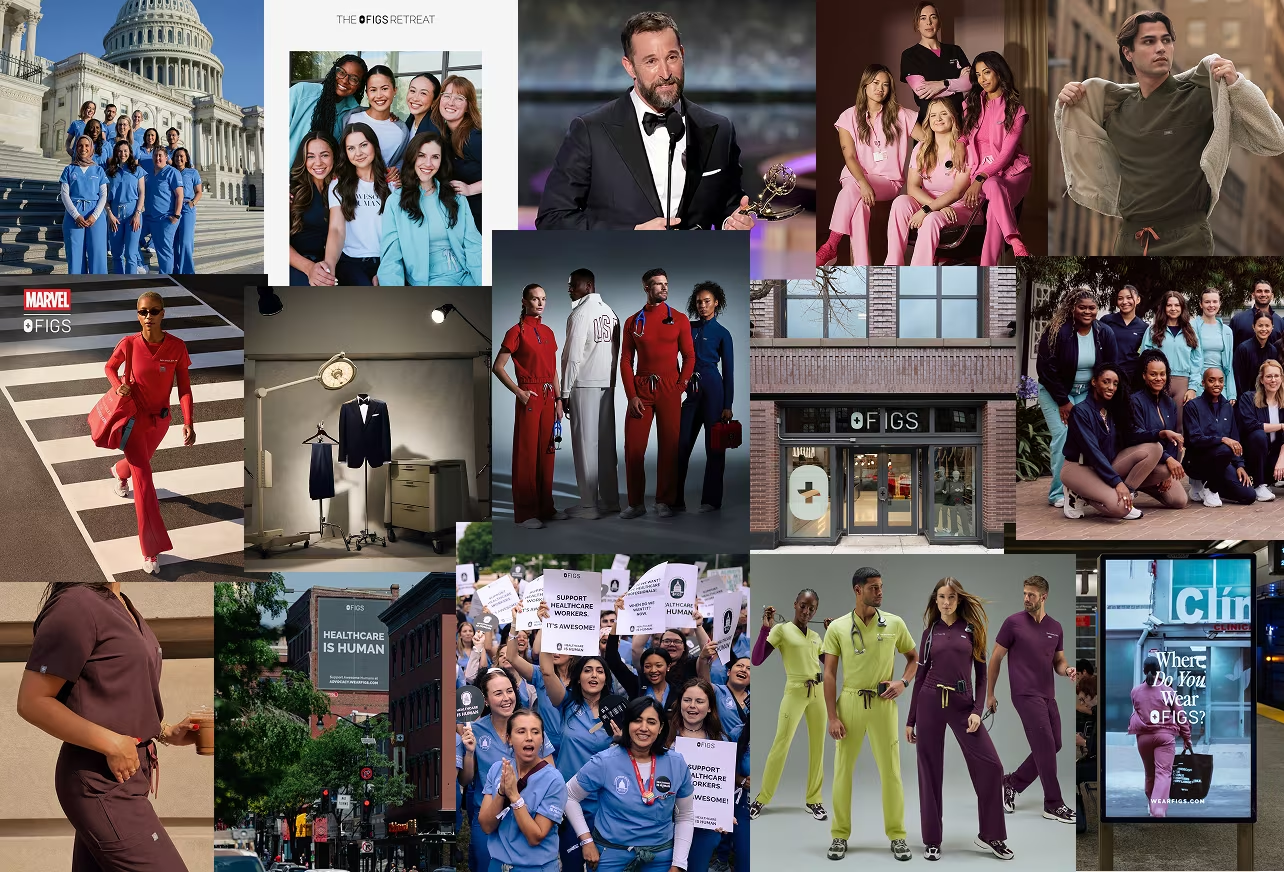
Nothing captures that dynamic better than what happened at the 77th Primetime Emmy Awards in September 2025. Noah Wyle (star of The Pitt, HBO's breakout medical drama) walked the red carpet in a custom midnight-blue tuxedo made by FIGS. It was the brand's first and only foray into formalwear, born from a challenge Wyle issued after a Capitol Hill trip he and FIGS took together to advocate for healthcare workers. "I looked into the camera and I made a challenge to FIGS," Wyle said on the red carpet. "'Hey FIGS, can you make me a tuxedo that's as comfortable as the scrubs I wear?'" Wyle won Outstanding Lead Actor that night and dedicated his speech to "anyone going on shift or coming off shift tonight."
"Tonight, Noah is proving that the healthcare community deserves a seat at every table, including television's biggest night," Spear said in a statement. What made it land was that Wyle used it to dedicate his win to healthcare workers on shift, turning Hollywood's biggest night into a tribute to the people FIGS has always been for.


What Happens When You Film Real Stories
The Women in Medicine campaign released for International Women’s Day on March 8, 2026, (landing 4 million Instagram views and 34,000 shares to date) is the clearest expression of how FIGS makes this work in practice. The timing was intentional: while most brands mark the day with a generic graphic and a hashtag, FIGS dropped a full film.
The film is set to Lenny Kravitz’s It Ain’t Over ’til It’s Over and captures the kind of small, specific details you can only get right if you actually talk to the people you're depicting — like a subtle eye roll and a line about epidurals that made the comment section erupt with recognition.
“Every single scene that we shot came from an actual story,” Eaton told Karten. “We sat with all of the women that we were going to feature and we were asking them about the types of scenarios they’ve been in.” That's what separates content that drives a single purchase from content that builds the kind of loyalty that keeps bringing people back.
None of this happens by accident. For FIGS, keeping creative in-house is what makes it possible — an in-house film director, art directors and copywriters whose deep familiarity with the community shows up in every frame. “Having an in-house film team means we’re not reinventing ourselves every campaign,” Eaton said. “We’re building on a deep understanding of our community. That continuity creates a consistency you can feel.”
The campaign metric Eaton tracks that doesn’t show up in any dashboard is worth noting. She calls it “break room buzz.” When her husband comes home from the hospital and tells her everyone was talking about the FIGS Women’s film, it’s gold. “That is when I know the work traveled. Peer to peer. Human to human. In the spaces that actually matter.”
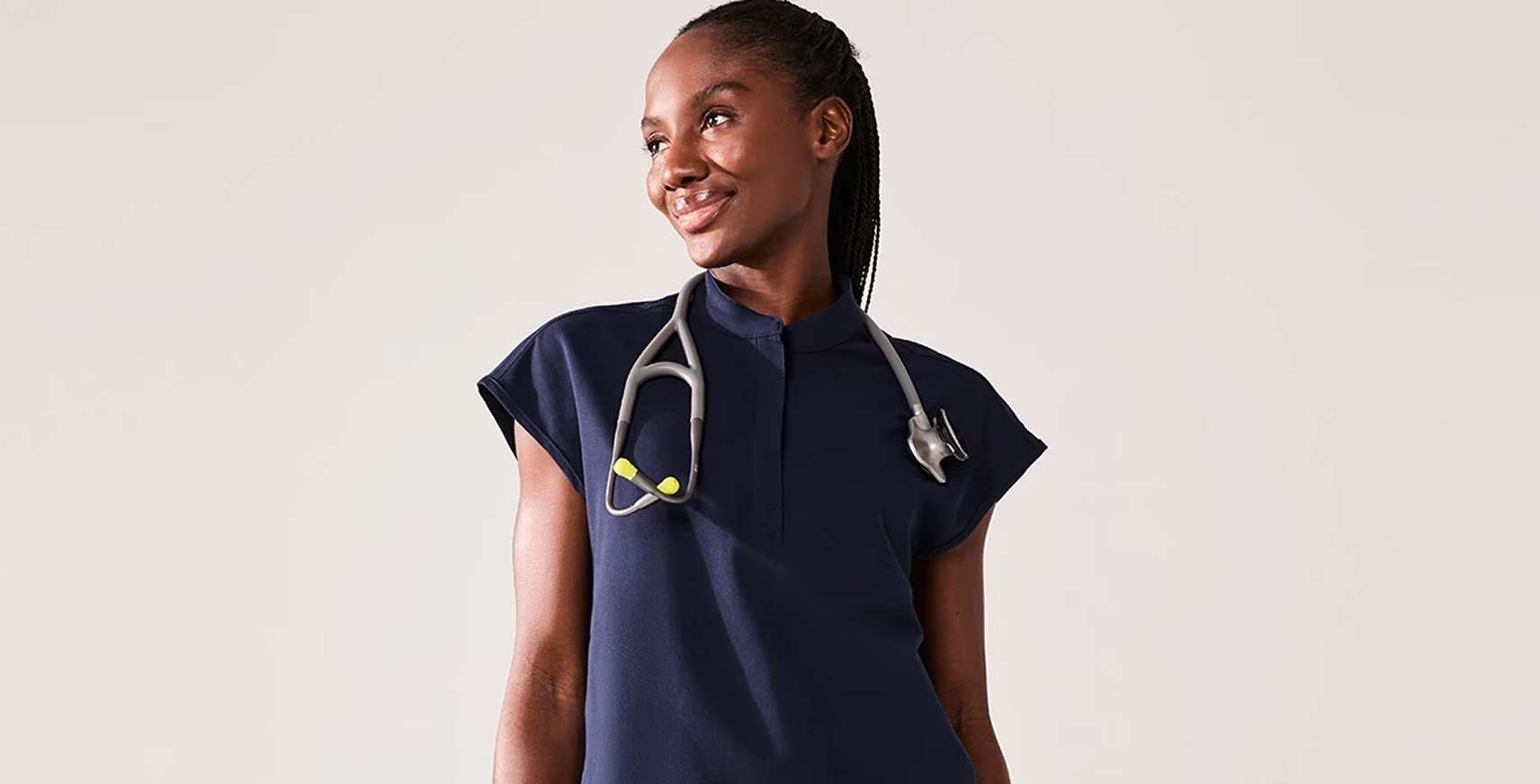
That instinct runs deeper than campaigns — FIGS regularly features real healthcare professionals as the faces of its marketing, the actual nurses, doctors and technicians its products are built for. When cardiac RN and natural hair advocate Farida Labaran couldn't find a scrub cap that worked for her curls, she co-designed the solution with FIGS. The Farida Scrub Cap, a satin-lined cap specifically designed for textured hair, launched in May 2026. "Farida's innovation is a powerful example of what happens when real experience drives meaningful change," Eaton said. It's a small product with a specific purpose, and exactly the kind of thing that only comes from a brand that treats its community as collaborators, not just customers.
How FIGS Used the Olympics to Celebrate the People Nobody Else Was Talking About
When FIGS announced its partnership with Team USA for the Milano Cortina 2026 Winter Games, the headline wasn’t just about an athlete, but about 150 healthcare professionals. FIGS became the first-ever brand to outfit the Team USA Medical Team at an Olympic and Paralympic Winter Games — a milestone that said everything about how the brand thinks about visibility. While every other sponsor was angling for athlete adjacency, FIGS put its name on the people behind the scenes. "Behind every athlete competing in the Winter Games is a dedicated medical team working tirelessly to keep them healthy and performing at their peak," said Jon Finnoff, Chief Medical Officer at the USOPC. FIGS was the first brand to make that visible on the world's biggest sporting stage.
Lindsey Vonn was part of that campaign; a natural fit, given that she'd come out of retirement after a partial knee replacement and FIGS could center its story on the medical team that made her return possible. The tagline: "It takes heart to build bodies that break records."
A week before the Games, Vonn tore her ACL, and she raced anyway. Then, during her first Olympic competition, she crashed and shattered her leg. Most brand partnerships built around athlete performance narratives would have gone quiet, but FIGS did the opposite.
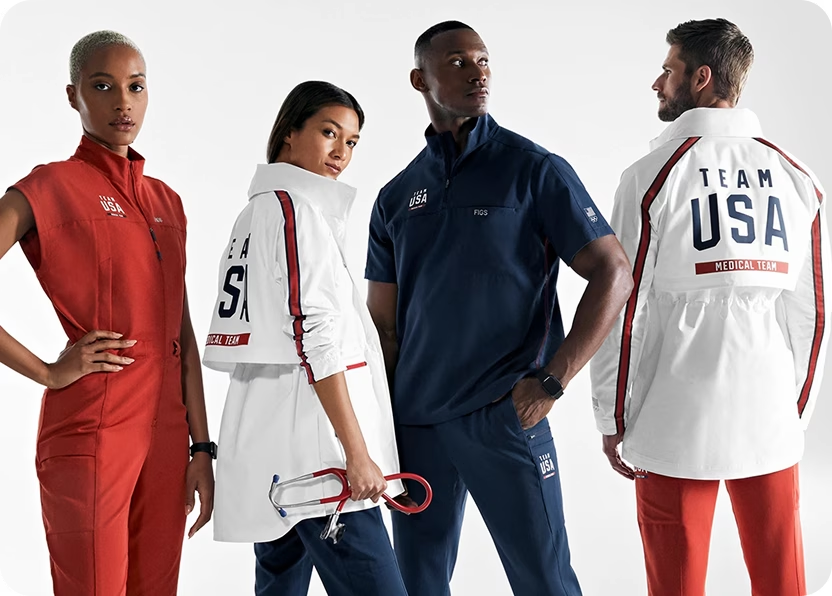
The team immediately posted support for Vonn and her medical team. On Valentine's Day, the brand dropped a carousel of healthcare professionals sharing messages of support, which Vonn reshared organically. They rewrote the campaign film, keeping much of the original footage but centering a new narrator: Vonn's own Team USA surgeon, Dr. Tom Hackett. New tagline: "It Takes Heart to Build Bodies That Break Records. And For the Record, We Did."
"High-profile sporting events like the Olympics always come with unpredictability," Eaton told Marketing Brew, "but our campaign wasn't dependent on podium outcomes."
That sentence is the key. Win or lose, the story was always about the medical team that made it possible to compete at all.
Stores Built For Community, Not Conversion
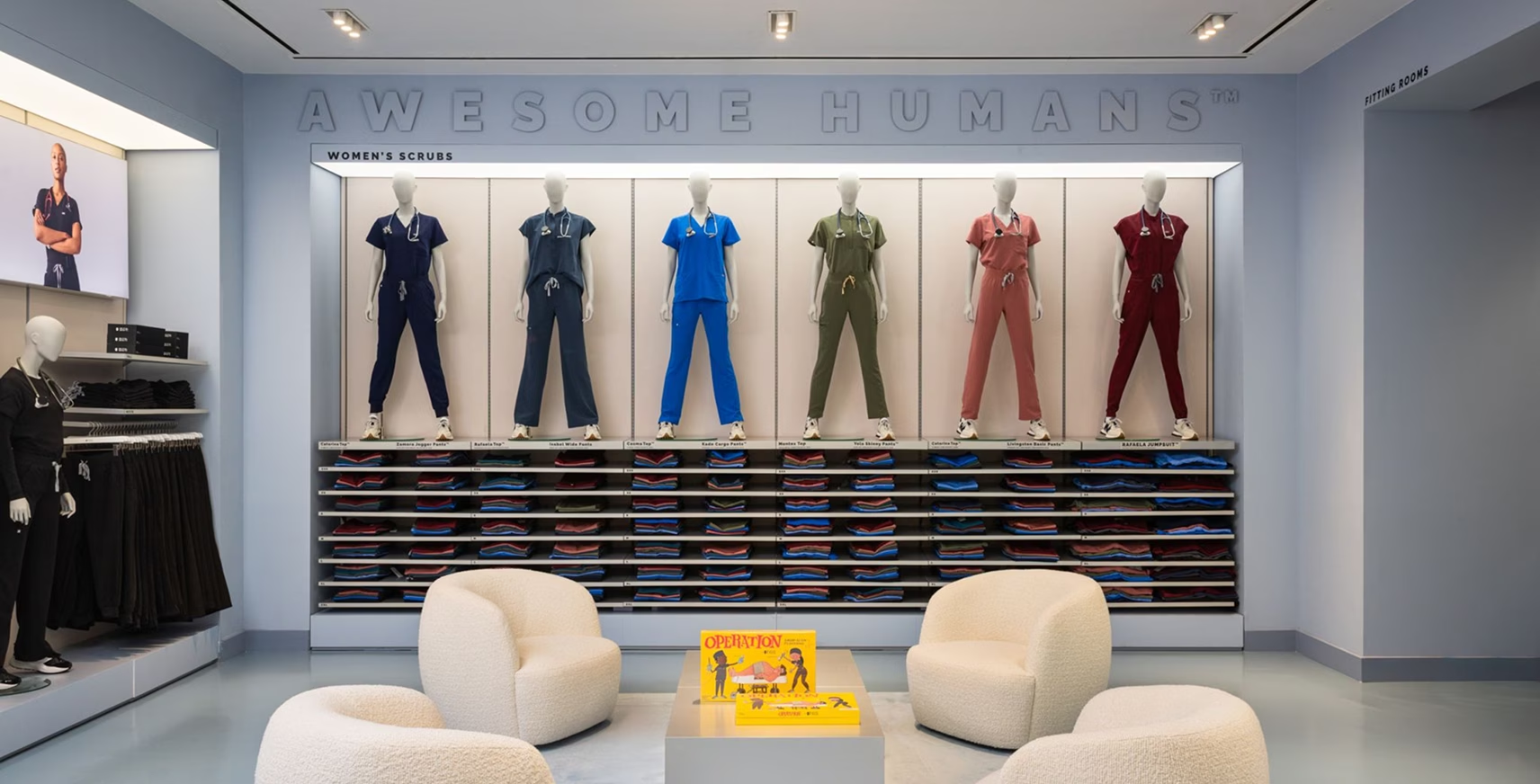
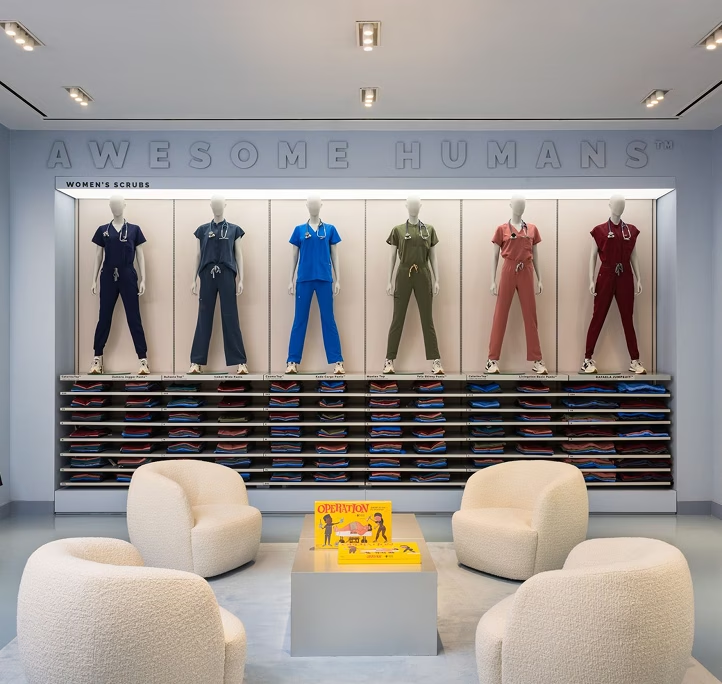
FIGS spent its first decade as an almost entirely digital business (more than $500 million in revenue in 2022), almost exclusively through its website. When it finally expanded into physical retail, it did so in a way that said everything about how the brand thinks. The stores are called Community Hubs (not retail stores or flagships) and placed deliberately near hospitals, medical universities and clinics.
The NYC location on the Upper East Side sits within walking distance of Memorial Sloan Kettering, New York-Presbyterian and Lenox Hill. The Philadelphia store opened during the 2024 Olympic Games as part of FIGS’ Team USA activation. The LA location was chosen in part because Century City Mall counts five healthcare clinics among its tenants. And the Houston location, which opened in December 2025 in Rice Village, sits just miles from the Texas Medical Center. "Houston is home to the Texas Medical Center, the largest medical complex in the world, and we are honored to bring a FIGS Community Hub to this city," Spear said at the opening.
The experience inside is more than just product display. There are Color Clinics and Customization Stations, embroidery workshops, and lounge areas; events and programming built around what matters to the healthcare community.
Over 40% of sales at the LA Hub came from customers who were new to the brand. For FIGS, that's the point — physical retail isn't just a space for existing fans, but how the brand finds new ones in the exact places those customers already spend their days. When the NYC Hub opened in November 2025, Spear told Modern Retail that lines went around the block. “We had hundreds of people. It was a two-and-a-half-hour wait.” Her take on retail ambitions: “If you build it, people will come.” And on scale: “At the end of the day, we also don’t need thousands of stores.”
That restraint — the same patience applied to product development, to campaign strategy, to community building runs through every decision FIGS makes. The brand has always been about intention, not volume.
Beyond the Brand: FIGS Goes to Washington (and Launches a Nonprofit)
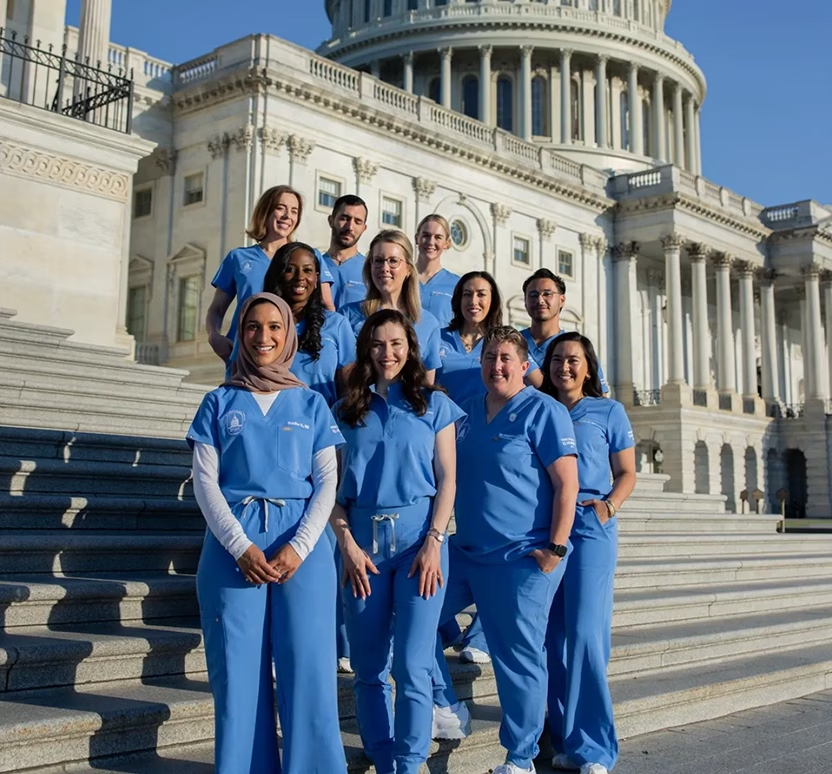
In June 2026, FIGS spent two days on Capitol Hill attending more than 20 meetings with legislators and policy staff, advocating on behalf of healthcare workers on issues including mental health support, fair pay, workplace safety and reduced administrative burdens. As Spear has said, "we believe if you serve the provider, they will be able to better serve the patient."
It's part of a broader infrastructure FIGS has been building around its mission that goes well beyond scrubs. In December 2025, the brand launched the Awesome Humans Foundation, its own nonprofit designed to provide direct financial support, training and resources to healthcare professionals and students, as reported by Fast Company. The Foundation has four pillars: Rapid Relief grants for healthcare workers facing financial hardship, Future Icons grants of $10,000 to help cover tuition costs, Ubuntu Grants for nonprofits supporting healthcare workers globally, and a Healthcare Is Human Award recognizing advocacy and leadership in the field.
In 2024 alone, FIGS donated $510,000 to healthcare nonprofits, gave away hundreds of thousands of scrubs and organized healthcare worker retreats.
The Foundation is designed to multiply that impact by opening fundraising to anyone who wants to contribute. "If you care like we care, we're going to be able to do big things together," Spear told Fast Company.
This is where FIGS separates itself most clearly from brands that talk about community. Most brands have a cause; FIGS is building the infrastructure to back it up.
What FIGS Signals About Brand Building Right Now
Zoom out from the specifics and FIGS' story offers a few lessons that translate well beyond medical apparel.
Specificity Compounds
FIGS didn’t build a brand for “people who care about wellness” or “professionals who value quality.” It built a brand for healthcare workers — one specific, enormous, underserved community and it has never wavered.
That combination (specific enough to resonate deeply, enormous enough to build a real business on) is rarer than it sounds. Most brands chase broad audiences and end up saying nothing to anyone; FIGS picked one community and learned everything about it. The campaigns work because they're made by people who understand what it feels like to be a healthcare worker.
In an AI world, Human Stories Are The Differentiator
FIGS has been making this bet for twelve years, but it’s landing differently now. From the eye roll in the Women in Medicine film, to the Vonn campaign pivot that centered her surgeon instead of her podium, to the break room buzz metric — every choice reflects an understanding that the most powerful marketing is the kind that makes people feel seen. That's harder to manufacture than ever, and only more valuable as time goes on.
The Brand Is The Community, Not The Other Way Around
Most brands build an audience and then try to convert it into a community. FIGS started with a community. People who were underserved and under-celebrated and built a brand to serve it.
The Community Hubs, the Ambassador program of 500 healthcare professionals who consult on campaigns, the break room buzz metric: these aren’t marketing tactics, but are the infrastructure for a relationship that was the point from the beginning.
The Honest Takeaway
FIGS went public at a valuation over $4 billion and has faced the volatility that comes with being a founder-led, mission-driven brand trading on public markets.
The stock has seen meaningful pressure since its 2021 IPO. The business, while approaching $700 million in revenue, is still building the scale to match its brand ambition.
But the underlying brand logic has never been stronger. The Women in Medicine campaign landing 4 million views without a dollar of paid media, the lines around the block at a store selling scrubs, the Olympic partnership that became more powerful the moment its athlete got hurt — none of it is accidental. It's what happens when a brand spends twelve years building something real, and the marketing is just the proof of work.
These are not the metrics of a brand that got lucky with a gap in the market, but the metrics of a company that had a vision for what they were building from the first parking lot shift change in 2013.
The scrubs were never really the point. The point was the millions of healthcare workers wearing them, and a brand that finally decided they deserved better.