The Art of the Rebrand

2025 has flown by — we can't believe that BFCM season is already here!
This week, we’re stepping outside of the chaos of the season, thinking deep on what a brand refresh really takes (we’ve had some recent experience of our own 👀), and looking back at some of the best and worst from this year. We’ve also rounded up our favorite recent campaigns, some of which we will definitely be bringing with us as inspo into the New Year. Let’s dive in!
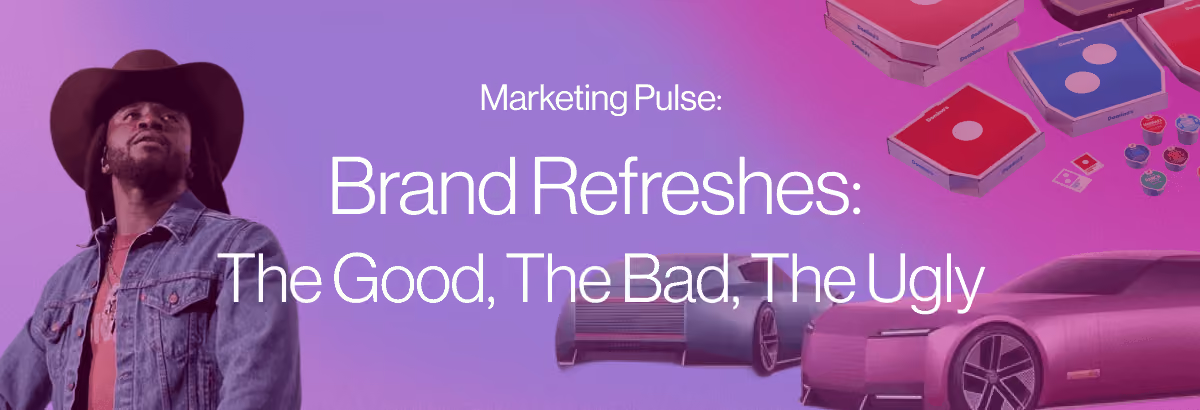
We’ve all seen it… a brand unveils a new logo, name or color palette and the internet loses its mind. Rebranding in 2025 (or 2026 👀) is more than a design update — it’s a leap of faith. Done right, it can reignite a brand’s purpose. Done poorly, it can spark confusion, bad press and a comment section full of “bring back the old logo” (*cough* Cracker Barrel).
So why risk it? Because when a rebrand works, it does more than look good — it reconnects a brand with what matters most: its audience, its story and its future.
Let’s look at who got it right (and who didn’t).
Introducing: Breef's New Brand Identity
Time to unveil our new look... 💙 Breef rebranded — and we couldn’t be more excited to share what we’ve been working on!
We spent 2025 crafting Breef's new brand identity. Now, we've finally launched it across our website, socials, newsletter and dozens of case studies.
The result? A more refined, modern brand that reflects who we are today — a tech-forward platform built to help brands and agencies collaborate with speed, ease and confidence.
At our core, we’re still the same Breef. But we've also grown into a version of ourselves that brings the best of humans and technology together — to change the way that brands and agencies partner. This next chapter is about cohesion for us, clarity for our community and commitment to our mission.
Finding the right agency and perfect client partner should be easy, enjoyable and lead to great work together. We hope you enjoy the new Breef!
Domino's + Grammarly / Superhuman
Don’t call it a comeback just yet, but topping our list of favorite recent rebrands is America’s #1 pizza chain: Domino’s. In early October, the brand rolled out its first major rebrand in over a decade, complete with brighter colors, updated typography, new packaging and its first-ever jingle, recorded by Shaboozey.
What we like about this move is that it doesn’t try to reinvent Domino’s into something it’s not. The new boxes, bolder palette and “Dommmino’s” jingle lean into what the brand already does well: fun and familiarity. It’s a refresh that feels like an upgrade to the experience, not a departure from it. Is it about the pizza, or the box? We’ll see.
Takeaway: When a brand already has strong equity, a rebrand doesn’t need to rewrite the story. It just needs to amplify what people already love and make the experience feel fresh.
Also entering 2026 with a fresh look is our modern-day English teacher: Grammarly. After acquiring Superhuman, an AI-enabled suite of email and productivity tools, Grammarly announced that it’s taking on Superhuman’s name, too.
Strategically, the shift makes sense. Grammarly is no longer just a writing tool. It’s positioning itself as an all-in-one productivity layer that quietly sits across email, docs and workflows. The Superhuman brand reflects that expanded ambition: less about helping people write better — now about helping people do everything better. From a brand architecture perspective, it’s a clear signal of where the company is headed, in a way that feels natural and exciting. We’re here for it!
Takeaway: When your product evolves beyond the story your brand can hold, a name change or acquisition is an avenue to reset and raise expectations — as long as the experience delivers on the promise.
Jaguar + HBO Max / Max / HBO Max / HBO Go / HBO Now
Most people remember Jaguar’s rebrand announcement, but probably not for the reasons they hoped.
In late 2024, Jaguar wiped its social feed and debuted a high-fashion film featuring models, with almost no cars in sight. The intention was probably right: signal a bold pivot into an all-electric, ultra-luxury future. The reaction was… not what they wanted. Longtime fans felt the brand had abandoned its heritage overnight, and critics called the shift confusing and disconnected from what made Jaguar, Jaguar in the first place. Sales have since dropped by nearly half compared to pre-rebrand levels, suggesting the disconnect wasn’t just aesthetic, but had real commercial impacts too.
Takeaway: Reinvention can’t erase the relationship you’ve built with your core audience. If your most loyal customers don’t recognize themselves in your “new era,” then what is the point?
Speaking of identity crises, we have to talk about HBO Max (we think that’s what it’s called now). Since 2010, the streaming service has cycled through five names: HBO Go, HBO Now, HBO Max, Max, and now, back to HBO Max again.
While HBO has justified every change, and has even had the sense to poke a little bit of fun at itself, the constant rebranding and renaming seems a little frivolous. The return to HBO Max is the right move strategically, but it also highlights how exhausting constant renaming can be for audiences who just want to know where to watch The White Lotus.
Takeaway: Strong brands don’t need constant reinvention to stay relevant. If you’re changing your name more often than your experience, the problem probably isn’t the logo — it’s the strategy.
The Lesson?
Branding should tell your story, not be the story. Making headlines is great, but some of the best rebrands move in silence and only impact those who matter most — customers.
The through line: brands that get it right treat rebrands as storytelling tools, not stunts. They know who they are, where they’re going and why their audience should care.
As you think about how your own brand will evolve in 2026, ask the harder questions first: What’s actually changing? Who is this for? And how will they feel it, not just see it? The design can follow.
And of course, when the time is right, work with the right creative partners to take your brand to the next level. 🚀
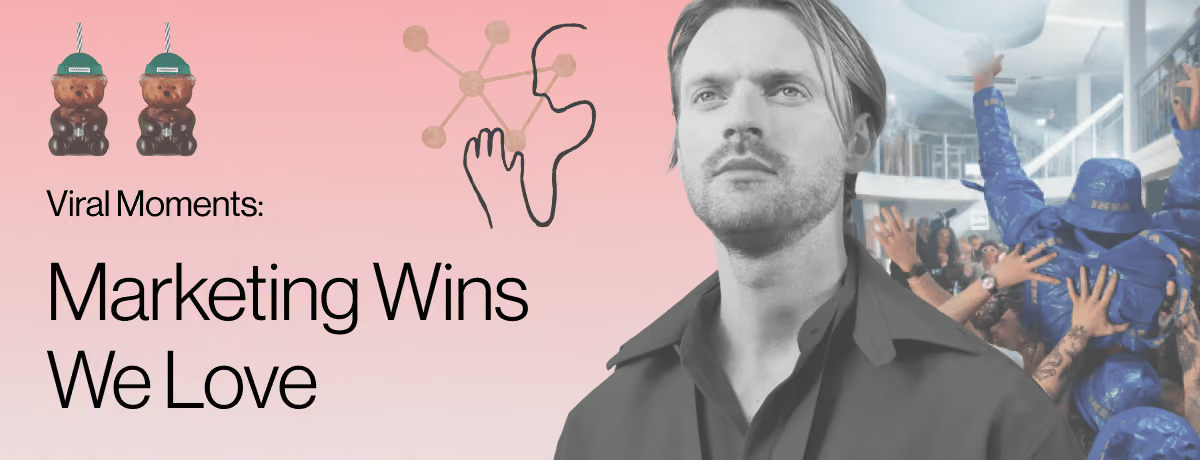
From brand collabs and social campaigns to Kim / Kourtney’s courtroom battle, here’s a few of the marketing moments that caught our eye over the past few weeks.
🐻 Starbucks | Bearista Cold Cup
Let's talk about the least controversial Starbucks headline of the week: the Bearista cup! Despite it not even being Thanksgiving yet, the coffee giant launched its most elusive holiday collection yet, starring a bear-shaped glass.
Only available in limited supply, the cups are already reselling for hundreds of dollars, and have influencers and consumers alike hunting for dupes.
🤖 Claude | “Keep Thinking”
Anthropic, the team behind AI assistant Claude, is soft-launching a brand personality that’s equal parts brainy and human, leaning into empathy, creativity and curiosity instead of cold futurism.
Its recent Keep Thinking campaign positions Claude as the thoughtful companion in the AI space, not just another tool. In a category crowded by tech talk, it’s refreshing to see emotion lead.
🧬 Lemme | Courtroom Drama Launch
For its newest supplement drop in 2025, Lemme paired founder Kourtney Kardashian with Kim Kardashian in a tongue-in-cheek courtroom spot where Kourtney is sued for gatekeeping the secret formula.
The campaign leans into real-world dynamics and celebrity DNA to make a wellness launch feel like pop culture theatre, proving that even product-driven brands can spark narrative engagement.
🪑 IKEA Malaysia | House Party Penang
To celebrate its Penang opening, IKEA turned localization into art with a full campaign and in-store event built around the local Hokkien dialect complete with clever wordplay and community-led activations.
The result was charming, culturally tuned and wildly shareable. A reminder that personalization isn’t just digital!
📺 Apple TV | Dropping the +
Apple just unveiled a sleek rebrand for its streaming platform — saying goodbye to the “+” and debuting a new audio-visual mnemonic created by Finneas. The update marks a more confident, simplified identity that unites Apple’s entertainment ecosystem under one umbrella.
By stripping back the name and soundtracking its refresh with a cultural heavyweight, Apple proves that sometimes the most powerful brand move is restraint. It’s a reminder that clarity and cohesion can be as impactful as total redesign.

🎧 Second Life: With Diarrha N'Diaye’s new role as EVP of Skims’ Beauty and Fragrance vertical recently announced, we’re revisiting her Second Life interview with Hillary Kerr (Who What Wear co-founder), where she shares her journey from social media marketing to founding Ami Colé.
🎧 The CMO Podcast: Hosted by the former CMO of Proctor and Gamble, this episode of The CMO Podcast dives into how you can measure brand impact + the ROI of storytelling.
📄 The Branding Journal: Explores how leading brands are redefining longevity by measuring the ROI of timelessness through consistency, storytelling and cultural relevance.
Final Thoughts
Even if a rebrand isn’t on your 2026 roadmap, there’s a lot to learn. Let core values and customers be your north star to ensure that brand evolution is intentional and functional, not just flashy. Every campaign, event and social post is a chance to connect with your audience + advocate for your unique brand and positioning, so take advantage and move with purpose. And if you get the chance to work with Shaboozey or Finneas, say yes
We know that your inbox will be crazy enough later this month, so we’ll be back in December. In the meantime, we’re wishing everyone a strong BFCM and can’t wait to hear about this year’s most successful campaigns!
That wraps this issue of the debreef. Keep an eye on your inbox for the next edition. In the meantime, browse more on our blog: The Breefing Room