The Best Super Bowl Ads Start Before Kickoff
Whether you tuned in for the game, the halftime show or the food, the Super Bowl is one of the few events that everyone watches.
While the commercials are the talk of the town for weeks before and after the big day, the most interesting marketing takeaway isn’t always what happens during those 30 seconds. It’s how brands show up before and after.
The smartest campaigns are built in phases: anticipation, activation and follow-through. While the Super Bowl puts that strategy on the biggest possible stage, it’s a playbook any brand can use, no matter the setting or budget.
Audiences don’t discover, engage and convert in a single moment. They warm up to ideas over time, encounter brands across channels and often need multiple touchpoints before taking action. Campaigns that provide different signals are far more likely to stick. This year’s Super Bowl week showed this in action — from brands rolling out teasers before game day to post-game offers and social extensions.
Before the moment, brands prime their audience. Whether it’s through teasers, early access or subtle social signals, signaling that something is coming creates familiarity and curiosity.
During the moment, attention peaks. Whether it’s a product launch, seasonal push or cultural event, this is when brands show up the loudest. The best executions give people something memorable to react to, share or talk about.
After the moment, momentum and impact either compound or disappear. Follow-up content, social extensions, behind-the-scenes peeks and community engagement can turn a short attention spike into something that lasts.
When stakes are high and attention is fragmented, sequencing matters, whether you’re running a national Super Bowl campaign or an Instagram targeted launch.
Takeaway: The most effective marketing isn’t built around single moments — it’s built around systems. Plan for anticipation, activation and follow-through to get more out of every campaign.
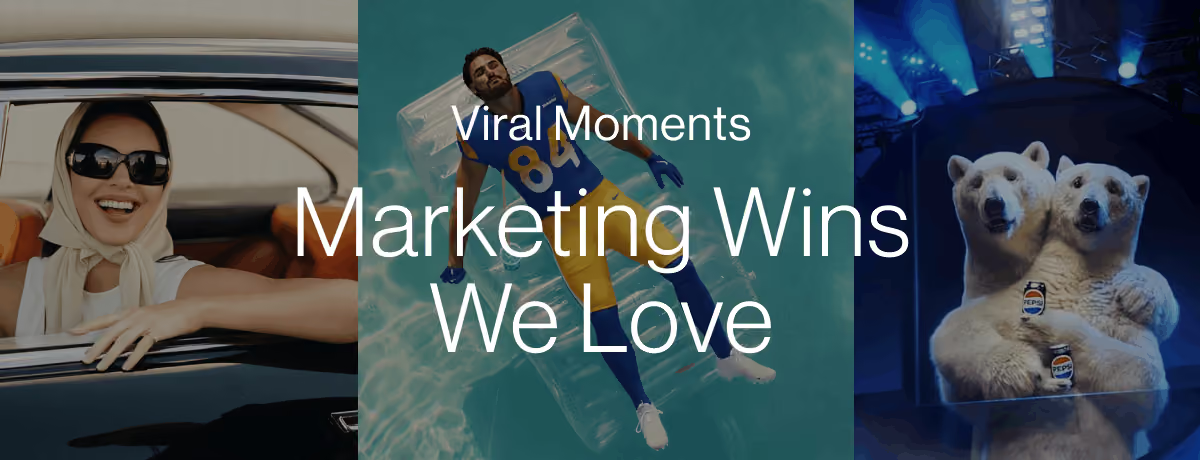
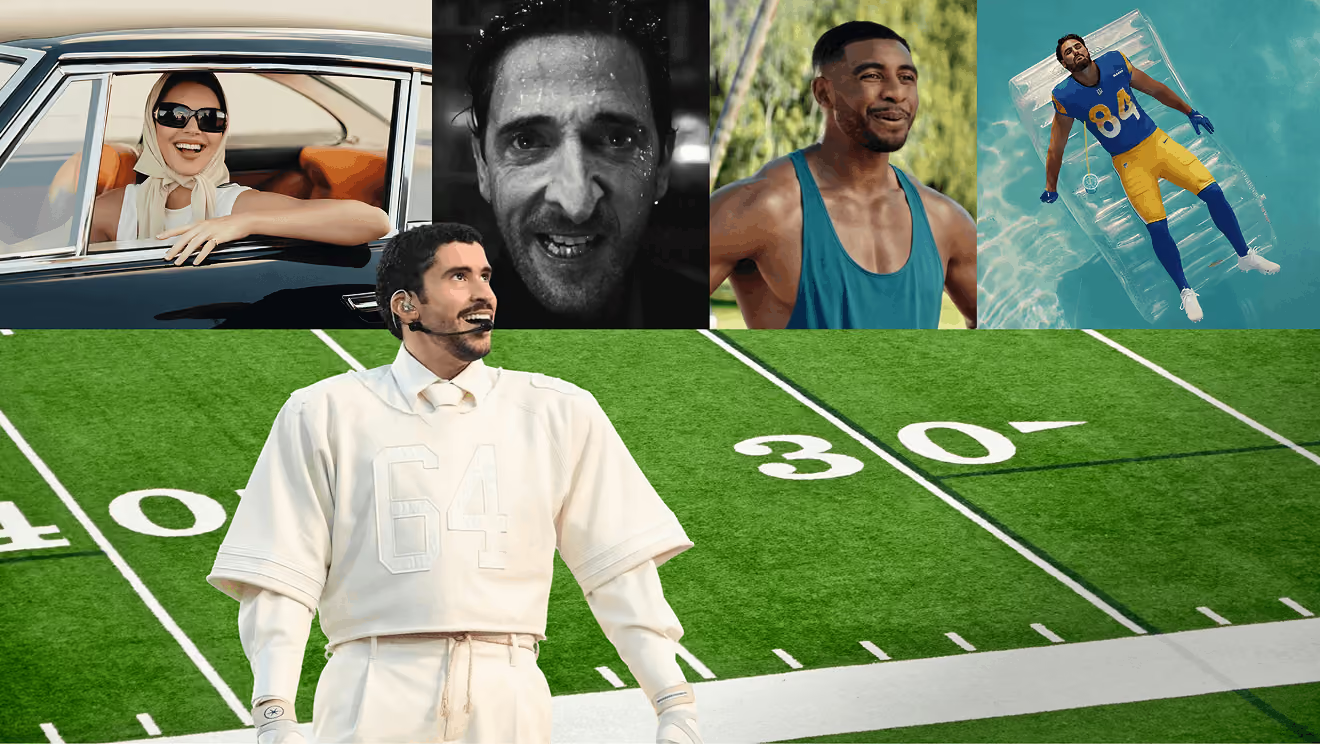
Pre- and post-game marketing is certainly important, but the ads themselves? Still worth watching. Here are the spots that stood out to us last night.
🤖 Claude | Keep Thinking
Claude used its first Super Bowl spot to draw a clear line against OpenAI, just weeks after the company announced ads are coming to ChatGPT. The ad shows what AI conversations could look like when jarring product ads interrupt personal advice. It's competitive differentiation rooted in values: Claude isn't just claiming to be different, they're showing what they're willing to sacrifice (ad revenue) to stay that way. The spot immediately sparked backlash from OpenAI CEO Sam Altman, who posted a lengthy defense of ChatGPT's ad strategy on X.
🎗️ Novartis | Relax Your Tight End
Novartis used football wordplay to reframe an often-avoided topic: prostate cancer screening. The spot opens like a lighthearted sports ad before pivoting to a clear, direct message encouraging men to talk to their doctors. By meeting viewers in a familiar, culturally relevant moment and lowering the barrier to engagement with humor, Novartis made a serious message feel accessible (and memorable!) on one of the biggest stages in advertising.
💧 Liquid I.V. | Take a Look
Liquid I.V. made its Super Bowl debut with singing toilets reminding viewers to check their urine color for hydration levels. Even Liquid I.V.’s CMO admitted that the concept made her uncomfortable, which is exactly why she approved it. It's potty humor done right: absurd enough to grab attention, clean enough not to alienate families, and still tied to a legitimate health message to reinforce the product’s value.
🎰 Fanatics Sportsbook | Bet on Kendall
Kendall Jenner turned the "Kardashian Curse" — the internet theory that NBA players who date her hit career slumps — into a betting strategy for Fanatics Sportsbook, admitting "while the world's been talking about it, I've been betting on it.” The campaign drove historical app download spikes and social engagement, especially after Jenner doubled down by announcing a $1 million pro Patriots bet on The Tonight Show (sorry Kendall…). Self-awareness is the ultimate strategy: when there's already a narrative about you, you might as well embrace (and monetize) it.
🧊 Pepsi | The Polar Bear's Choice
Pepsi borrowed Coke's iconic polar bear mascot, put it through a blind taste test where it chose Pepsi, and then sent it to therapy with Taika Waititi before ending with a Coldplay kiss-cam moment referencing last year's viral scandal. Hijacking your biggest competitor’s mascot to prove that your product tastes better is certainly bold. Not only that, but Pepsi also poked fun at Coke’s recent misuse of AI by using real production and CGI, albeit with absurd scenes like polar bears on a jumbotron.
📊 TurboTax | The Drama Expert
TurboTax brought Oscar winner Adrien Brody to play a tax expert, but he refuses to drop his signature dramatic intensity, instead choosing to deliver brooding monologues in the rain, storm off set and kick a trash can through a window on his way out. The joke works because it leans into self-awareness about both Brody's reputation for dramatic roles and the fact that taxes aren't exciting, reinforcing TurboTax's core message: filing doesn't need to be dramatic when you have the right tools. The timing is strategic too, showing up right on time (for the 13th year in a row) for the millions who are about to face tax season.

📄 Was Social Media Actually Better in 2016? (ICYMI): We’ve all seen 2016 nostalgia trending on social as a “simpler time” for the internet, but are we looking back with rose-colored glasses? Lia Haberman interviewed marketers who worked at major brands in 2016 to reflect on working in social at that time.
📄 Airbnb Leverages Milano Cortina 2026 Olympics As Growth Flywheel (Forbes, Paywalled): How Airbnb is using the 2026 Winter Olympics as more than a sponsorship moment — turning it into a long-term growth engine through experiences, hosts and localized storytelling tied to travel demand.
📄 The Gummyification of Wellness (Express Checkout): An exploration of the recent trend of supplement and wellness brands packaging serious health products in candy-like formats. What does this trend signal about accessibility, consumer trust and the fine line between fun and credibility?
🎧 Is Digital Detoxing Being “Performatively Offline”? (ICYMI): A conversation unpacking whether digital detox culture is about genuine balance or public signaling. The implications are clear: how people talk about being offline says a lot about attention, identity and the social pressure brands are operating within.
📄 I Wouldn't Market to Gen Z in 2026 Without Knowing These Stats (The Social Juice): A data-backed breakdown of how Gen Z actually consumes content and purchases, and why outdated assumptions about the generation are holding marketers back.
Final Thoughts
The Super Bowl might be marketing’s biggest stage, but the strategy behind it isn’t exclusive to brands with seven-figure media budgets. Whether you're launching a product on social, running a seasonal campaign or building buzz for an event, the same principle applies: think in phases.
This year’s standout brands treated game day as one moment in a longer sequence — not the whole story. And while few campaigns come with Super Bowl-sized stakes, the underlying approach applies everywhere attention is fragmented and fleeting.
That wraps this issue of the debreef. Keep an eye on your inbox for the next edition. In the meantime, browse more on our blog: The Breefing Room