Building your project scope

Gap’s Brand Comeback: How Culture, Collabs and Nostalgia Revived a Retail Icon
For nearly a decade, people talked about Gap in the past tense. Nearly everyone had a memory of it, whether that was the sequin American flag tee their parents bought them for the Fourth of July or the hoodie they wore to school, but fewer people had a reason to walk into the store. The Gap brand’s global sales peaked at $6.4 billion in 2013 and then slid for years, while discounts became the main way to move product.
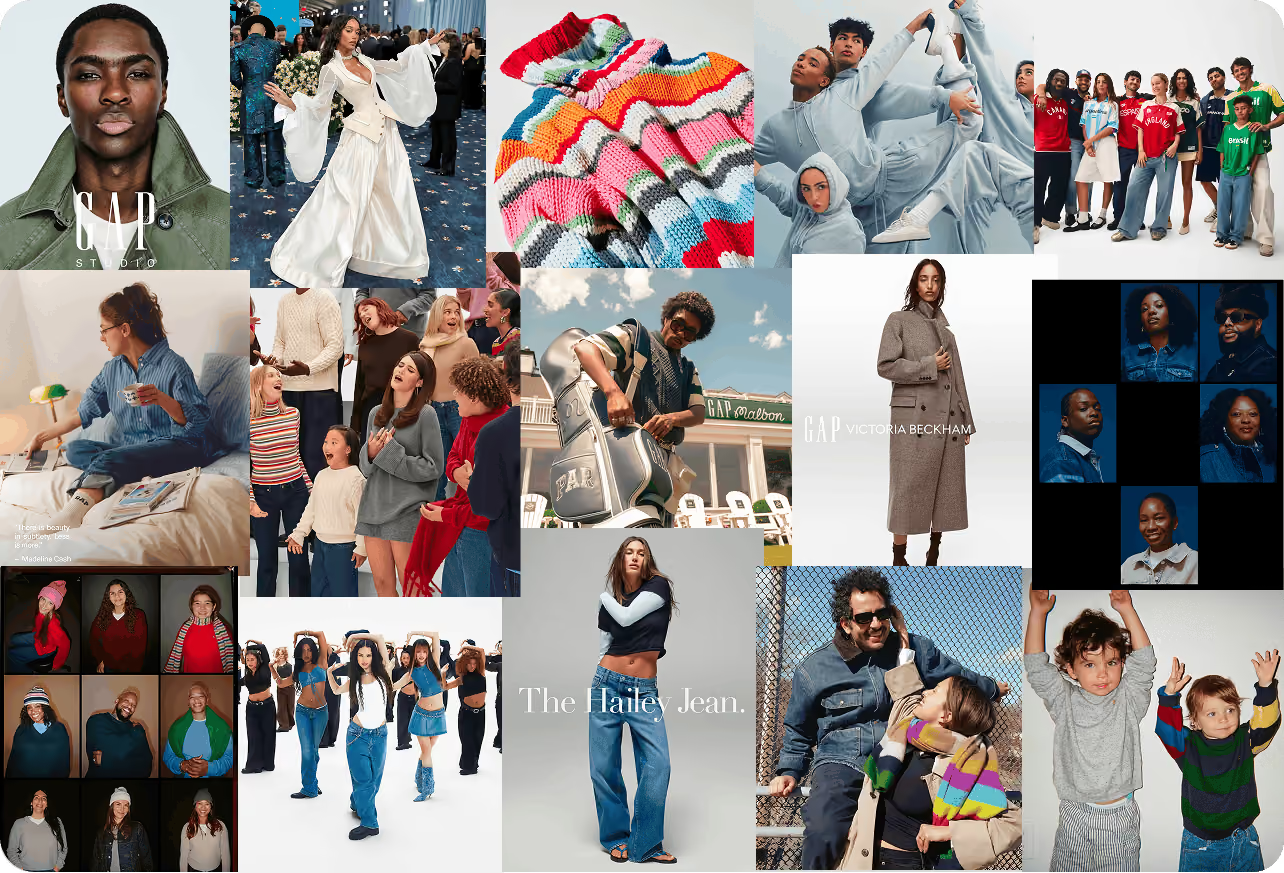
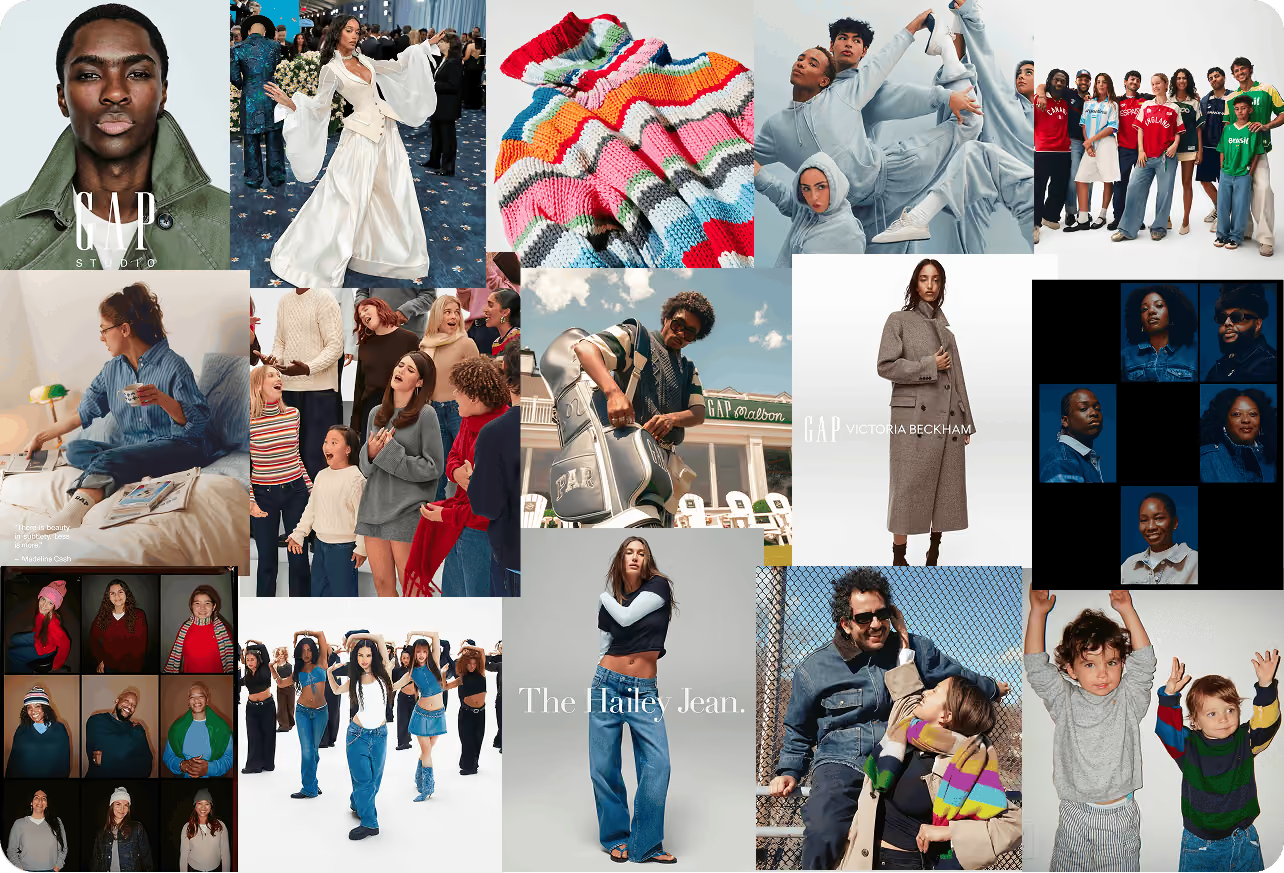
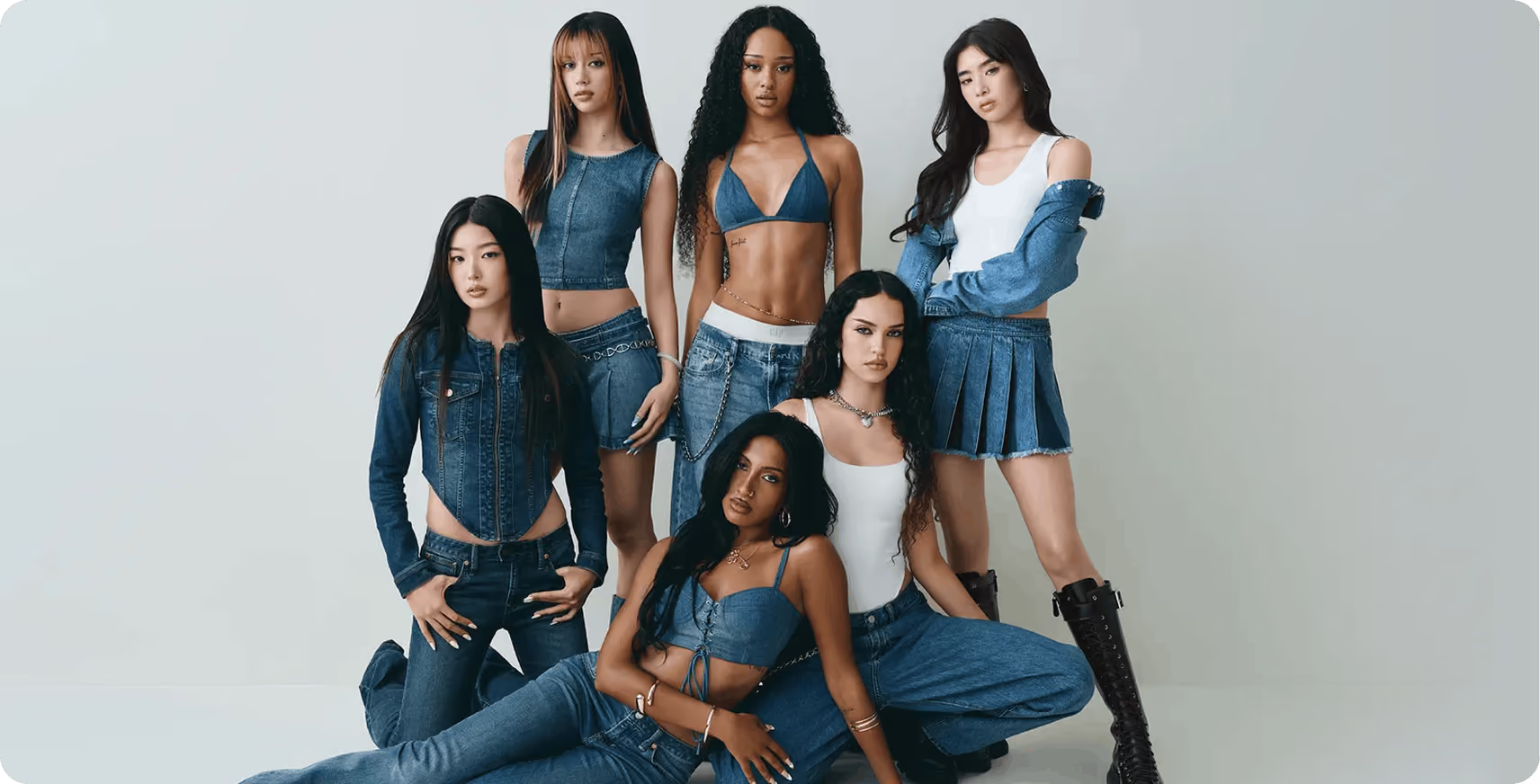
Then Gap started building its way back into culture. In spring 2024, it cast Grammy winner Tyla, whose “Water” dance had already taken over TikTok, as the face of a linen campaign choreographed as a nod to the brand’s own dance-ad history. That fall, it brought in Troye Sivan along with the dance troupe behind his “Rush” video. In August 2025, it put global girl group KATSEYE in low-rise jeans, set the routine to Kelis’ “Milkshake” and pulled more views in 3 days than its previous 4 campaigns combined. Anne Hathaway wore a $158 Gap shirtdress in Rome and it sold out in under 6 hours. In May 2026, Kendall Jenner walked the Met Gala steps in GapStudio.
The Gap brand has now posted 10% comparable sales growth for 2 quarters in a row, per its latest earnings report. The comeback rests on a handful of decisions that sound obvious and took years to get right: show up in culture, partner with people who have their own audiences, take product seriously again and treat the archive as an asset. Gap made a couple of very public mistakes along the way, and how it handled them is as useful to study as anything it got right.
The Logo That Lasted Six Days
Before the comeback, there was a cautionary tale. On October 6, 2010, Gap introduced a new logo that replaced the navy blue box it had used for about 20 years with bold black Helvetica and a small blue square tucked behind the “p.” There was no campaign to introduce it. The new mark appeared on the website, and customers found it on their own.
Within 24 hours, one design blog had collected around 2,000 negative comments, a protest Twitter account called @GapLogo had picked up 5,000 followers and a “make your own Gap logo” site had gathered nearly 14,000 parodies. Gap tried to reframe the change as an invitation for fans to submit their own designs, which made things worse. On October 12, the company announced it was going back to the original.
“We’ve learned a lot in this process. And we are clear that we did not go about this in the right way,” Marka Hansen, then president of Gap North America, said in a statement.
The redesign is a textbook case of blanding, when a brand trades its distinctive identity for something cleaner and more generic. Helvetica is a perfectly good typeface. It’s also the typeface of subway signs and countless corporate logos. Gap’s blue box carried decades of memories for people who grew up shopping there, and the company tried to swap it for something that could have belonged to anyone.
Customers made it clear the logo belonged to them as much as it belonged to Gap. Sixteen years later, that lesson sits at the center of the brand’s turnaround.
How Gap Lost the Story
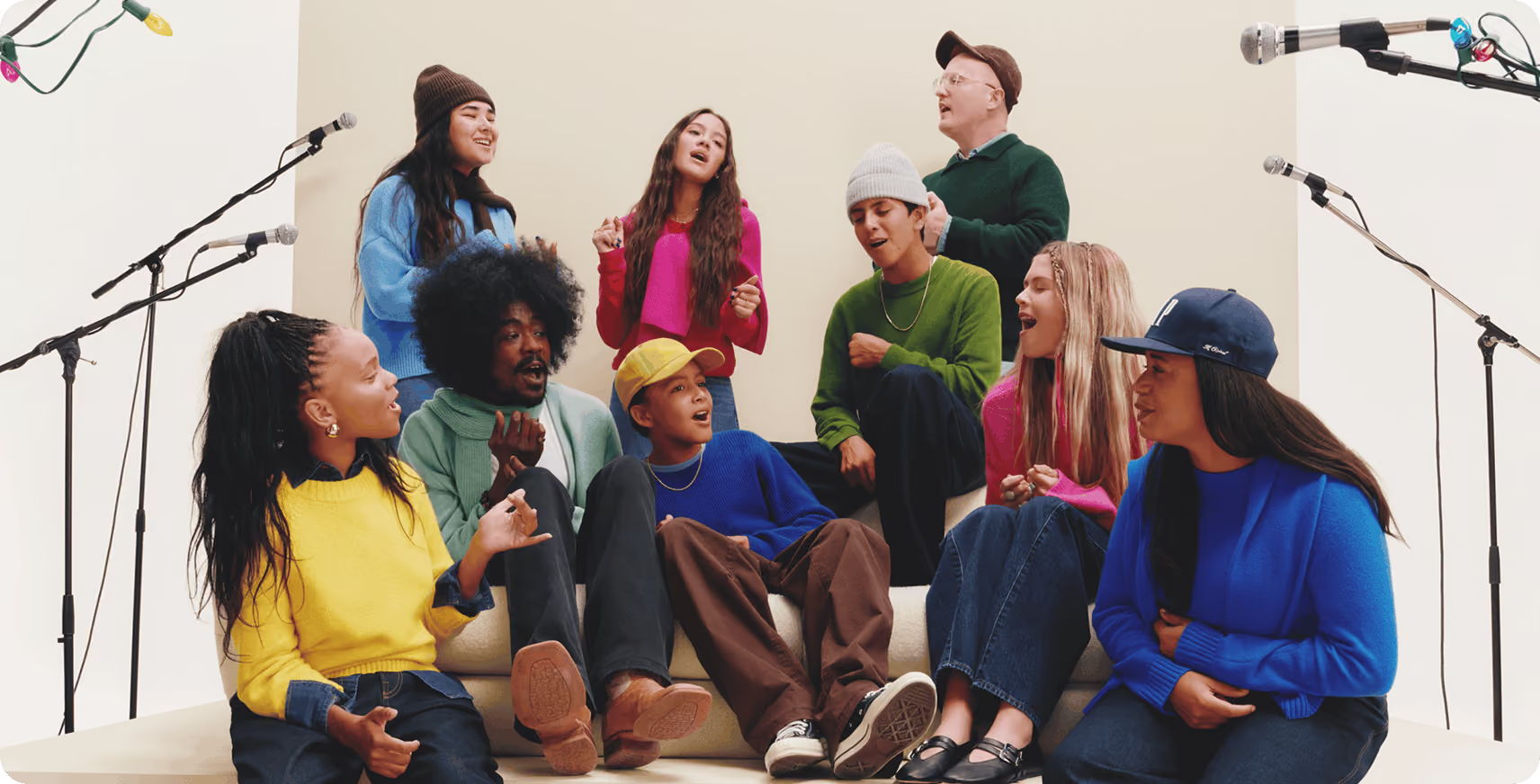
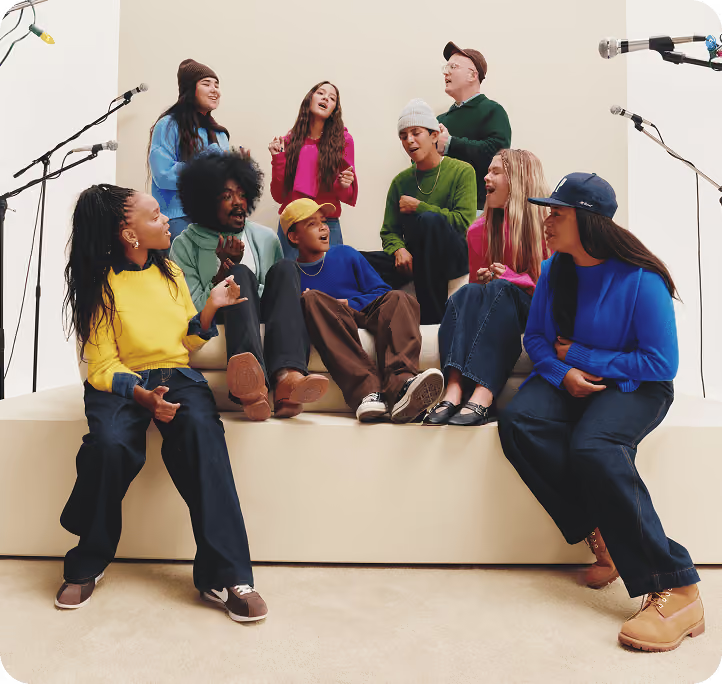
Fixing the logo didn’t fix the bigger problem. Through the 2010s and into the early 2020s, the Gap brand relied on promotions to drive sales. Mark Breitbard, who has led the Gap brand since 2020, told Fortune that discounting had become the main lever, and that breaking the cycle meant giving people a reason to want Gap again.
Richard Dickson, who became CEO of Gap Inc. in 2023 after leading the Barbie revival at Mattel, named the problem plainly. “We had great storytelling and brands, but somewhere along the way, we lost the story and became more about the stuff,” he told Fortune. He made cultural relevance a top priority alongside product quality, and in February 2024 he hired designer Zac Posen as Gap Inc.’s creative director.
Dancing Its Way Back Into Culture
Dance has been part of Gap’s identity for decades. Its 1998 Khakis Swing spot, with dancers jumping and spinning to Louis Prima’s “Jump, Jive an’ Wail,” is one of the most recognizable retail ads of the ’90s. When the brand went looking for a way back into the conversation, it returned to movement and music.
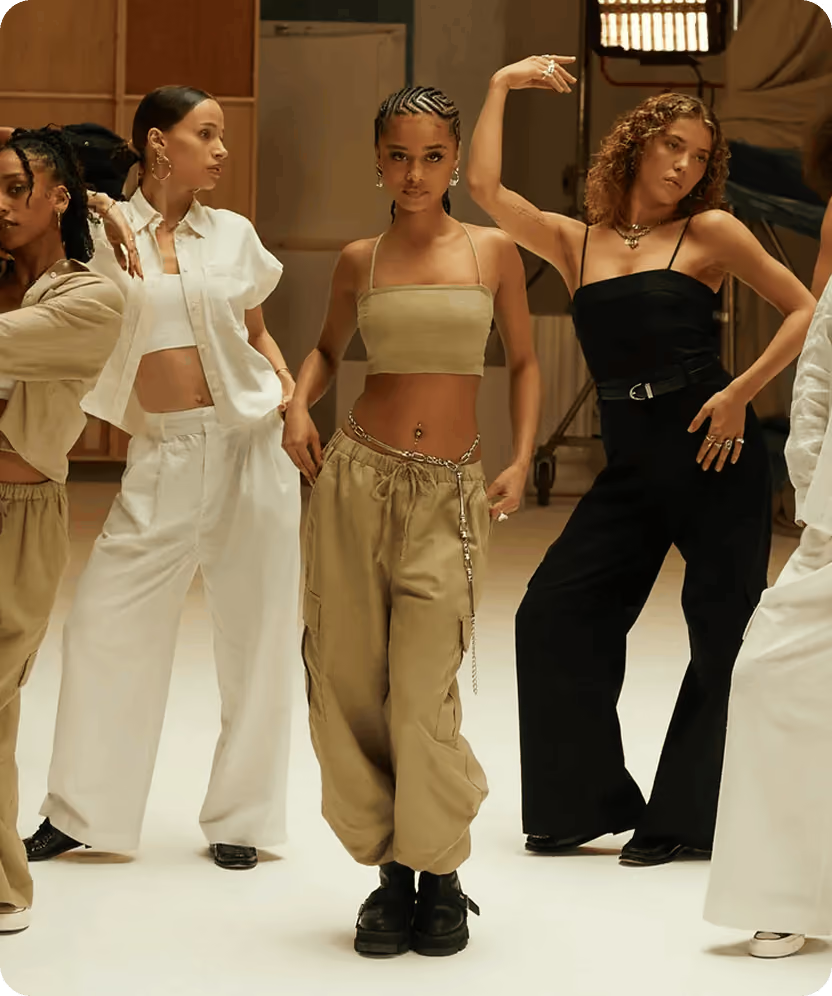
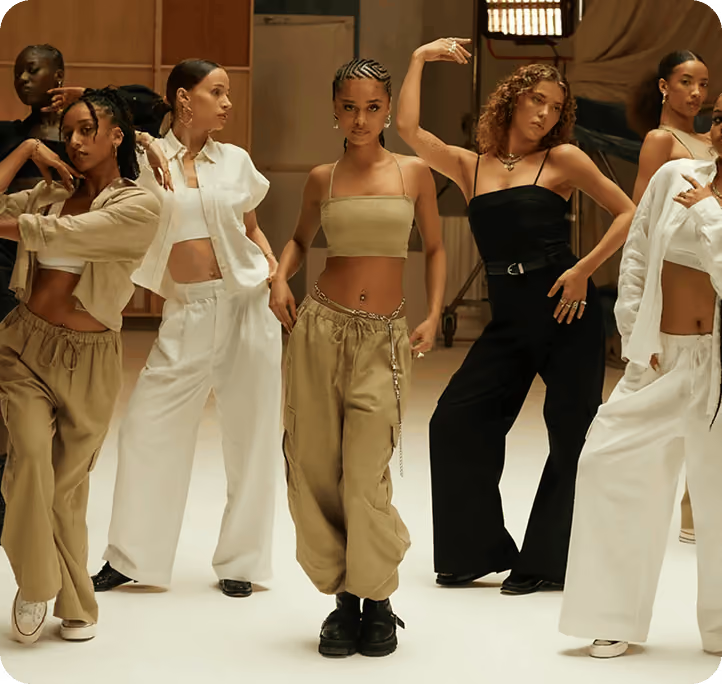
Linen Moves, the spring 2024 campaign, featured South African singer Tyla in a near re-creation of Jungle’s music video for “Back On 74.” According to Gap’s head of marketing Erika Everett, the video’s director, Charlie Di Placido, had Khakis Swing on his mood board when he made it, so the reference came full circle. Everett told Marketing Brew it was one of the brand’s “most successful campaigns to date” for online engagement.
That fall, Get Loose put Troye Sivan in baggy Gap basics, dancing to Thundercat’s “Funny Thing” with choreography inspired by a viral video from the dance troupe CDK Company. One TikTok from the campaign reached nearly 30 million views within weeks, and fans started recreating the routine themselves. Commenters kept saying the ads felt like the old Gap.
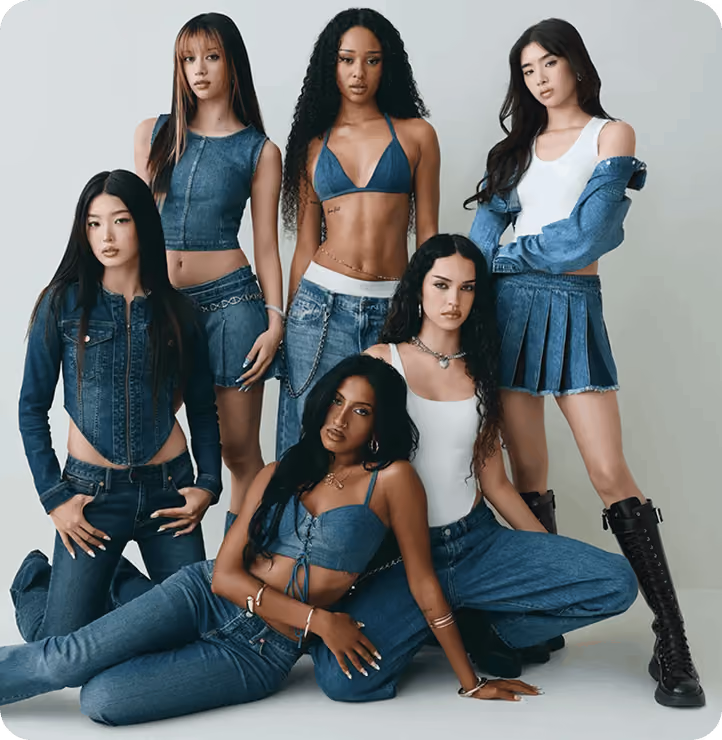
Better in Denim followed in August 2025. KATSEYE danced to “Milkshake” to celebrate the return of low-rise jeans, and the ad drew about 20 million views in its first 3 days. Dickson said on the earnings call that it earned “more views than the full length of our last four releases combined,” per Modern Retail. By November, the campaign had passed 500 million views and 8 billion media impressions, Gap brand comparable sales were up 7% for the quarter and Gap had climbed 2 spots to become the No. 6 adult denim brand in the U.S., according to Marketing Dive.
The format suits how people find brands now. A dance can be learned, stitched, duetted and recreated, and every fan who posts a version extends the campaign at no cost to Gap. Everett told Marketing Brew that music would be “a key cultural pillar” for the brand going forward, and Gap has followed through, down to the in-store playlists it built with Tyla and Sivan.
Collabs That Bring New Customers Through the Door
The dance campaigns gave Gap visibility. Collaborations gave people something new to buy. Breitbard calls them “ways of bringing new customers into the brand,” and the partner list from the past few years reads like a map of the audiences Gap had lost touch with.
Nearly all of those partners sell at price points well above Gap’s. A Dôen dress or a Victoria Beckham trench usually costs several hundred dollars or more, while the Gap versions run far lower, from $15 to $268 for the Sandy Liang collection and $34 to $328 for Victoria Beckham’s first drop. Those prices still sit above what Gap typically charges for a T-shirt or a pair of jeans, and the pieces carry more design detail than Gap’s everyday basics.
That positioning works in both directions. Fans of the higher-priced brands get an affordable way into a label they love, and many of them walk into a Gap for the first time in years. Gap’s regular customers get access to designers they might not otherwise buy from. And Gap gets to raise its own ceiling on design and price without asking anyone to pay luxury prices.
Dôen, the California label known for romantic, vintage-inspired dresses, launched a limited collection with Gap in May 2024 built around the theme of sisterhood, then returned for a second drop in April 2025. In July 2025, Gap teamed up with Béis, Shay Mitchell’s luggage brand, on a travel capsule of denim bags and comfortable travel clothes. Béis brought a following built around airport-ready style, and Gap brought the clothes people wear on the plane.
Sandy Liang followed in October 2025 with a women’s and kids’ collection full of her signature bows, pleated denim and vegan fur, priced from $15 to $268. “Growing up, Gap was the pinnacle of fashion,” Liang said. The collection sold out.
In March 2026, Awake NY brought downtown streetwear credibility with bold prints and remixed Gap logos drawn from the archive and New York’s ’90s club scene. A month later, Gap launched a multi-season partnership with Victoria Beckham, starting with a 38-piece collection that reworked staples like the trench coat and the white button-down at prices from $34 to $328. Beckham’s 33.4 million Instagram followers dwarf Gap’s 3.7 million, which is part of the appeal. “These things are meant to be moments of high heat, to draw attention, to have fun, to drive business,” Breitbard told Fast Company.
More recently, Hailey Bieber launched The Hailey Jean in July 2026, a 2-style denim capsule inspired by 1996, the year she was born. The campaign film, set to The Cranberries’ “Linger” and directed by Di Placido, recreated the minimalist sets of Gap’s ’90s ads. Breitbard’s explanation for the pick was short. “She’s a Gap girl,” he told Fortune.
One of Gap's longest-running partnerships is with Harlem designer Dapper Dan, whose "DAP GAP" hoodies first dropped in November 2022 and sold out. Dapper Dan has said he wants to "destigmatize" the hoodie, a garment that has long carried negative stereotypes, and the partnership grew into a 22-piece spring 2024 collection with Western-inspired denim and a GapKids line. "GAP helped me reach everybody," he told Hypebeast. In June 2025, Gap teamed up with LA-based golf lifestyle brand Malbon on a 33-piece capsule that used Gap's arch logo on fleece and knits for golfers who want clothes that work off the course too. The two brands reunited in August 2026 for a 35-piece follow-up that added tennis and expanded the women's assortment. "The response showed us the power of bringing together great product, sport, and style," Breitbard said.
Each partner brings a different crowd to the brand: Dôen's romantic-dress shopper, Sandy Liang's ballet-flat devotees, Victoria Beckham's luxury customer, Awake NY's streetwear community, Dapper Dan's Harlem following and Malbon's new generation of golfers. Gap gets introduced to each audience by someone that audience already trusts, and the collaborator gets Gap's reach in return.
GapStudio Puts a Mall Brand on the Red Carpet
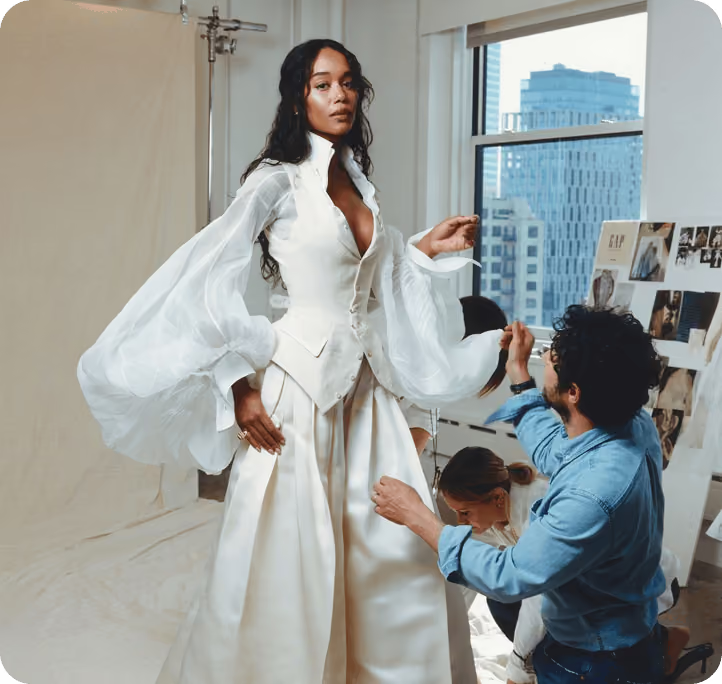
Posen’s arrival gave Gap a couture point of view it had never had. Through GapStudio, his in-house design atelier, he has dressed celebrities in custom Gap for some of fashion’s biggest nights.
The first big moment came at the 2024 Met Gala, where Da’Vine Joy Randolph wore a custom Gap denim gown. Two weeks later, Anne Hathaway wore a deconstructed white shirtdress by Posen to a Bulgari event in Rome. The photos spread fast, Gap released a version for $158 and it sold out in under 6 hours.
Laura Harrier wore couture denim by Gap to the 2025 Met Gala. Claire Danes, a longtime friend of Posen’s, wore a white GapStudio gown to the 2026 Golden Globes and told Vanity Fair that as a kid, “we used to talk about money in terms of what it would allow us to buy at the Gap.” At the 2026 Met Gala, Kendall Jenner wore a custom GapStudio gown inspired by the Winged Victory of Samothrace. Posen built it on a molded leather bodice, draped it in cotton jersey, chiffon and organza and hand-dyed it in tea for an aged finish.
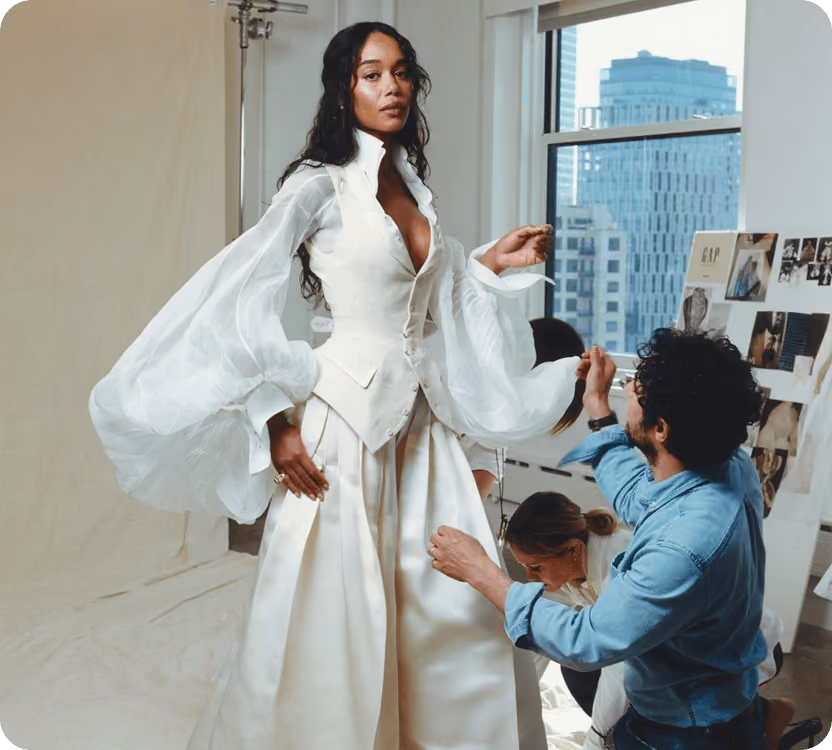
For Gap, the payoff is coverage it couldn’t buy. Fashion press that rarely writes about mall retailers now covers Gap in the same breath as the luxury houses, and Hathaway’s dress showed that a red carpet look can turn into a sell-out product when it’s priced for regular people. GapStudio now has its own line of pieces under $250.
Taking Quality Seriously Again
None of the cultural work would last if people bought the clothes and felt let down. Breitbard has admitted the product had slipped to “subpar” before the turnaround, per Fortune, and Dickson put quality on the same priority list as relevance when he took over.
Gap hasn’t moved its whole line to natural fibers, and plenty of pieces still use blends. CashSoft, one of its best-known sweater lines, is a cashmere blend. The bigger changes show up in hero pieces, where Gap puts fabric content front and center, and in the shapes it releases, which have gotten sharper and more current. Its 100% cotton oversized sweater has become a fall favorite that Who What Wear says sells out every season, and recent collabs have leaned on heavier fabrics, like the extra-heavyweight fleece hoodies in the Sandy Liang collection.
Quality also decides whether the turnaround holds. Guggenheim analyst Simeon Siegel told Fortune that the real test for Gap is whether it can raise prices, and that relevance should “drive revenues, and also drive prices.” Better product is what gives Gap permission to charge more and discount less once a campaign stops trending.
Mining the Archive (and the Happy Stripe Lesson)
Gap has 57 years of product history, and it has started treating that history like inventory. In January 2025, it partnered with vintage curator Sean Wotherspoon on GapVintage, a program built around vintage Gap pieces. The arch logo hoodie keeps coming back, and a spring 2026 campaign with Young Miko generated nearly 1.5 billion press and social impressions, per Retail Dive. When Gap remodeled its Flatiron store in New York, Dickson filled it with archive campaign photography by Annie Leibovitz and Bruce Weber. “We need to celebrate our history and now we add new people,” he told Fortune.
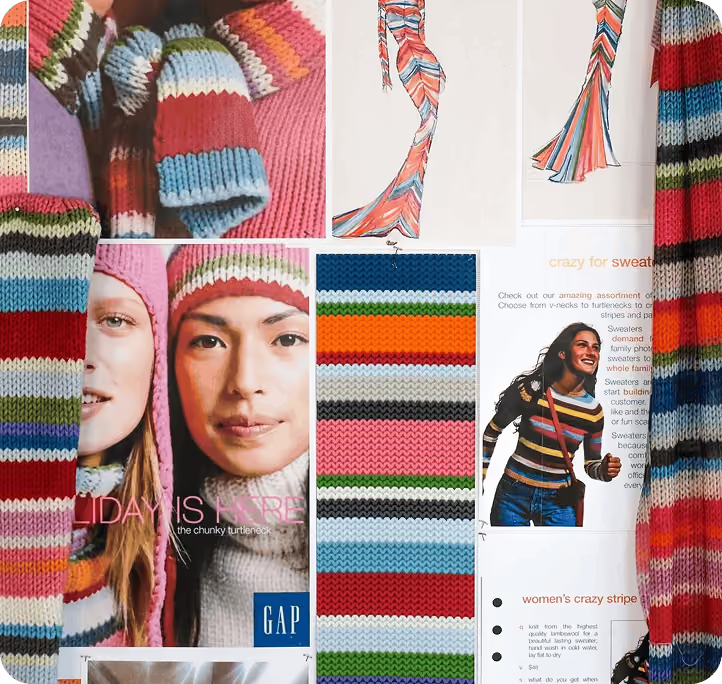
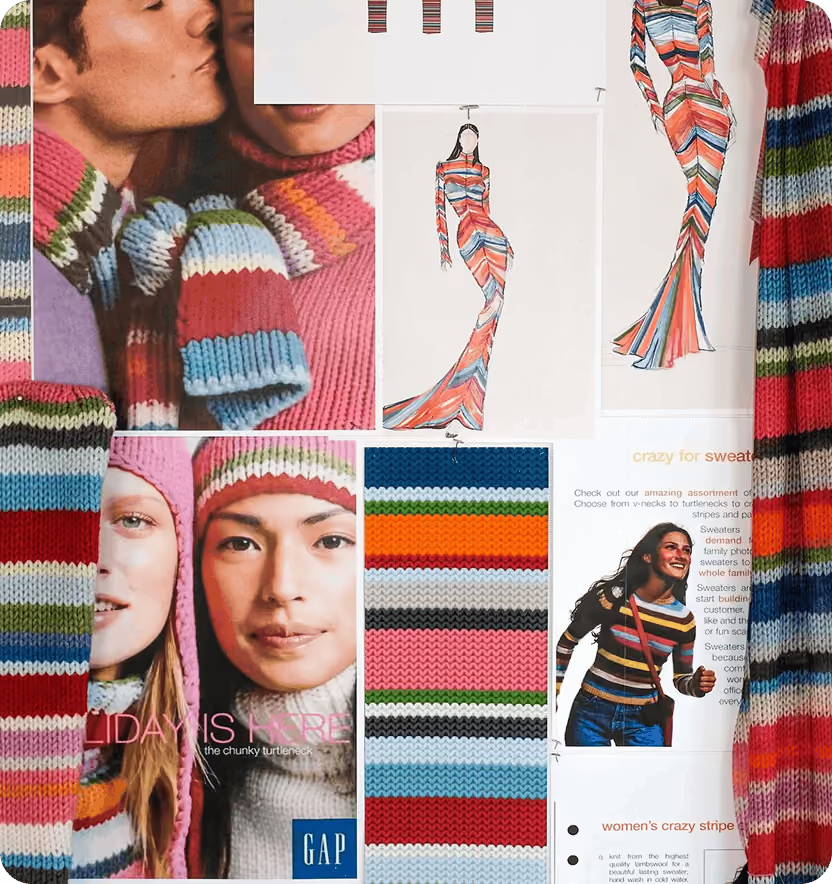
The archive also produced the brand’s most recent stumble. In late June 2026, GapStudio launched a Happy Stripe capsule inspired by the multicolor striped turtleneck from Gap’s 2000 holiday campaign. Instead of knitting the sweater again, Gap printed a photorealistic image of the knit onto polyester mesh and used it for tanks, tees, skirts and dresses priced from $58 to $128.
Fans noticed right away. “Ah yes, let’s take a beautiful knit and print it on plastic!” one commenter wrote, according to Inc. Others said the line “gives Shein,” and one person called printing “a picture of beautiful craftsmanship” onto stretch mesh “dystopian.” Another Instagram commenter wrote, “Nothing is sacred huh.” The capsule sold out anyway, but the reaction showed how closely Gap’s audience guards the pieces it remembers.
On November 12, Gap announced it would bring back the original Happy Stripe sweater in 100% cotton. The people who complained wanted the real sweater, and Gap is giving it to them, in time for the holiday season the original was made for.
In 2010, Gap took 6 days to reverse the logo. This time it took about 4 months, and the fix came in the form of a product people can buy. Both times, the brand recovered by listening to what customers said Gap meant to them.
What Gap Signals About Brand Building Right Now
Step back from the specifics and Gap’s comeback offers a few lessons that apply well beyond apparel.
Distinctiveness Is an Asset
Gap’s 2010 logo and its 2026 mesh stripes made the same mistake 16 years apart, trading something people loved for something cleaner or cheaper. Before a refresh, brands should figure out which assets customers feel attached to and leave those alone.
Culture Comes Before Conversion
The dance campaigns don’t feature price points or promo codes. They give people something to watch, share and recreate, and the sales have followed. Gap brand comparable sales have grown for more than 2 years, with denim leading the way.
Borrow Audiences on Purpose
Every Gap collaborator brings a specific community the brand wanted to reach. Each partnership has a clear reason to exist, and none of them read as Gap stamping its logo on someone else’s product.
Heritage Needs Product to Back It Up
Nostalgia gets attention, and quality decides whether people buy again. The Happy Stripe backlash showed that customers can tell an archive revival from a printed imitation of one.
The Honest Takeaway
Gap’s turnaround isn’t finished. Old Navy and Athleta have weighed on the parent company, Gap Inc. shares were down about 20% for the year as of August and analysts are still waiting to see whether the brand can hold full price. Gap brand sales also remain well below their early-2000s peak.
What has changed is that people want to buy Gap for reasons that have nothing to do with a sale. Fans recreate its campaigns and its designer collabs sell out. That demand is what gives Gap a real shot at holding full price, which is the test analysts are watching.
In 2010, Gap tried to look like everyone else, and its customers wouldn’t let it. Sixteen years later, the brand is growing by doing the opposite, casting talent with cultural pull and reissuing the pieces people still remember. Bringing the Happy Stripe back in 100% cotton is a small product decision. It also shows a company that now values its history and audience more than the savings on a cheaper fabric.