Building your project scope

How Duolingo Made Chaos Its Brand Strategy

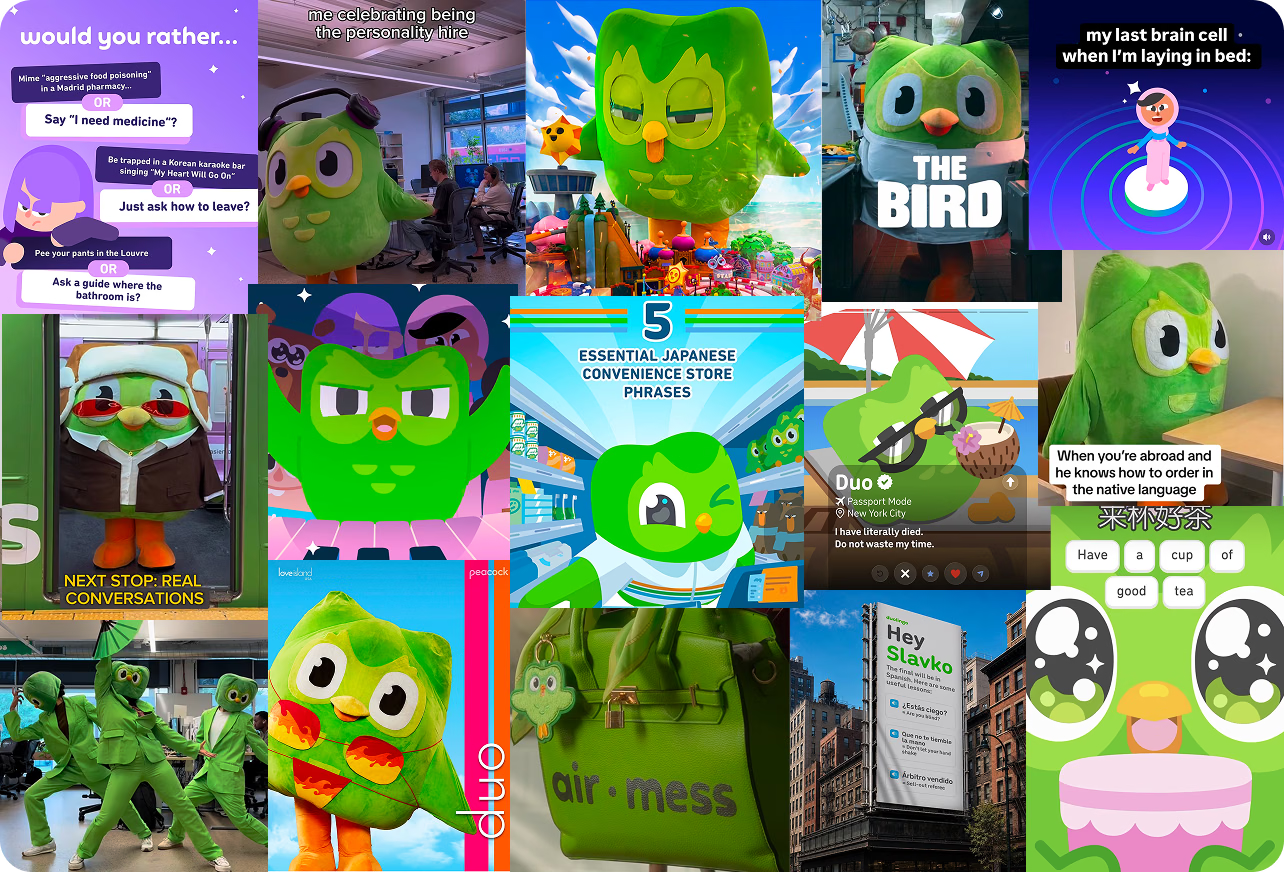
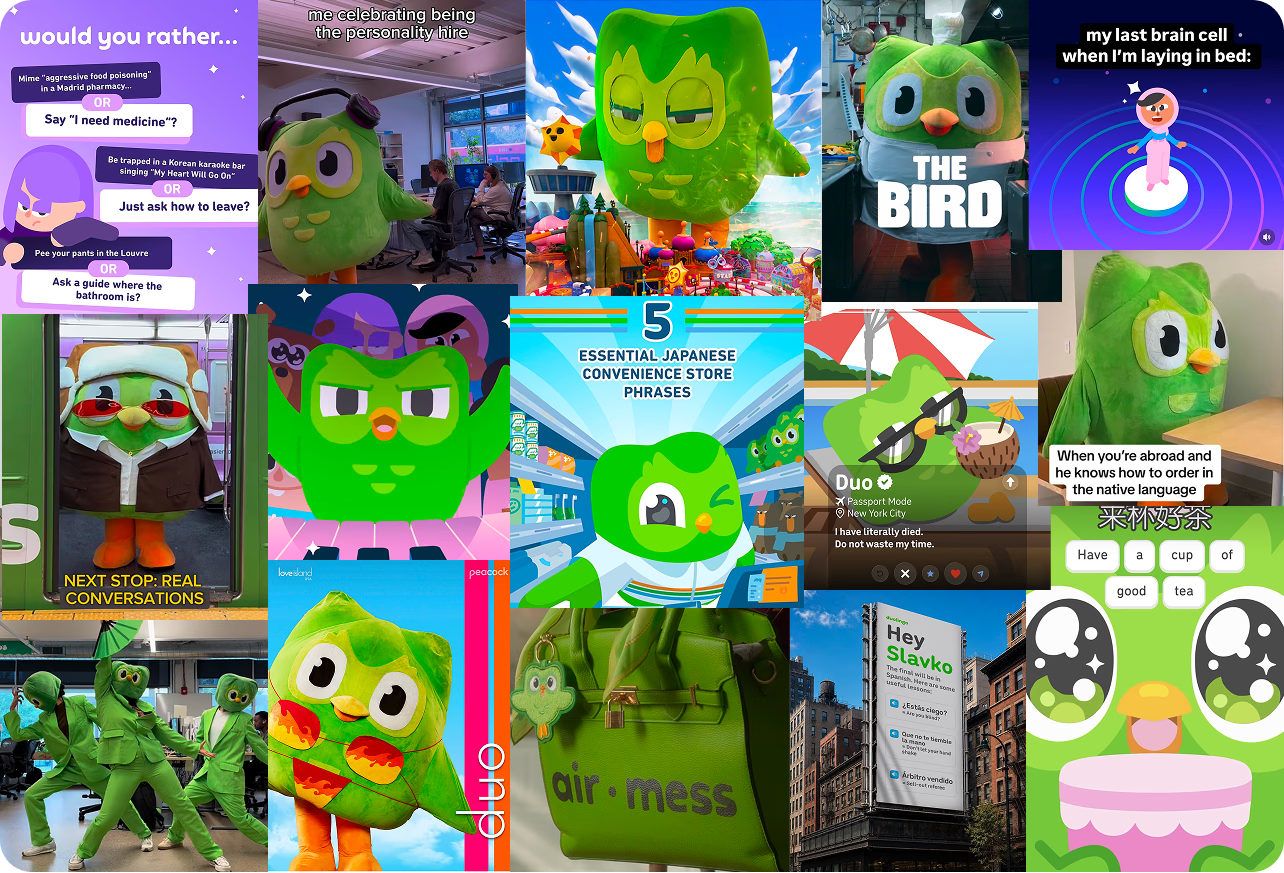
In 2021, a 23-year-old recent graduate named Zaria Parvez asked her manager at Duolingo if she could make videos for the brand’s dormant TikTok account. Nobody expected much from an account with 35,000 followers on a platform still figuring out what it was, especially for a brand best known for guilt-tripping you into practicing your Spanish.
What happened next became one of the most studied brand stories in modern marketing history.
By the time Zaria left Duolingo five years later, the account had 16 million followers — a 45,614% increase, as Rachel Karten noted in her interview for Link in Bio. But the number almost undersells the impact. Duolingo didn’t just build a big TikTok account; it built a character that people recognized and cared about, a content philosophy that the entire industry started copying, and proof that the most powerful marketing decision a company can make is sometimes to get out of the way and let someone run with it.
The story of how that happened (and what nearly undid it) is worth paying close attention to.
It Started With An Accidental Comment
Here’s the thing about Duolingo’s “unhinged” era: it wasn’t planned. It was a mistake that someone had the sense to repeat.
Zaria has told the origin story publicly, and it’s almost too good to be true. Early in her tenure, she accidentally posted a comment from Duolingo’s account that she meant to post from her personal account. The comment was more irreverent than anything a brand would typically say. Instead of deleting it and pretending it never happened, she watched what the audience did with it: they loved it. As she later wrote in a LinkedIn article: “The comment section is your social brief.”
That accidental post became a philosophy. Rather than treating the audience as a target to be reached, Zaria started treating them as co-authors. The comment section told her what was landing and what the audience wanted Duo to be, which was a character, not a brand account. “If you look at our TikTok, it’s not really a brand channel, it’s Duo’s channel,” CMO Manu Orssaud told Adweek. “That’s novel for a brand; we don’t really talk about our product on social; it’s about what the owl has been up to.”
The practical implications of that distinction are significant. Most brand social accounts exist to distribute marketing messages. Duolingo’s TikTok existed to tell Duo’s story and the marketing happened as a byproduct. Duo flirted with Dua Lipa, he showed up at the Eras Tour in a blinged out costume, he had feuds, obsessions, and opinions; he was, in every meaningful sense, an internet personality who happened to be a mascot.
What made it work wasn’t just the content, but the operating model behind it. Approvals were fast and failures were normalized. Zaria was given the trust to move at internet speed rather than corporate speed. “Wanting to be like Duolingo is meaningless if you don’t have a destination,” she told Karten. “If you don’t know where you’re going, distractions will look like opportunities.” The destination at Duolingo was always clear: make people feel something, remind them they haven’t done their lesson, and do it in a way that feels nothing like advertising.
The Brand Is The Mission, Not The Marketing
What looked like chaos from the outside was a highly disciplined creative system. A few principles ran underneath everything.
The Comment Section Is The Brief
This wasn’t just a catchy line, it was a literal operating procedure. Zaria and her team monitored what their audience was saying, what they were asking for and what they were already doing with the Duo character organically, and they built content around those signals. As Orssaud put it to Marketing Brew: “One of our team mantras is that the comments section is our brief. We pay close attention to what people say, and we aren’t afraid to experiment in response.” The result was content that felt like it came from inside the community, not from a brand briefing room.
Speed Over Polish
The Death of Duo campaign (more on that shortly) went from concept to execution in six days, according to Adweek. That kind of velocity isn’t possible in a traditional brand approval structure. Duolingo made it possible by trusting the team and accepting that not every post would land. As Zaria noted in her Inc. interview, normalizing failure was part of what made the high points possible. You can't have a 35-million-view moment without also having a lot of posts that barely register.
Duo Is A Character, Not A Mascot
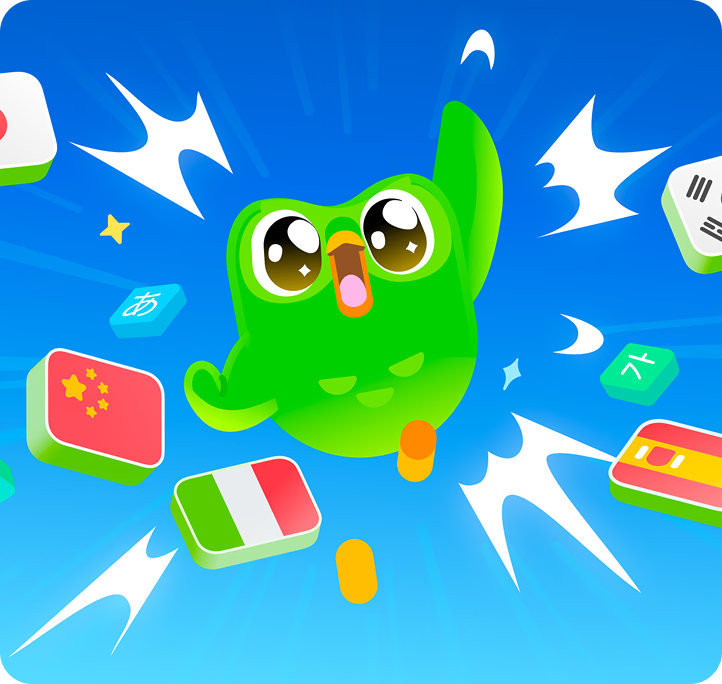
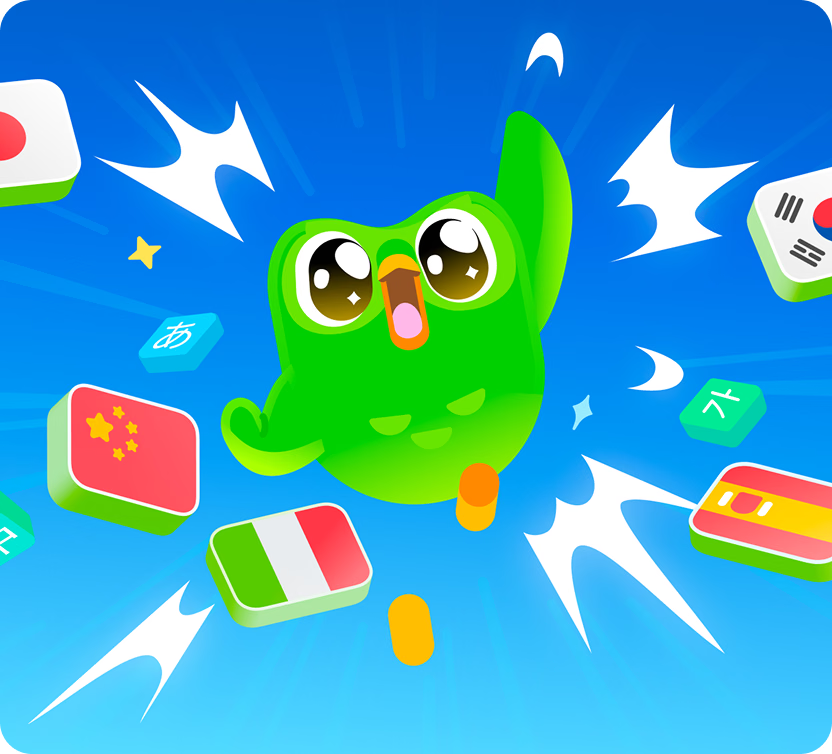
There’s a meaningful difference between a brand mascot (a visual device that represents a company) and a character (a personality with a consistent internal logic, relationships and a storyline). Duolingo crossed that line deliberately and early. Duo had opinions, he had a rivalry with Google Translate, he had an unrequited thing for Dua Lipa, and he had feelings about your streak. That character depth is what made it possible to kill him (and bring him back), and have the internet care about both.
Social As Retention, Not Just Acquisition
Most brands treat social media as a top-of-funnel awareness tool. Duolingo figured out that for an app with a daily habit loop, social media was also a retention mechanism. Every viral Duo post was, functionally, a reminder that you hadn’t done your lesson. The guilt was the product. “In a world where our competitors are anything that takes up screen time,” Orssaud told Marketing Brew, “building loyalty comes from meeting people where they are and showing up consistently so Duolingo stays top of mind.”
The Death of Duo: A Masterclass In Earned Media
If there's a single campaign that captures what Duolingo has built, it's the Death of Duo.
On February 11, Duolingo posted a statement across all its social channels: Duo the owl was dead. The cause of death, depicted in a video, was a Tesla Cybertruck hit-and-run — an unmistakable jab at Elon Musk. The campaign generated over 169,000 mentions and a billion organic views within two weeks. Daily mentions spiked 436%, and the #ripduo hashtag took off. Dua Lipa posted about it, Netflix inserted Duo into a clip from Squid Game and the World Health Organization sent condolences. Other brands piled on, which is the digital equivalent of a standing ovation.
But the real stroke of genius wasn’t the death, but the resurrection mechanic.
Duolingo launched a website called “Bring Back Duolingo” where users could collectively earn 50 billion XP inside the app to revive the owl. The goal was surpassed: 50,921,342,438 XP across 15 countries, representing more than 5 billion Duolingo lessons completed in just a few weeks. “This campaign was about engaging our community in a way that only Duolingo can — by making entertaining content that reminds our fans to do their lesson,” Duolingo spokesperson Monica Earle told NPR.
The campaign looked like a viral stunt, but functioned as a product engagement mechanism. As PR Daily reported, Duolingo’s internal analytics team tracked not just the spike in engagement but whether it sustained, and the Death of Duo campaign produced a lift in both new and returning users that held beyond the initial moment.
Duo's death landed in Duolingo's Q1 2025 numbers. Daily active users reached 46.6 million, up 49% year over year, and monthly active users climbed to 130.2 million. The company also added more DAUs that quarter than in any other in its history.
What Happens When The Character’s Creator Leaves
By August 2025, Zaria had announced she was leaving Duolingo after five years. The account she inherited had 35,000 followers and the one she handed over had 16 million.
Her departure raised an obvious question: was the strategy Zaria, or was it Duolingo?
The answer, it turns out, is both, which is the more reassuring one. Zaria built the playbook and proved the concept, but Orssaud and the team had built institutional infrastructure around it: fast approvals, a culture of experimentation, a brand character with enough depth and lore to sustain storytelling beyond any single creator. The Death of Duo campaign happened while Zaria was still there, but the operating principles behind it are the ones she spent five years embedding.
Zaria herself put it best in her Link in Bio exit interview: “Tell one story really well.” That ethos isn’t person-dependent; it’s a creative principle that either a company believes in and operationalizes, or it doesn’t.
Post-Zaria, Duolingo hasn’t gone quiet. Earlier this year, the Bad Bunny 101 campaign ahead of Super Bowl 60 (a Duolingo crash course timed to the all-Spanish halftime show) showed the strategy maturing rather than stalling. “That’s when fans are sharing, obsessing, and anticipating what’s next,” Orssaud told Adweek. “Instead of a one-time splash during the game, we focused on meeting Bad Bunny fans where they already are — online.” Same instincts, different execution.
The AI Memo And What It Cost
In April 2025, CEO Luis von Ahn published an internal memo on LinkedIn announcing that Duolingo would become “AI-first” — phasing out contractors for work AI could handle, factoring AI into hiring decisions, and restricting new headcount unless teams could demonstrate they couldn’t automate more of their work.
The backlash was immediate and severe.
Users flooded the comment sections. Videos of people ending multi-year streaks and deleting the app went viral. The brand that had spent years building the impression of being human, irreverent and community-first had just announced (in the most clinical corporate language imaginable) that it was replacing humans with AI.
As Fast Company reported, Duolingo went dark on social media over the following weekend, wiping all posts from its TikTok and Instagram accounts and leaving only cryptic bios. The company lost over 400,000 TikTok followers in weeks.
The business impact was real. On the Q2 2025 earnings call, von Ahn acknowledged the backlash had pushed daily active user growth to the lower end of projections — still 40% year over year, but slower than the 60% seen in the same period the previous year. As Customer Experience Dive reported, Duolingo’s Q3 shareholder letter went further, attributing slower DAU growth in part to posting less unhinged content on its English-language accounts.
The company’s own shareholder letter acknowledged that pulling back on the irreverent social content, in response to the AI controversy, had contributed to slower growth. Pulling back on the unhinged posts proved how much they'd been driving the business.
BuzzRadar captured the dynamic well: “Every fart joke was a small deposit into an account labeled ‘we are people like you.’ The AI memo was a withdrawal against a balance the company didn’t know it had.”
Von Ahn later walked back the framing, clarifying that “AI-first” referred to a mindset rather than a wholesale replacement of people. The social accounts came back, the tone gradually returned; but the episode is a case study in what happens when a brand that has made a promise through its content (we are human, we are with you, we find the same things funny that you find funny) makes an operational announcement that contradicts that promise.
The lesson isn’t that brands can’t talk about AI, but that every decision a company makes is a brand decision, even the ones that feel internal.
What Duolingo Signals About The Industry
Pull back from the specifics and Duolingo’s story points to a few things worth paying attention to.
Characters Outperform Campaigns
Duolingo didn’t run campaigns that happened to feature an owl, it built a character that campaigns grew out of. The difference is structural: a campaign has a start and end date; a character has continuity. Duo’s lore compounded over five years in a way that no campaign could. The brands building the most durable social presences right now are the ones investing in character depth, not just content volume.
The Org Chart Is The Strategy
Zaria’s success wasn’t just about her instincts; it was about the trust and speed she was given. Fast approvals, permission to fail, and genuine creative autonomy. Most brands say they want a social presence and then route every post through four layers of legal review. The organizational decision to empower a 23-year-old recent graduate to run one of the brand’s most important channels is inseparable from the results that followed.
Virality Has To Connect To The Product
The Death of Duo campaign is the perfect example of this. It was outrageously viral and was also a mechanism to drive app engagement. The XP goal to bring Duo back meant that millions of people had to actually do their lessons. The brands getting the most mileage out of viral moments right now are the ones that connect the entertainment to the product, rather than treating them as separate things.
Brand Trust Is A Balance Sheet Item
The AI memo episode demonstrated something important: the goodwill built through years of authentic, human, community-oriented content had real monetary value, and it could be spent. The relationship between brand sentiment and business metrics was legible enough that it showed up in a shareholder letter. For any brand thinking about how to value culture and community work, that’s a remarkable data point.

The Honest Takeaway
Duolingo is one of the most imitated brands in marketing right now. Every few months, another company announces it wants to “do what Duolingo does.” Most of them end up with a brand account that’s slightly edgier than before and a mascot that doesn’t quite have a personality.
What they're usually missing isn't the owl, but the operating model: the trust given to the person running the account, the speed at which decisions get made, and the willingness to post something weird and see what happens. It's the discipline to connect the entertainment to the product, and the institutional commitment to a character deep enough that it can die, get resurrected and make the World Health Organization write a condolence post.
Zaria Parvez didn’t set out to build one of the most recognizable brands on the internet. She accidentally posted from the wrong account and paid attention to what happened next. The rest was five years of following that instinct, and a company with the wisdom to let her.