Building your project scope

The Olive Oil Aisle Had Zero Cool Brands. Graza Decided That was the Opportunity.
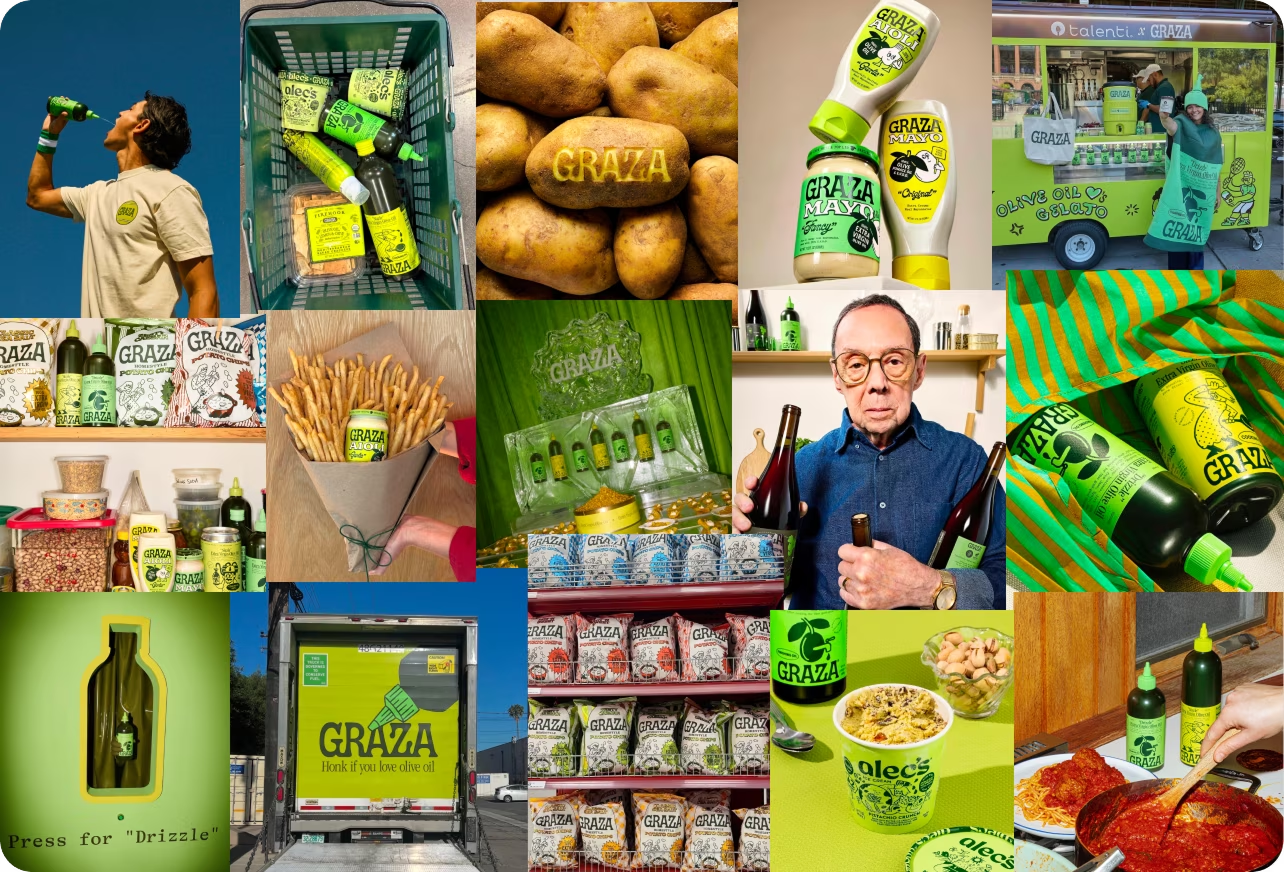
Nobody had a favorite olive oil brand.
That’s not a knock on olive oil. It’s in nearly every kitchen in America and one of the most consistently purchased grocery items in the country, with a $1.8 billion U.S. market. But ask someone to name the brand in their pantry and most would have to walk to the cabinet to check. California Olive Ranch, maybe. Kirkland, probably. Whatever was on sale.
That was the opportunity Andrew Benin saw when he launched Graza in January 2022 — a whole category that no one had claimed.
Three years later, Graza is the fifth-largest national olive oil brand in the U.S., representing roughly 24% of total olive oil category growth in 2025. It’s in more than 11,000 stores. The New York Times called its Sizzle variety “the best all-around olive oil you can buy in a store.” People give it as a gift instead of wine. Someone even got a Graza tattoo.
The brand didn’t get there by outspending the competition, but by outthinking the category entirely.
The Gap Nobody Wanted
The olive oil market in 2022 had a structural problem nobody was fixing.
At the bottom: mass-produced oils that barely deserved the label. Journalist Tom Mueller reported in his book Extra Virginity that at least 75% of extra-virgin olive oil sold in the U.S. is fraudulent — cut with cheaper oils, mislabeled, or barely olive oil at all.
At the top: boutique imported bottles with Italian labels, $40 minimums and a vibe that said “display, don’t use.”The middle: high quality, honest, affordable, actually designed for cooking was empty.
Benin knew it because he’d tasted it. A trip to Spain, where his wife’s family lived, introduced him to olive oil that bore no resemblance to what was on American shelves. He wanted to bring it back. His first instinct was to go luxury. His mentor, Mike Anthony, the executive chef at Gramercy Tavern in New York City, talked him out of it. “Do not start another gourmet food brand,” Anthony told him, as Benin recounted to Shopify.
Instead, Anthony pointed at the gap: pure, quality olive oil at a price and in a format that real cooks would actually reach for.
“That changed my perspective completely,” Benin said. “Ever since then, mass and scale have been the leading principles for this company, of course, without sacrificing quality.”
That reframe (from luxury to accessible, from precious to practical) is the foundation that everything else was built on. Graza wasn’t going to be the $37 boutique bottle with the lovely label. It was going to be the olive oil you squeeze straight into the pan, every night, without thinking twice.
The Shower Where A Brand Was Born
Every brand has its origin myth. Graza’s is unusually literal.
Benin was in the shower using a Dr. Bronner’s soap bottle when the idea hit. As he told Forbes: “I compromised on the suds and ran straight to the kitchen, washed it out, filled it with olive oil, and started squeezing it into a pan. It felt like we’d discovered a new tactile experience in the kitchen.”
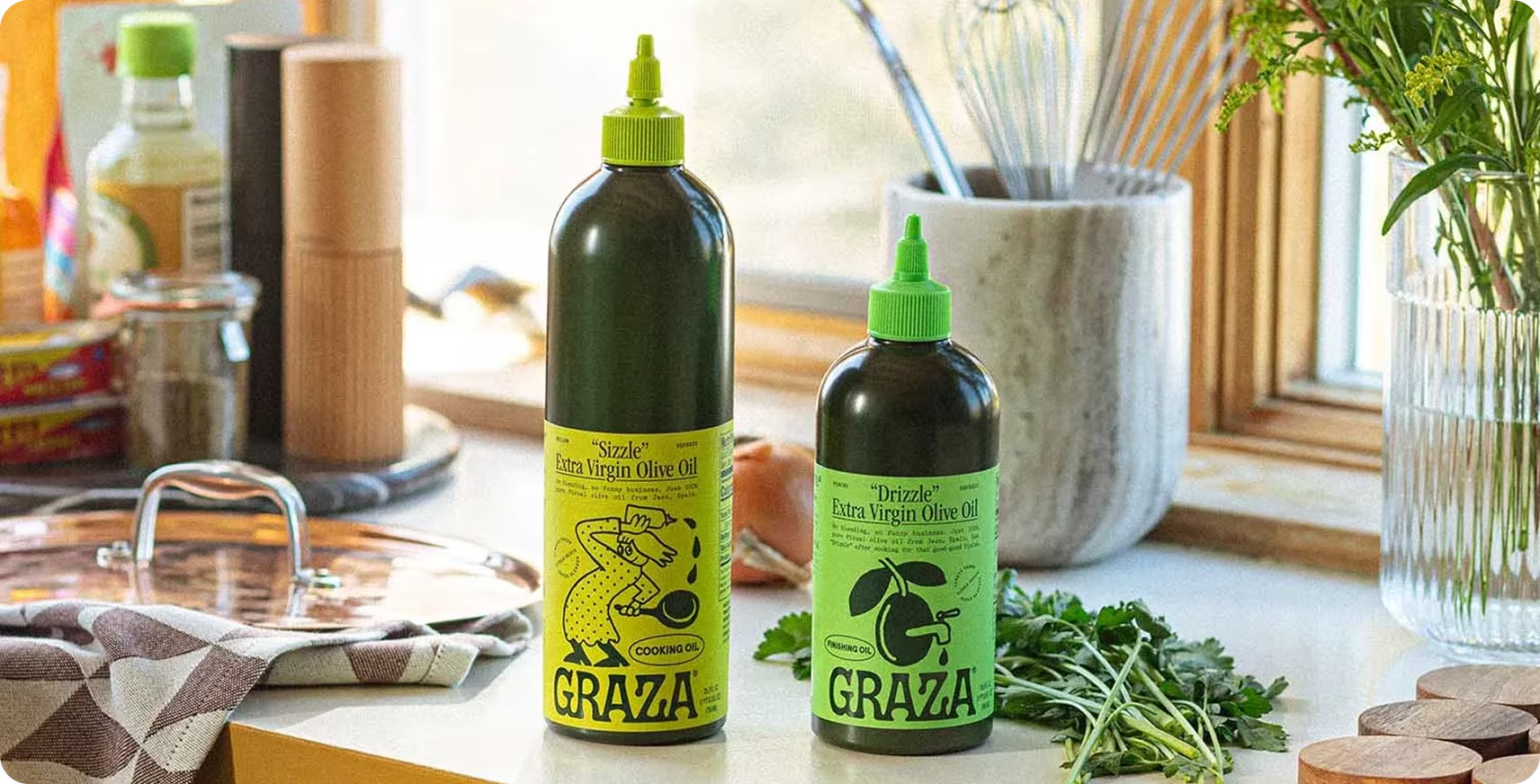
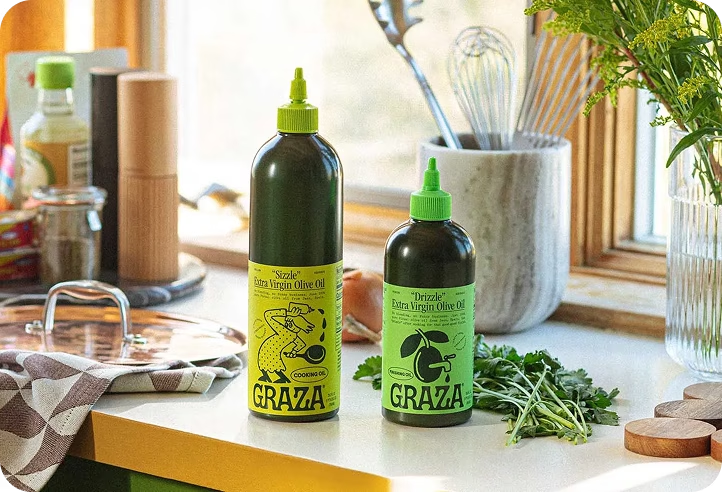
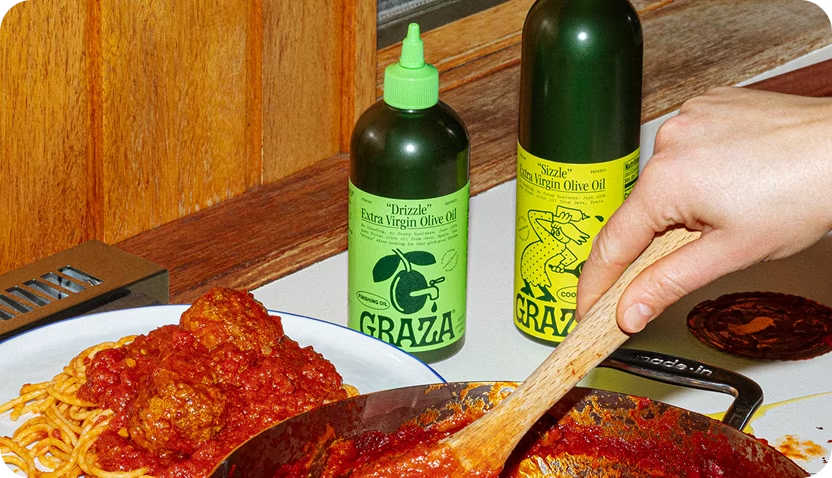
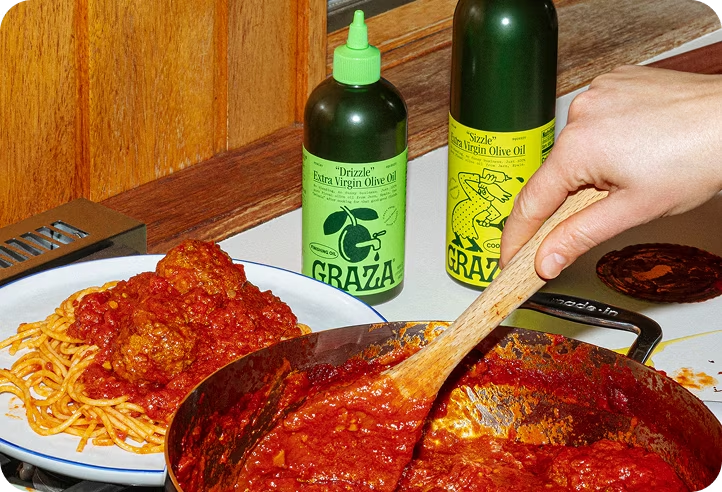
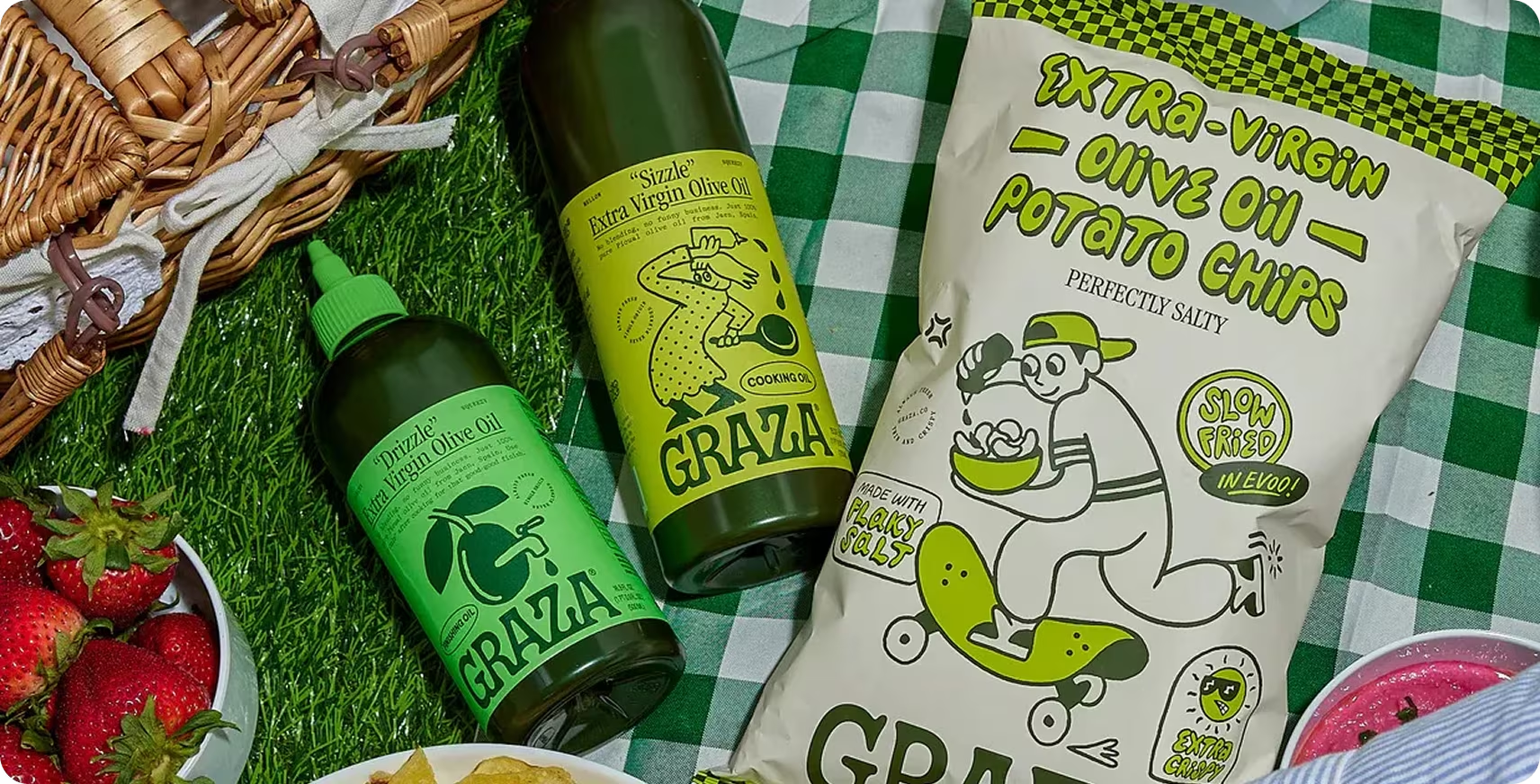
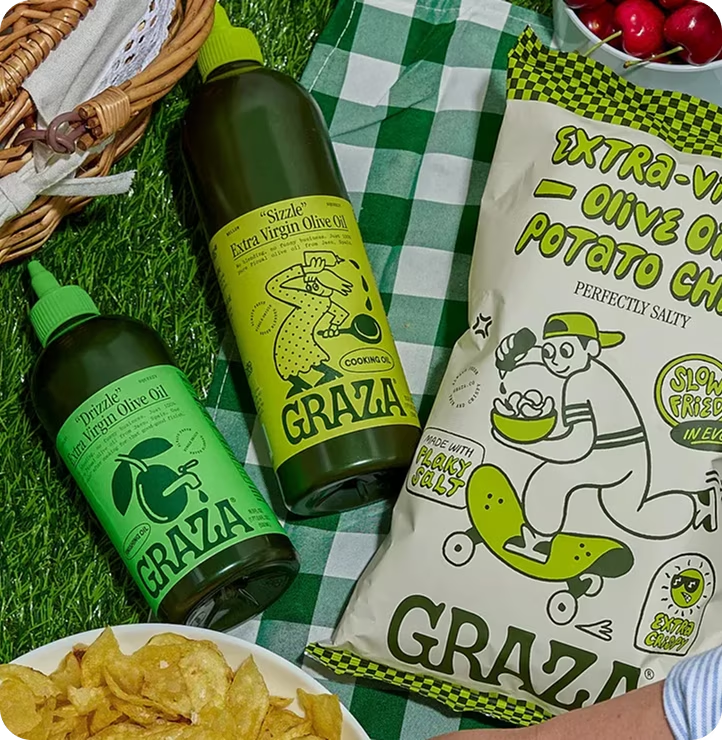
The squeeze bottle isn’t just packaging, it’s the brand. In a category where every competitor sells in glass — serious, fragile, easy to over-pour, impossible to control, Graza’s neon green squeeze bottle changed the behavior. Suddenly, you could squeeze oil exactly where you wanted it, exactly the amount you needed, without the mess of tipping a glass bottle mid-stir. The product became its own demonstration.
It also made Graza inescapably visual. The bottle shows up in cooking videos, in kitchen shelfies, in the background of influencer stories. You can recognize it from across the room. That kind of visual shorthand isn’t something you buy with ad spend. You design it in.
The category noticed. Within a year, competitors were launching their own squeeze-bottle olive oils. In a now-famous LinkedIn moment, Benin called one of them out publicly as “#copycat culture” then returned a few days later to apologize for being “heated and reacting poorly.”
The episode, covered by Bloomberg Businessweek, served the brand well: it showed a founder who cared deeply about what he’d built, and it made the squeeze bottle feel like something worth copying.
How Graza Launched Without Spending A Dollar On Ads
Graza’s launch strategy is one of the more studied in DTC food (and for good reason). They sold out in their first week, brought in $100K in revenue and crossed $500K by April 2022, all without a single paid ad.
The strategy had three components, laid out by Kendall Dickieson, the social media consultant who ran Graza’s launch, in a 2022 interview with Rachel Karten for Link in Bio.
First, product seeding (and a lot of it). Graza started sending bottles to food creators about three weeks before launch, roughly 25 packs per week, no strings attached. No required posts. No talking points. Just: here’s the olive oil, do whatever you want with it.
“We took a seeding approach that was no strings attached,” Benin told DTC Pod. The bet was that the product and packaging were compelling enough that creators would post anyway, and they did.
The moment that changed everything: cookbook author and Bon Appétit YouTube alum Molly Baz ran out of her gifted supply during launch week. Graza sent her restaurant-sized 5L jugs as a refill. She posted them to her Instagram Stories. “The second she posted that on her story, it was a bloodbath,” Benin told Klaviyo. “Suddenly, everyone wanted them.”
Second, community building in public. Dickieson and her collaborator Grace Clarke used their own networks to build Graza in real time, sharing behind-the-scenes moments and letting their audiences feel invested in the launch. By the day Graza went live, people were sending Dickieson their purchase confirmation emails.
Third, email treated as a brand channel, not a sales one. Graza built its list before launch with a simple landing page: share your email, we’ll tell you when we’re live. Post-launch, they maintained 50%+ open rates through hyper-segmented sends and emails that led with brand rather than CTA. “We won’t have a CTA in tile one, ever,” Benin told Klaviyo. Email became, as Klaviyo reported, “Graza’s most reliable revenue driver.”
None of this was cheap in time or product, but it was cheap compared to paid acquisition and it built something paid ads can’t: a community that felt like it discovered Graza, rather than being sold to it.
Four years on, that seeding philosophy has matured into something more structured, but the underlying logic hasn't changed. Gabby Fowler, Graza's Sr Manager of Social and Influencer, laid it out in a May 2026 interview with Following Up: "From day one, Graza's core reason for being was 'olive oil for anyone who cooks.' When it comes to influencers, we see them as an opportunity to be living, breathing proof of that concept."
That means working with chefs, yes, but also home cooks, comedians and creators with no food background at all. The comedian vertical is a deliberate choice. "We take our products very seriously, but we don't take ourselves too seriously," Fowler explained, "and comedians naturally live in that same space."
The brief to creators is kept deliberately loose. "Clarity is kindness," Fowler said, "but from there it's important that creators have space to interpret it through their own lens." Success isn't measured by reach alone either. Fowler's team tracks shares, saves and comment quality over passive views. "Something can absolutely blow up numbers-wise and still be a miss if the audience walks away remembering the content, but not the brand."
The Apology Email That Became a Brand Asset
About a year into Graza's life, things went sideways: shipping problems, quality lapses, the kind of operational chaos that kills young brands when founders try to paper over it with corporate-speak.
Benin did the opposite. He wrote an apology to more than 30,000 customers: stream-of-consciousness, unpolished, not proofread, and sent before anyone else had seen it.
It worked — not despite the informality, but because of it. In a world where brand communications are workshopped into blandness, a founder talking to customers like actual humans is remarkable enough to land in the Wall Street Journal.
The episode is a window into how Benin thinks about brand. As he explained to Forbes, the generation of consumer brands before Graza was built on “instant gratification-style marketing” and “growth at all costs.” His approach was different — patient, specific and honest when things went wrong. “We were more specific and targeted, and chipped away at it rather than throwing darts.”
That same philosophy shaped the sourcing strategy. Benin told Forbes he would pre-purchase oil eight months before harvest to secure supply from farmers he trusted, building relationships in Andalusia years before the brand launched. Getting the best oil required being the kind of buyer who understood that.
The Collab Playbook: Everywhere, Efficiently
Most brands think about collaborations as PR moments. Graza thinks about them as distribution math.
"For young brands, it's probably the most efficient way to capture new impressions," Benin told Forbes. The logic is simple: find brands with meaningful consumer overlap, collaborate and expose each other's audiences to something they hadn't tried yet.
Early on, that meant brands like Fishwife and Aura Bora — different categories, shared sensibility, overlapping kitchens. "All we had to do was collaborate, send an email to each other's audiences, or do something to expose more people efficiently to each other's brands," Benin explained. "We didn't feel competitive."
The distinction Benin draws between brand marketing collaborations and real product collaborations is worth noting. Brand collabs are efficient; product collabs are powerful. The Ithaca Hummus x Graza Olive Oil and Sea Salt Hummus launched at Whole Foods in early 2025 and became Ithaca's number one SKU, outperforming products they'd spent ten years building.
The Firehook Crackers collab followed a similar logic: an Olive Oil, Lemon and Chive cracker made with Graza's extra virgin olive oil, launched exclusively at Whole Foods. Different category, same principle — olive oil as the hero ingredient, Graza's brand as the entry point.
Not every collab is a product, though. In November 2025, Graza teamed up with Yahoo to launch "Sssshhhhizzle" Keyboard Oil — a satirical holiday gift set designed for loud office typers. The oil inside was 100% real Graza EVOO. The joke was the point. It generated earned media, fit Graza's irreverent personality perfectly and cost next to nothing to execute.
What makes the collaboration strategy interesting isn't just the volume of partnerships, but the selectivity behind them. Benin told Forbes the brand is now in a position to say no more than yes, and that the goal is never to "pimp out" the brand for awareness alone. Every collaboration has to make sense for the oil.
What Rejected Growth-At-All-Costs Actually Looks Like in Practice
The Forbes headline sounds like a philosophy. What's interesting is how specifically it translated into decisions.
When olive oil input costs spiked, Graza cut marketing spend from roughly 12.5% of gross revenue to around 5%, leaning on organic channels rather than compensating with paid. When retail partners came calling faster than expected, they were selective getting into Whole Foods five months after launch, then using that relationship as a foundation before expanding to Target and Walmart.
"The formula of one retailer really getting behind your product at the beginning, and you putting your resources behind that retailer — advertising against them, driving traffic to them, showing true partnership — was wise," Benin told Forbes.
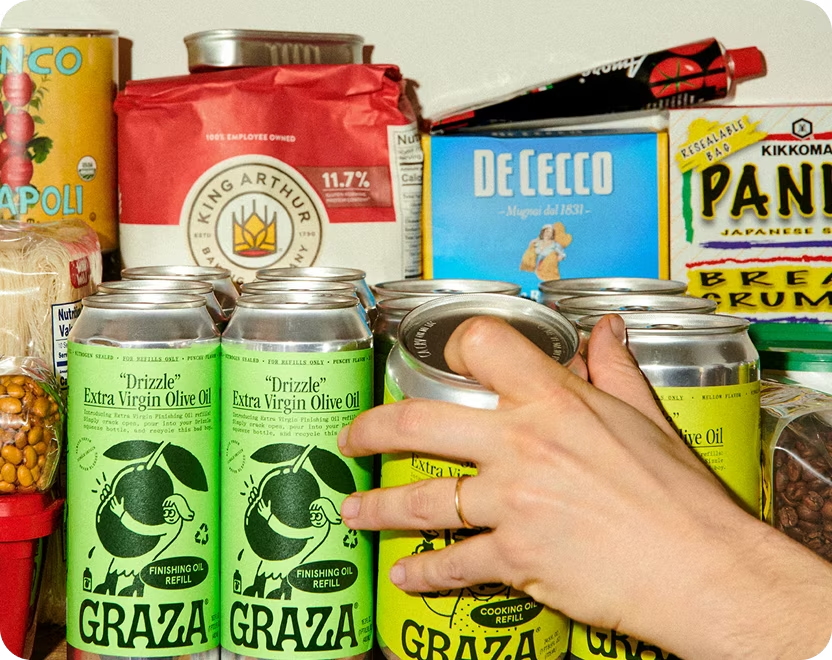
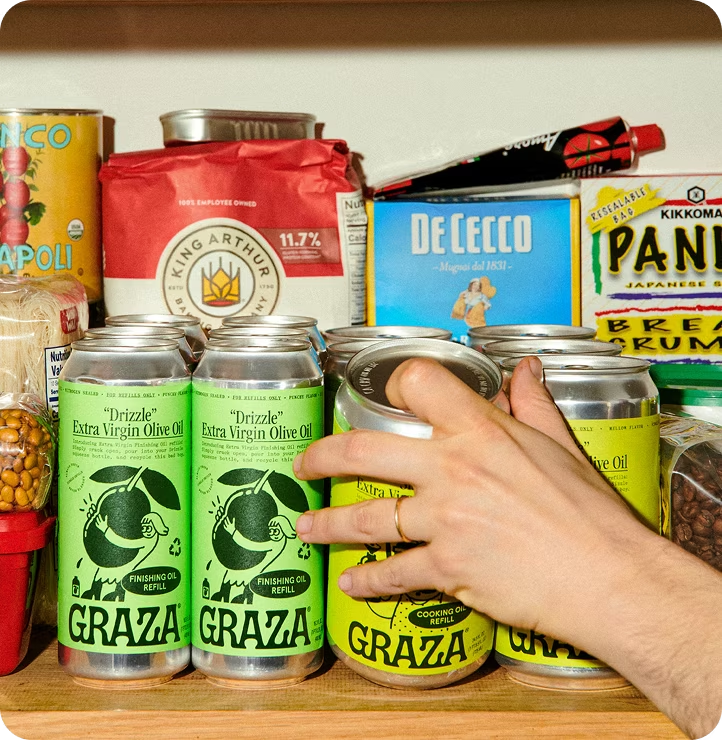
The refill cans are the clearest example of this thinking applied to product. When competitors started copying the squeeze bottle, Graza didn't sit still, they moved to the next thing no one else was doing: aluminum refill cans that gave the squeeze bottle a lifecycle ecosystem rather than making it just a package.
From 2 SKUs to Mayo (and now chips): How Graza Expands Without Losing the Plot
For the first two years of its life, Graza sold exactly two products: Sizzle and Drizzle. That was it.
The discipline was intentional. While most food brands treat a new SKU as a marketing moment, something to announce, campaign around, generate buzz for; Benin treated product expansion as a decision that required genuine justification. Each new format that followed (refill cans, Frizzle high-heat oil, glass bottles, a spray) answered the same question: does this solve something real for the person already using Graza? Does olive oil belong here?
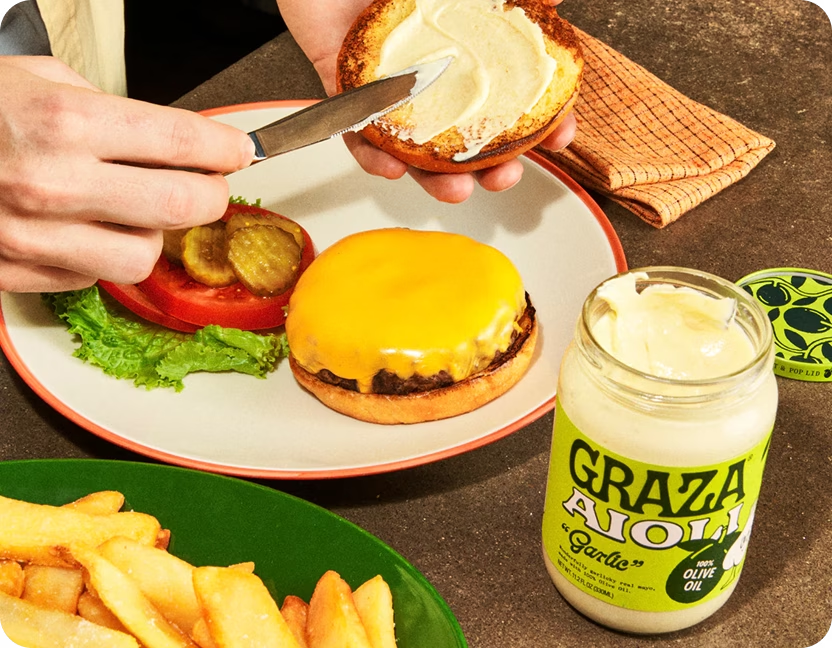
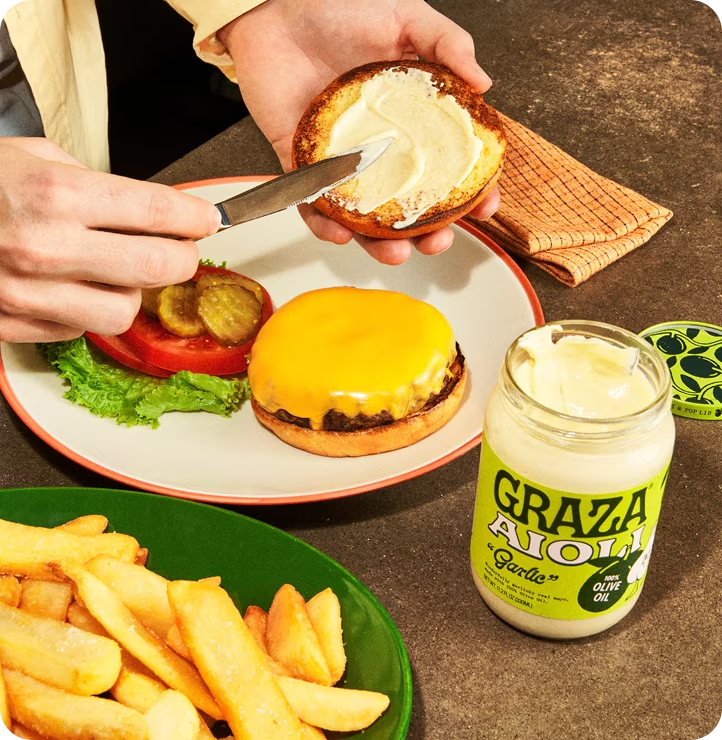
The mayo launch, which hit Whole Foods in January 2026, is the most ambitious test of that thesis yet. Mayo is a category dominated by two legacy giants and industrial seed oils: canola, soybean, the kind of oils Graza was built to replace. The opportunity Benin saw: mayo is roughly 65% oil by composition, which made it the most logical category for a brand whose entire identity is built around quality oil.
The Garlic Aioli was designed to taste “like your Spanish mother-in-law’s aioli” and given that Benin has a Spanish mother-in-law, he’s a credible source on that.
The product launched with Graza’s largest paid campaign to date — a slightly absurdist TV and streaming push called “Seriously Serious” that ran on Peacock and partnered with Bravo’s Top Chef. The campaign’s brief, according to Graza’s director of brand marketing Kali Shulklapper, was deliberate: “There is this misconception around the brand that because we have such fun packaging and a playful brand voice, we can’t possibly produce such high quality oil.” So the campaign put quality front and center featuring the brand’s two dedicated master testers (one who sniffs, one who tastes), the precise harvest timing and thousands of recipe tests behind the mayo formulation. Absurdist visuals, serious substance.
The chips followed shortly after. Graza relaunched its potato chip line in four new flavors this May, and Fowler, who has tasted all of them, called them "genuinely my favorite things we've ever made." Same squeeze-bottle logic applied to a bag: a commodity snack category, elevated through quality oil and Graza's unmistakable personality.
The brand isn't trying to become a general food company. It's following olive oil into every category where oil is the hero ingredient, disrupting the same way it disrupted the oil aisle.
Same squeeze bottle, same sense of humor, just a different shelf.
What Graza’s Playbook Signals About the Industry
How Graza Launched Without Spending A Dollar On Ads
The squeeze bottle isn’t a design flourish, it’s the entire business model made tangible. It changed behavior, created a visual shorthand, generated organic content and differentiated the brand in a category where everything looks identical.
Brands that think of packaging as a primary brand asset rather than a cost center have a structural advantage that’s very hard to replicate quickly.
Community Beats Reach
Graza didn’t launch by buying the biggest megaphone. It launched by seeding product into the right kitchens and letting people discover it.
The result was a community that felt ownership over the brand — Graza tattoos, purchase confirmation emails sent to the social lead on launch day, 50%+ email open rates. That kind of engagement is built through product and patience.
Honesty is A Differentiated Brand Asset
The apology email, the LinkedIn copycat drama, Benin’s candid Forbes interview about the difficulty of sourcing relationships. None of these are polished brand communications outputs, but a founder who talks to people like people.
In a landscape saturated with brand voice that sounds like it was workshopped by committee, unfiltered authenticity continues to cut through.
The Honest Takeaway
Graza's story is seductive because it looks, from the outside, like everything worked — sell out on launch day, go viral on Instagram, land in Whole Foods within five months, and have the New York Times call you the best olive oil in America.
The less glamorous version: debt-financed for the first two years, tight on payroll every month, failed patent application, operational meltdowns requiring mass apology emails. The squeeze bottle idea came from a shower. The brand-defining positioning came from a chef who told Benin to abandon his original plan.
What Graza actually demonstrates is that category disruption doesn’t require a celebrity, a massive funding round or a proprietary formula. It requires finding the thing that’s broken about how people experience a product they already buy and fixing it in a way that’s impossible to ignore.
In olive oil, the broken thing was that nobody had made it fun. The fix was a squeeze bottle and a founder willing to talk to his customers like humans.
Most brands never even ask the question. Graza built their company on it.