The Culture Calendar Is Shaping Marketing

The modern marketing calendar is overflowing with cultural moments. Every brand wants to be everywhere. But what makes the intersection of brand and moment a successful one? The real differentiator is fit, not frequency.

The marketing calendar is packed: sports finals, music festivals, trending TV shows, award season, year-end holidays and everything in between. On the surface, it can feel like a constant posting opportunity — but these cultural moments also create pressure to signal that your brand is in tune with what’s happening.
Participation in culture is easy, but relevance isn’t. Not every moment is meant for every brand. If you’re struggling to find a way into a specific cultural moment, then that might be your answer. The stronger move is knowing when a moment aligns with your voice — and more importantly, when it doesn’t. If it feels forced, the market will typically interpret it that way too.
How do you know when a moment is worth tapping into? Start judging by alignment, not relevance. Ask yourself: Does this actually serve our audience? Does our brand naturally fit into this conversation? If the answer is no, then skipping it is often the stronger decision.
Memorable brands aren’t everywhere at once — they’re selective. They show up where the context fits, then add something that feels like it could only come from them.

☕ Baby Björn | Latte Dads
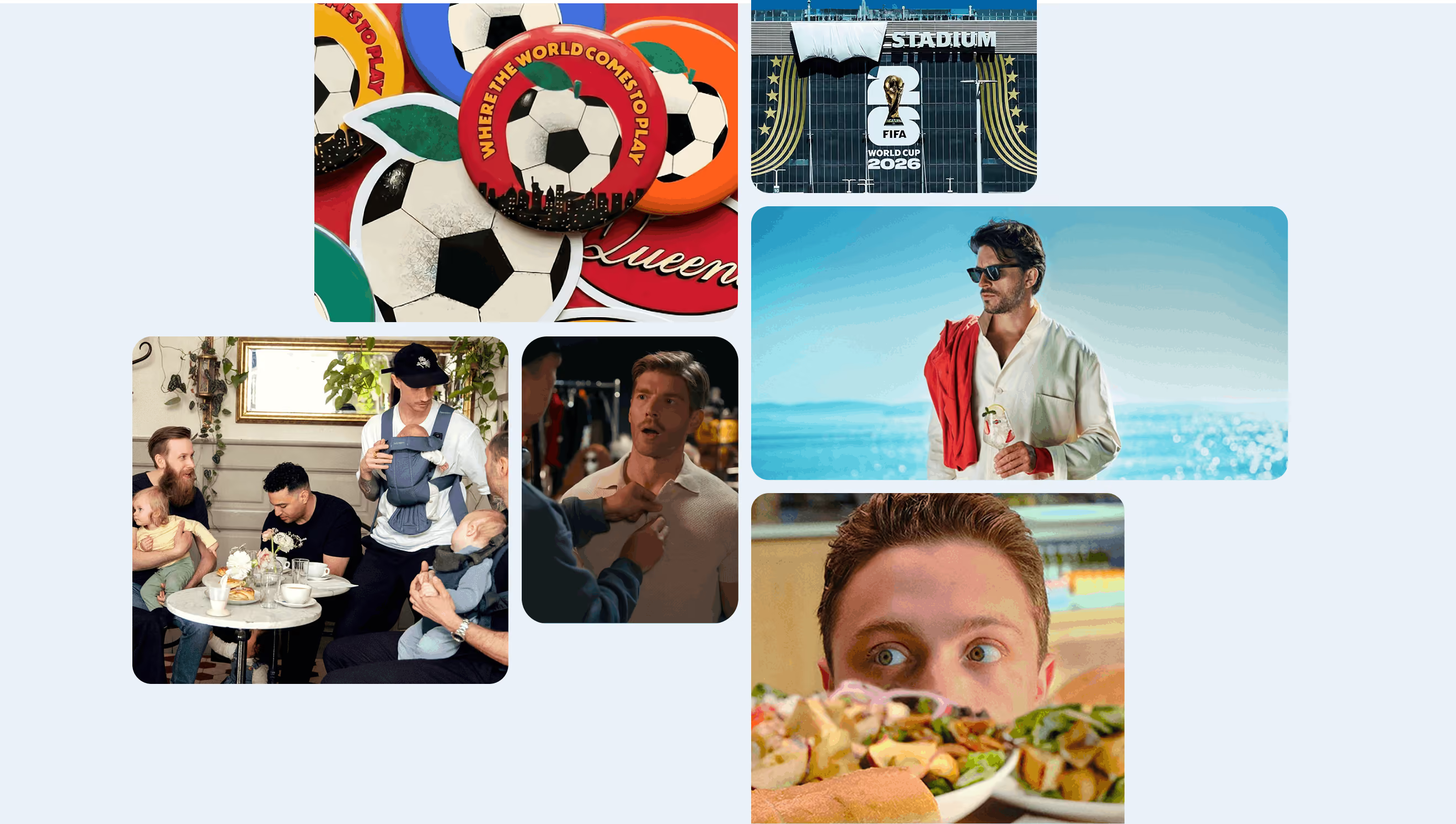
Shot like a nature documentary, Baby Björn's latest campaign turns a Swedish cultural stereotype — dads on parental leave, baby in carrier, coffee in hand — into a warm, funny meditation on modern fatherhood. In a category that has historically centered the mother's experience almost exclusively, it's a refreshing shift.
🥖 Panera | Behind the Scenes With Jake Shane
Rather than putting Jake Shane in a standard brand spot, Panera built the campaign around his personality — imagining the behind-the-scenes of the shoot itself, where he and the director aren't exactly on the same page — a great example of actually using a creator's voice instead of just their following.
👖 Levi’s | [redacted] Stadium
FIFA required all non-sponsor stadium logos to be covered for the World Cup, but Levi's silhouette is so recognizable that covering it only made people look closer — turning a compliance requirement into an accidental brand moment, with the brand even changing their profile image on social channels to the covered logo.
🏠 Hubspot | Kyle Cooke Takes Advice
HubSpot tapped Summer House's Kyle Cooke at a peak cultural moment for a campaign shot in the style of a reality TV confessional. It's a smart, fast move for a B2B brand, and a reminder that the instinct to stay in your lane can be the thing that makes you forgettable.
🍸 Martini | The Martini Man
Bridgerton and Wicked star Jonathan Bailey travels to Italy to learn the art of aperitivo in Martini's latest cinematic spot, and the whole thing has a Bond film energy that's hard to look away from — sun-drenched villas, effortless charm, and the kind of aspirational summer feeling that makes you want to book a flight.

🎧 The Secret Marketing Tactic Killing the Internet (ICYMI): Host Lia Haberman and New York Magazine writer Lane Brown break down the "clipping economy" — the practice of using bots and paid users to manufacture fake hype around everything from music to TV shows — and ask the uncomfortable question underneath it all: if everything online is engineered engagement, is any of it real?
🎧 What’s Powering the ‘Experience Economy’? (The Drum): Strategist Tom Gray makes the case for reframing how we understand modern media — not through attention, but through experience. From immersive theater to stadium design, he looks at what the best real-world experiences have in common and what marketers can learn from them.
📄 A Founder’s Perspective on Influencer Strategy (Following Up!): Margaux co-founder Alexa Buckley Roussel pulls back the curtain on how the brand thinks about community, creator relationships, and the difference between affiliate and brand-led influencer work — making the case that the most valuable partnerships are the ones built around something more durable than metrics.
📄 The NYC World Cup Campaign Inspired by Sports Memorabilia, City Signage, and the Subway (It’s Nice That): Mayor Mamdani has made graphic design a deliberate part of New York's civic identity, and the city's official World Cup campaign is a great example of that — designer Arsh Raziuddin built the visual identity by pulling from borough flags, subway colors, taxi yellow, and vintage sports ephemera, resisting the generic global look most tournaments default to, resulting in an identity that feels distinctly NYC.
Final Thoughts
Cultural moments can be a one-way ticket into a relevant conversation, but they can also be a quick way to throw your audience off, particularly when there's no authentic link to your brand, product or positioning. "Just because your friends are doing it doesn't mean you should too" applies here as well. Not every cultural moment needs your brand's perspective. Knowing which moments are yours to own (and which aren't) keeps a brand from showing up where it doesn't belong.